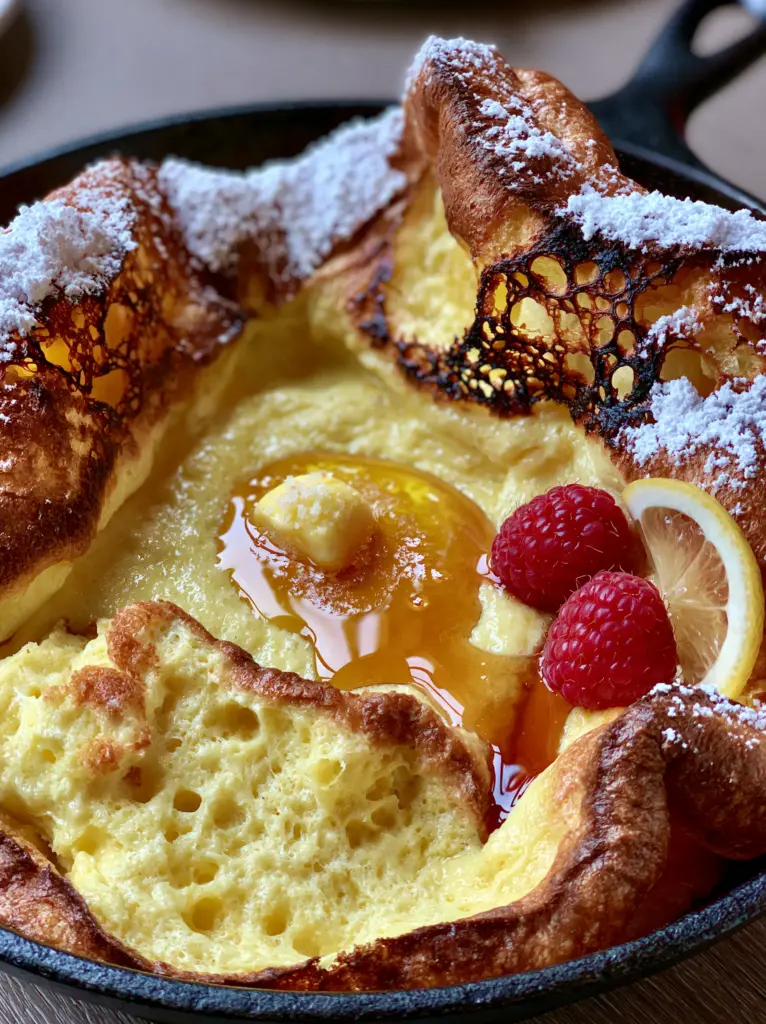
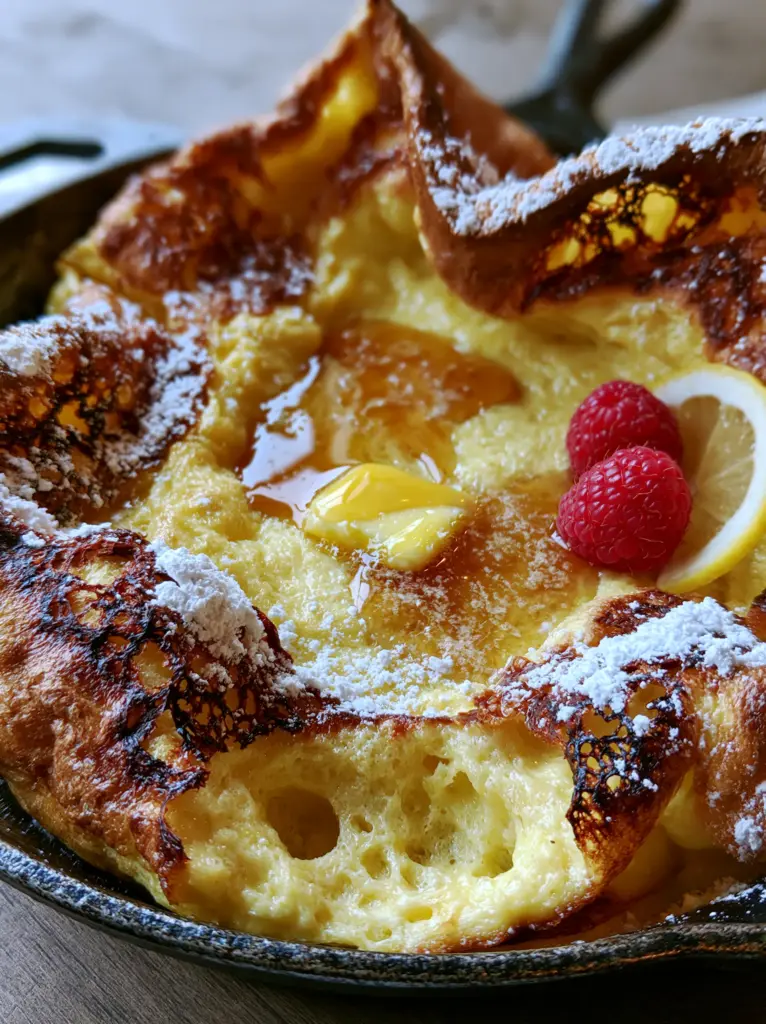
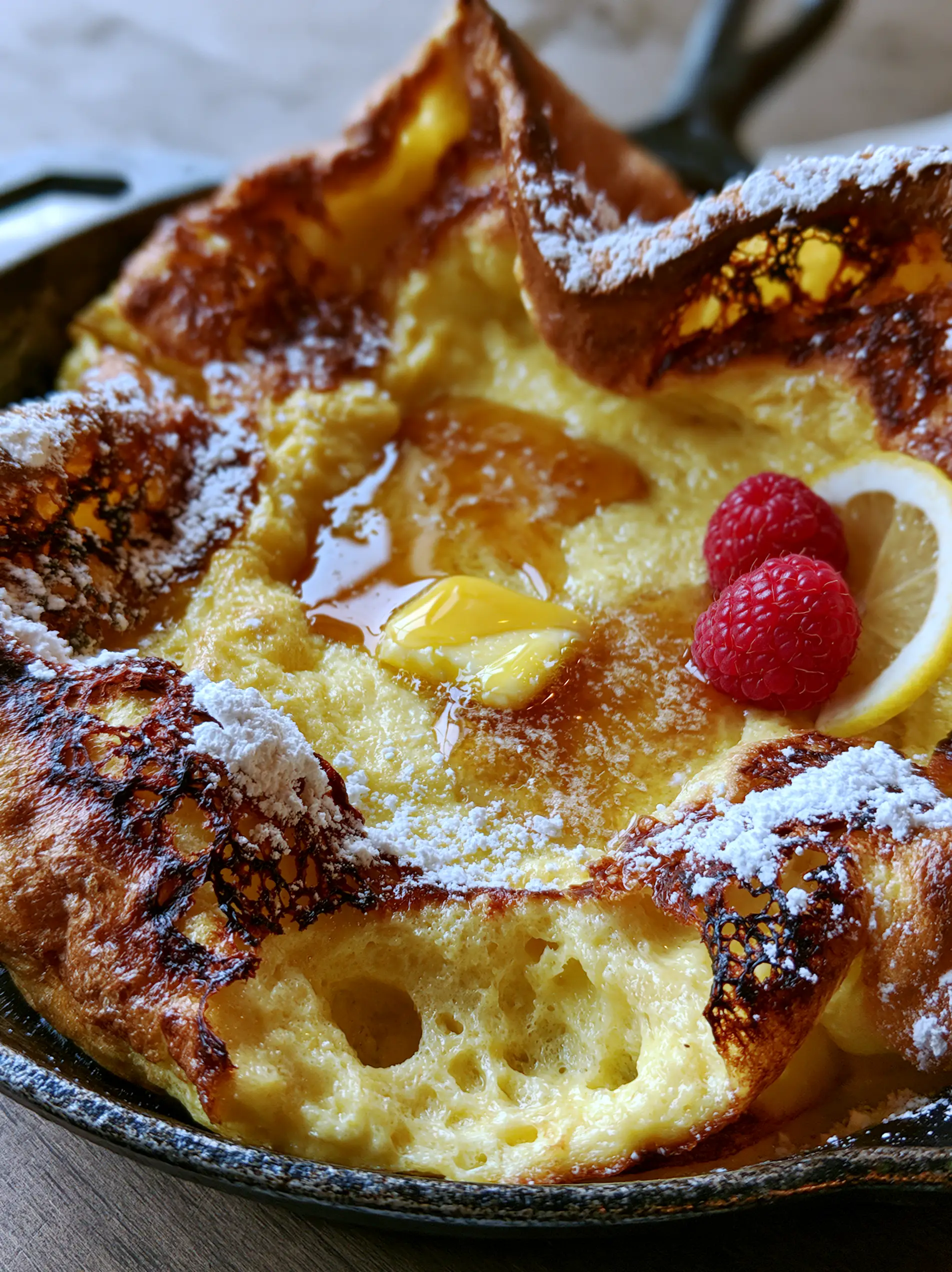
There is nothing quite like the theatrical arrival of a German pancake recipe at the breakfast table. As it emerges from the oven, this massive, pillowy masterpiece overflows from its rustic black cast iron skillet, boasting edges that are dramatically puffed up and airy.
The visual contrast is stunning: deep golden-brown toasted ridges give way to crispy, charred lace patterns on the periphery, while the heart of the dish remains a soft, pale yellow custardy center. This is not just a meal; it is a culinary event defined by steam-driven lift and delicate textures.
In this guide, we will master the science of the “Dutch Baby,” ensuring your version matches the glistening amber maple syrup and snowy powdered sugar dusting seen in professional kitchens. Whether you are a seasoned baker or a weekend hobbyist, this method guarantees a spongy, porous interior that catches every drop of melted salted butter.
The Aesthetic Allure of the Perfect German Pancake
- Dramatic Architecture: The tall, golden-brown ridges create a natural “bowl” perfect for holding fresh fruit and syrups.
- Texture Play: A dual-experience dish featuring a soft, yellow custard center and crispy, parchment-like edges.
- Glistening Finishes: We focus on the high-gloss appeal of amber maple syrup paired with the matte elegance of fine powdered sugar.
- Vibrant Accents: Using two fresh whole raspberries and a thin lemon wedge half-moon provides a necessary acidic “pop” to the rich egg-batter base.
Essential Components for a High-Rise Batter
To achieve the visual results of this German pancake recipe, every ingredient serves a structural or aesthetic purpose. We do not use chemical leaveners; instead, we rely on the expansion of steam and protein structures.
Room Temperature Large Eggs: Essential for maximum volume. Cold eggs can shock the hot skillet and prevent the dramatic puffing required for those charred lace patterns.
Whole Milk (240ml / 1 cup): Provides the fat and hydration needed for the soft yellow custard center. The sugars in the milk contribute to the deep golden-brown toasted ridges.
All-Purpose Flour (125g / 1 cup): The structural backbone. This specific ratio ensures the pancake is sturdy enough to climb the skillet walls without becoming “bread-like.”
Salted Butter (42g / 3 tbsp): Used both in the batter and to grease the pan. The butter in the pan creates a “frying” effect for the base, leading to those sought-after crispy charred edges.
Pure Vanilla Extract and Fine Sea Salt: While “invisible,” these are foundational for flavor. Salt heightens the sweetness of the syrup, while vanilla provides the aromatic “bakery” scent.
Precision Tools for Skillet Success
You cannot achieve the specific “rustic black cast iron” look described in our visual blueprint without the right vessel. A 10-inch (25cm) cast iron skillet is the gold standard for heat retention and distribution.
A high-speed blender is also recommended. Aerating the batter for 30 seconds introduces tiny air bubbles that expand rapidly in the oven, helping the batter “climb” the walls of the skillet to create that massive, pillowy appearance.
Achieving the Signature Puff: Step-by-Step
Phase 1: The Pre-Heat and Skillet Preparation
Place your cast iron skillet into the oven and preheat to 425°F (220°C). This is the most critical step; a cold pan will result in a flat, dense pancake rather than a dramatically puffed one.
Phase 2: The High-Aeration Batter
While the skillet heats, combine your eggs, milk, flour, vanilla, and a pinch of salt in the blender. Blend on high until the mixture is completely smooth and slightly frothy, which usually takes about 30-45 seconds.
Phase 3: The Sizzle and Pour
Carefully remove the blazing hot skillet. Drop in 2 tablespoons (28g) of salted butter and swirl until it is a glistening amber pool. Immediately pour the batter into the center; you should hear a distinct sizzle as the edges begin to set instantly.
Phase 4: The Golden Transformation
Return the skillet to the oven and bake for 15-20 minutes. Do not open the oven door! Watch through the window as the edges rise like a crown, developing deep golden-brown ridges and crispy charred lace patterns.
Expert Troubleshooting for the Best German Pancake Recipe
- The “Deflation” Factor: All German pancakes will sink slightly once removed from the heat. To minimize this, serve immediately while the steam is still trapped in the porous interior.
- Avoid Over-Mixing: If using a whisk instead of a blender, stop as soon as the large lumps disappear to prevent the gluten from becoming too tough.
- Skillet Seasoning: Ensure your cast iron is well-seasoned. This contributes to the rustic aesthetic and ensures the crispy edges pull away cleanly.
- Milk Temperature: Slightly warm your milk to 70°F (21°C) to ensure it emulsifies perfectly with the eggs.
Elevating Your Breakfast Presentation
The visual blueprint of this German pancake recipe is defined by its toppings. Once the pancake is out, place a single small pat of salted butter in the center, allowing it to melt into a golden pool.
Sift a snowy dusting of fine powdered sugar over the peaks of the puffed ridges. Drizzle with glistening amber maple syrup, ensuring it catches the light. Finally, tuck two vibrant red raspberries and a thin half-moon lemon slice into the side.
For more breakfast inspiration, you might enjoy our fluffy blueberry pancakes or explore these creative french toast ideas. If you prefer a savory start, consider how well this custardy texture pairs with savory breakfast sides.
Proper Storage and Reheating Techniques
While this dish is best enjoyed fresh from the oven to appreciate the spongy interior texture, you can store leftovers in an airtight container in the refrigerator for up to 2 days.
To reheat and regain some of that “crispy charred lace” texture, place slices in a toaster oven at 350°F (175°C) for 5 minutes. Avoid the microwave, as it will make the custard center rubbery rather than soft.
Frequently Asked Questions
Yes, you can refrigerate the batter for up to 24 hours. However, ensure you give it a quick blend before pouring into the hot skillet to re-aerate the mixture.
While cast iron is best for the charred lace patterns, you can use a preheated metal cake pan or a heavy glass baking dish. Avoid thin pans that lose heat quickly.
They are essentially the same dish. The name ‘Dutch Baby’ was coined by an American restaurateur, but the recipe is derived from the German ‘Pfannkuchen’.
The most common reasons are using cold eggs or a skillet that wasn’t preheated. The ‘puff’ relies on the immediate conversion of liquid to steam when the batter hits a blazing hot pan.
A strong egg smell usually means the pancake is slightly undercooked in the center. Ensure the center is a pale yellow custard and not liquid batter before removing from the oven.
The Master German Pancake Recipe
German pancake recipe: The Ultimate Guide to a Tall, Crispy Dutch Baby
Ingredients
Equipment
Method
- Place a 10-inch cast iron skillet in the oven and preheat to 425°F (220°C).
- Combine eggs, milk, flour, vanilla, salt, and 1 tbsp of melted butter in a blender. Blend on high for 30-45 seconds until frothy.
- Carefully remove the hot skillet from the oven. Add the remaining 2 tbsp of butter, swirling until it forms a golden pool.
- Immediately pour the batter into the skillet. Return to the oven and bake for 15-20 minutes until the edges are tall, golden-brown, and crispy.
- Dust with powdered sugar, drizzle with maple syrup, and garnish with raspberries and a lemon wedge. Serve immediately.
Notes
Do not open the oven door during the first 15 minutes of baking.
Join Our Culinary Community
We hope this German pancake recipe brings a touch of farmhouse magic to your morning. The combination of the airy puff and the zesty lemon wedge creates a balanced flavor profile that is hard to beat.
If you made this, please leave a comment below and share your photos! For more visual inspiration and daily recipes, follow us on Pinterest and save this pin for your next brunch gathering.