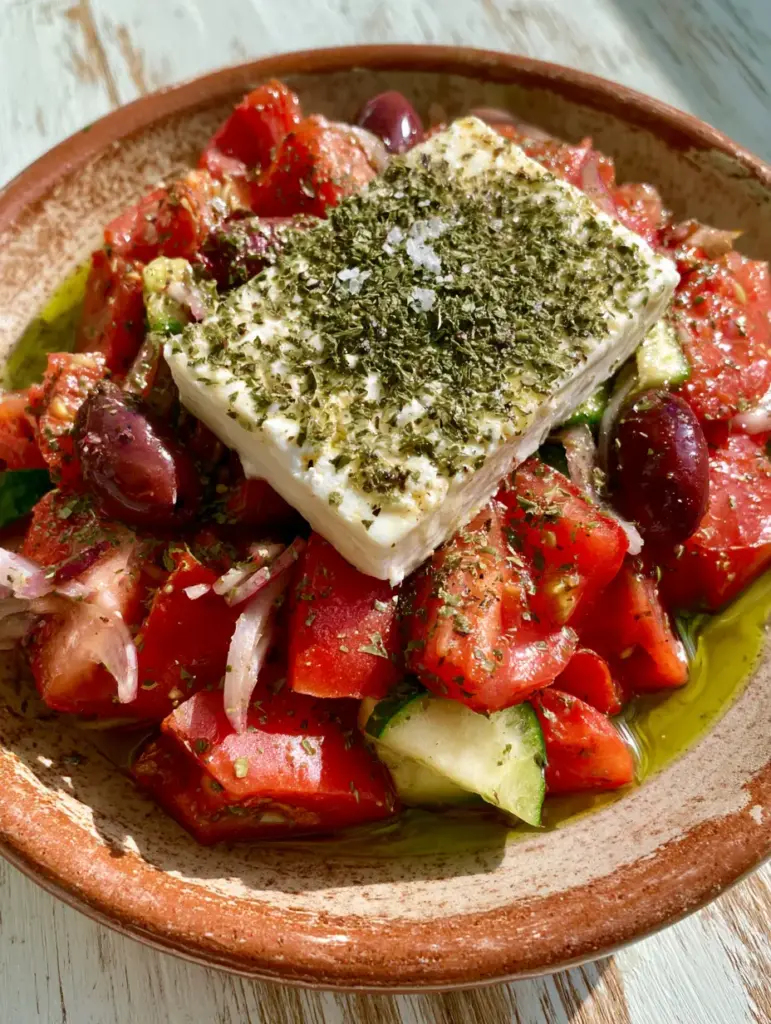
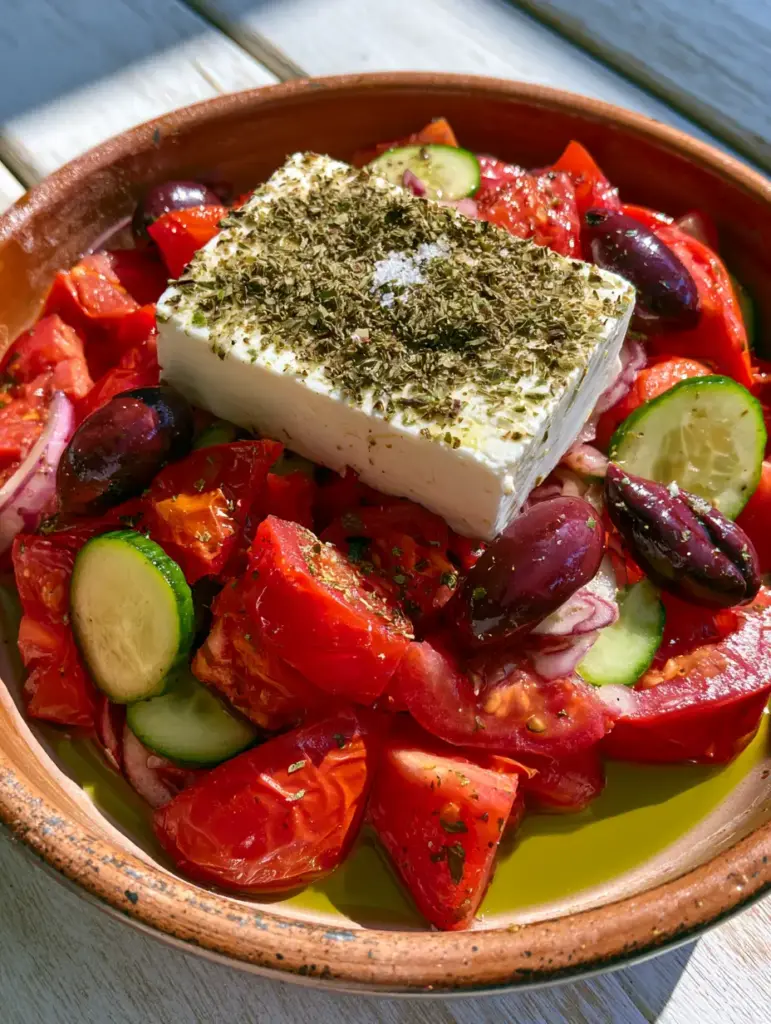
There is a specific, sun-drenched magic in a bowl of authentic Horiatiki. When you look at a Greek salad recipe card, you aren’t just looking at a list of vegetables; you are looking at the soul of Greek summer. Imagine a sun-bleached light wooden table, the soft side-lighting of a late afternoon casting gentle shadows across a weathered terracotta bowl. Inside, the colors are vibrant—deep reds, forest greens, and the stark, creamy white of a massive block of feta. This isn’t your standard lettuce-filled diner salad; this is a rustic, textured masterpiece where every ingredient is allowed to be its most flavorful self.
The beauty of this dish lies in its simplicity and the quality of its components. From the thick-cut, irregular wedges of vine-ripened tomatoes to the glistening pool of golden-green extra virgin olive oil at the bottom of the bowl, every element is designed to be savored. This Greek salad recipe card focuses on the “Village” style (Horiatiki), which prioritizes the crunch of unpeeled Persian cucumbers and the pungent kick of raw red onion slivers. Whether you are serving this at a family gathering or enjoying it as a solo lunch, the sensory experience—the smell of dried wild oregano and the sound of a crusty loaf of bread dipping into the juices—is unmatched.
The Irresistible Allure of a True Horiatiki Salad
- Unmatched Textural Contrast: Experience the interplay between crunchy cucumber rounds and the buttery, soft block of sheep milk feta.
- Vibrant Visual Appeal: Deep red vine-ripened tomatoes provide a stunning backdrop for translucent red onion rings and dark purple Kalamata olives.
- Authentic Flavor Profile: No bottled dressings here—only the high-quality drizzle of extra virgin olive oil and the herbal punch of dried Greek oregano.
- Scientifically Sound Structure: Using unpeeled cucumbers and whole olives with pits ensures the salad retains its structural integrity and doesn’t become soggy.
The Garden-Fresh Components for Your Greek Salad Recipe Card
Vine-Ripened Tomatoes (4 large / approx. 680g): These must be deep red and slightly soft to the touch to ensure they release enough juice to mingle with the oil. The thick-cut wedges should be irregular to catch the salt and oregano in their crevices.
Persian Cucumbers (3-4 medium / approx. 300g): We use unpeeled Persian cucumbers because their skin is thin and sweet, providing a necessary snap without the bitterness of thicker-skinned varieties. Slicing them into rounds maintains a rustic, farmhouse aesthetic.
Red Onion (1/2 small / approx. 50g): To achieve those “translucent slivers” seen in professional food photography, the onion must be sliced paper-thin. This allows the sharp bite to mellow slightly as it macerates in the olive oil.
Kalamata Olives (1/2 cup / 90g): Always use whole olives with pits for an authentic Greek salad recipe card. The pit protects the flesh from absorbing too much salt, keeping the olive plump and glossy.
Sheep Milk Feta (1 large block / 200g): A single, solid rectangular block of high-quality feta is the hallmark of Horiatiki. It should sit proudly on top, ready to be broken apart by the diners’ forks.
Extra Virgin Olive Oil (1/4 cup / 60ml): Use a cold-pressed, golden-green oil. This acts as the “glue” that binds the flavors together, pooling at the bottom of the terracotta bowl for dipping.
Dried Greek Oregano (1 tsp): Unlike fresh oregano, the dried version offers a concentrated, earthy aroma that defines the Mediterranean scent profile. A heavy sprinkle over the feta is essential.
Coarse Sea Salt (1/2 tsp): The large crystals provide a periodic “pop” of salinity that enhances the sweetness of the vine-ripened tomatoes.
Essential Tools for the Perfect Rustic Presentation
To achieve the look of a professional Greek salad recipe card, your equipment matters as much as your produce. You will need a high-quality chef’s knife to create those clean, irregular tomato wedges and translucent onion slivers. A weathered terracotta bowl is highly recommended; the porous nature of the clay keeps the vegetables slightly cooler and provides a beautiful, rustic contrast to the vibrant vegetables. Finally, use a high-quality glass cruet for your olive oil to ensure a controlled, glistening drizzle over the final assembly.
Mastering the Art of the Village Cut: Step-by-Step
Preparing the Vibrant Vegetable Base
Start with your vine-ripened tomatoes. Instead of precise slices, aim for thick, irregular wedges. This rustic cutting style increases the surface area, allowing the sea salt to draw out the internal juices, which is vital for that signature “pool” of liquid at the bottom. Move on to the Persian cucumbers; keep the skin on for a vibrant green border and slice them into 1/2-inch (1.25cm) rounds. If you are looking for more vegetable-forward inspiration, you might also enjoy our Greek asparagus salad for a different seasonal twist.
Achieving Translucent Onion Slivers
The red onion should be handled with care. Slice it from root to stem to create thin, translucent slivers. If the onion is particularly sharp, you can soak the slivers in ice water for five minutes, though a true Horiatiki thrives on that raw, pungent kick. Scatter these slivers over the tomato and cucumber base along with the glossy Kalamata olives. This is a classic technique used in many Mediterranean dishes, similar to how we prep for a potluck recipe where visual texture is key.
The Feta Crown and Finishing Drizzle
Place the large, rectangular block of sheep milk feta directly in the center of the bowl. This is the visual anchor of the dish. Do not crumble it; part of the experience is breaking the cheese yourself. Now, perform the “glistening drizzle.” Pour the extra virgin olive oil in a circular motion, ensuring it coats the cheese and the vegetables before pooling at the bottom. Finally, add a heavy sprinkle of dried Greek oregano and a pinch of coarse sea salt. The result should look exactly like a professional Greek salad recipe card: hyper-realistic, textured, and glistening.
Expert Tips for Horiatiki Success
- Temperature Matters: Never serve your tomatoes straight from the fridge. Room-temperature tomatoes have a much more complex flavor and a softer texture that melds better with the oil.
- The “Papara” Factor: Always serve this salad with a side of crusty bread. The “papara” is the act of dipping bread into the mixture of olive oil, tomato juice, and feta bits at the bottom of the bowl.
- Olive Integrity: If you must use pitted olives, ensure they are oil-cured. However, whole olives with pits provide a superior mouthfeel and look much better in photos.
- Salt Strategy: Apply the sea salt directly to the tomatoes first. This draws out the juices before the oil is added, creating a more flavorful “dressing” naturally.
Shelf Life and Freshness Standards
A Horiatiki salad is best enjoyed within 30 minutes of assembly. Because of the high salt content, the tomatoes will eventually release all their moisture and the cucumbers will lose their crunch. If you have leftovers, they can be stored in an airtight container for up to 24 hours, but the texture will be significantly softer. This is not a dish for freezing; the cellular structure of the fresh vegetables would collapse, resulting in a mushy mess. If you need a salad that holds up longer for a party, consider our cucumber chips as a sturdier snack alternative.
What to Serve with Your Authentic Greek Salad
This salad is remarkably versatile. It serves as a cooling side to grilled meats or a hearty vegetarian lunch on its own. If you are planning a larger Mediterranean feast, pair it with our zucchini corn tomato bake for a warm, cheesy contrast. For those who enjoy a variety of textures at the table, the crunch of this salad complements the creaminess of a strawberry fluff salad if you are hosting a diverse summer barbecue.
Frequently Asked Questions
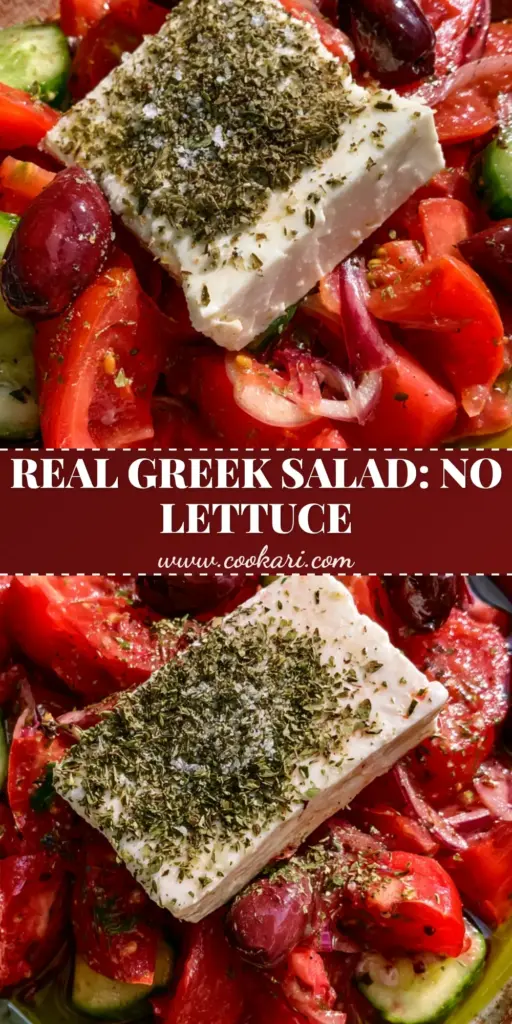
Authentic Horiatiki (Village Salad) never contains lettuce. The base is strictly tomatoes and cucumbers. Lettuce is a common addition in ‘American-style’ Greek salads but is not traditional.
Traditional Horiatiki uses unpeeled cucumbers, especially Persian or Kirby varieties. The skin provides a necessary crunch and a vibrant green visual contrast that defines the rustic style.
A high-quality, cold-pressed Extra Virgin Olive Oil (EVOO) from Greece, specifically from Koroneiki olives, provides the best golden-green color and peppery finish.
Whole olives with pits retain their structural integrity and have a superior flavor. Pitted olives can become waterlogged and salty when sitting in the tomato juices and olive oil.
In an authentic Horiatiki, a single block of feta preserves the creaminess of the cheese and allows diners to break off as much as they want, preventing the salad from becoming overly salty or ‘muddy’ from small crumbles.
The Authentic Horiatiki Greek Salad Recipe
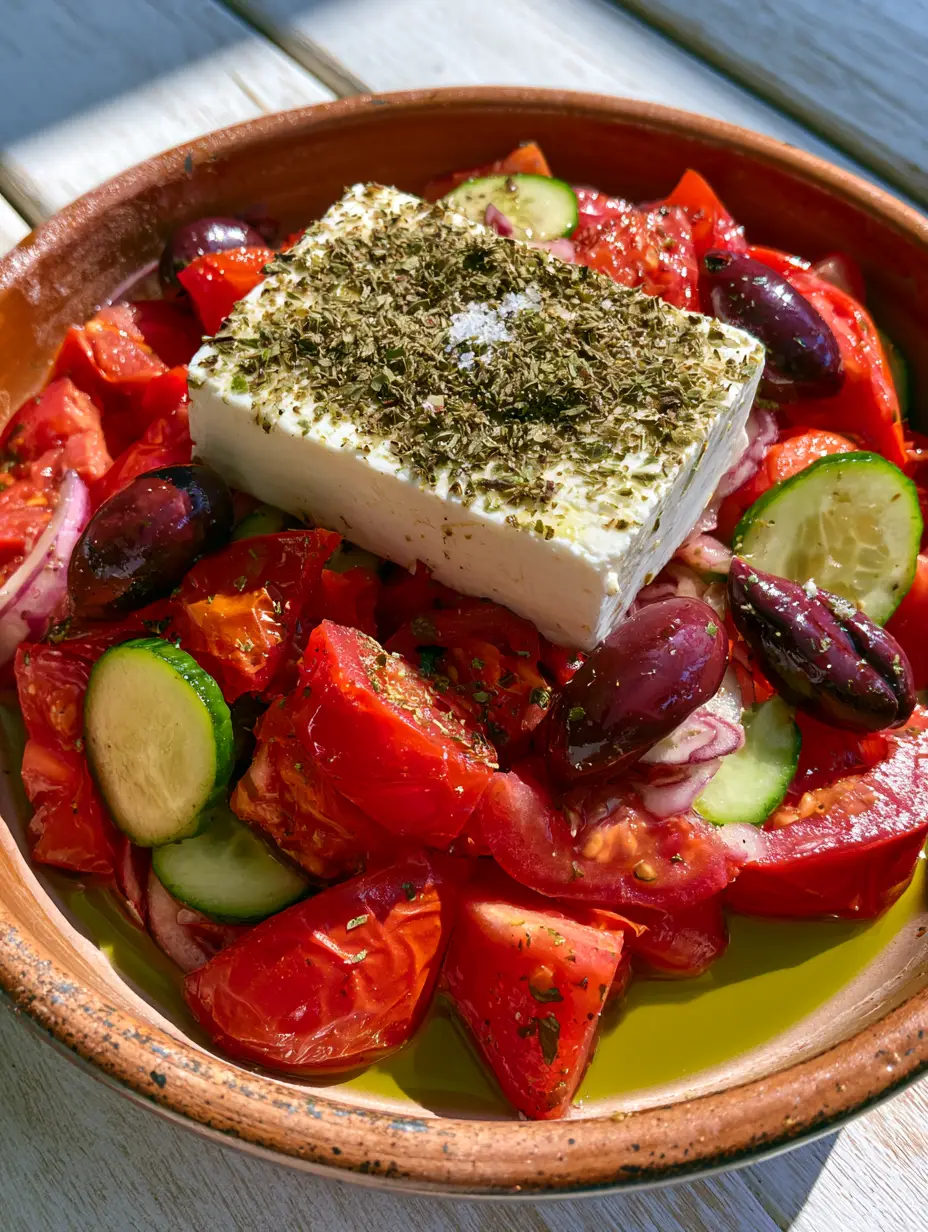
Greek salad recipe card: The Ultimate Authentic Horiatiki Guide
Ingredients
Equipment
Method
- Slice the vine-ripened tomatoes into thick, irregular wedges and place them in a weathered terracotta bowl.
- Slice the unpeeled Persian cucumbers into rounds about 1/2 inch (1.25cm) thick and add to the bowl.
- Scatter the translucent red onion slivers and the whole Kalamata olives over the tomato and cucumber base.
- Place the whole rectangular block of sheep milk feta prominently on top of the salad mound.
- Pour the extra virgin olive oil generously over the cheese and vegetables until it pools slightly at the bottom.
- Finish with a heavy dusting of dried green oregano and a pinch of coarse sea salt over the entire dish.
Notes
Don't forget the crusty bread for the 'papara' (dipping in the oil).
Conclusion: Bring the Mediterranean Home
Mastering the Greek salad recipe card is about more than just chopping vegetables; it is about respecting the ingredients. When you use the right cutting techniques and high-quality sheep milk feta, you create a dish that is both a visual masterpiece and a nutritional powerhouse. We invite you to share your Horiatiki creations with us! Follow our journey for more authentic recipes on Pinterest and leave a comment below telling us your favorite secret ingredient for the perfect summer salad.