There is a specific kind of culinary magic that happens when sun-ripened vegetables meet the briny depth of the Mediterranean. This Greek Salad is not just a side dish; it is a vibrant, nutrient-dense masterpiece designed for those who appreciate the structural integrity of a perfect meal-prep container. By integrating plump canned chickpeas and a thick, emulsified dressing, we elevate the classic “Horiatiki” into a powerhouse lunch that stays crisp for days.
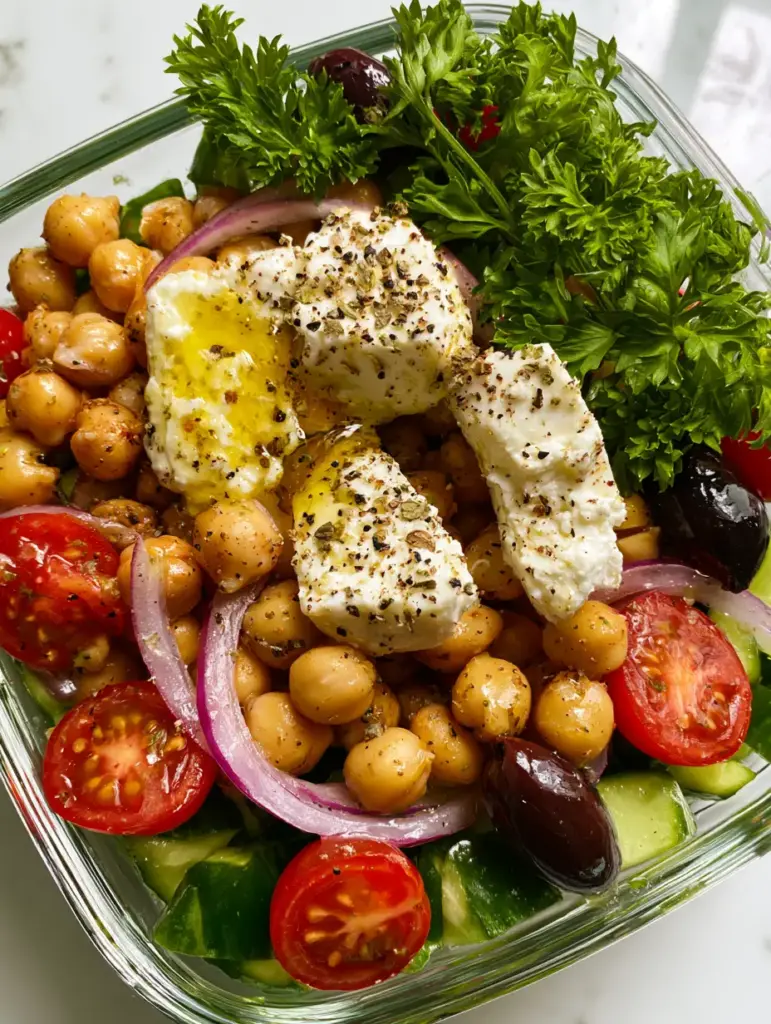
In the world of high-end food photography, the “hero” shot of a salad requires every component to hold its own. This recipe mirrors the exact visual standards of a premium Mediterranean bistro. We are looking for those firm, deep green Persian cucumbers and the glistening, golden-yellow sheen of a dressing that refuses to separate. Every bite is a calculated balance of salt, acid, and crunch.
The Anatomy of a Superior Mediterranean Chickpea Bowl
What sets this specific Greek Salad apart from the soggy, lackluster versions found in plastic deli tubs? It comes down to the forensic selection of ingredients and the science of emulsification. Here is why this recipe is a game-changer for your weekly rotation:
- Structural Integrity: Using Persian cucumbers ensures a lower water content, preventing the salad from becoming “soupy” in the fridge.
- Protein-Forward: The addition of canned chickpeas provides a creamy texture and plant-based protein, making this a complete standalone meal.
- Emulsified Vinaigrette: Unlike thin oils that slide off veggies, our lemon-herb dressing is thick and “clingy,” ensuring every nook of the feta is seasoned.
- Heirloom Quality: By choosing heirloom cherry tomatoes, we introduce a higher sugar-to-acid ratio and a tighter skin that snaps when bitten.
The Blueprint: Essential Ingredients for Visual and Flavor Success
To achieve the professional results seen in our Greek Salad recipe card, every ingredient must serve a dual purpose: aesthetic beauty and culinary function. Use the following guide to source your components.
4 cups (600g) Persian Cucumbers: These are preferred over English or slicing cucumbers for their firm texture and lack of large, watery seeds. Slice them into uniform 1/2-inch (1.25cm) cubes to maintain that deep green “foundation” look.
2 cups (300g) Red Heirloom Cherry Tomatoes: Halving these reveals the inner gel and seeds, which slightly mingle with the dressing. Their tight, glossy red skins provide a necessary visual pop against the green cucumbers.
1 can (15 oz / 425g) Chickpeas: Rinse these thoroughly until the water runs clear. These should be plump and glistening, acting as the neutral canvas for our golden-yellow vinaigrette.
1/2 cup (75g) Red Onion: Slice these into paper-thin, translucent crescents. Soaking them in cold water for ten minutes before adding to the salad can remove the harsh “sulfur” bite while keeping the vibrant purple color.
1/2 cup (80g) Pitted Kalamata Olives: Look for oil-cured black olives that have a natural gloss. These provide the “sharp contrast” mentioned in our visual prompt and a deep, fermented saltiness.
6 oz (170g) High-Quality Feta Cheese: Avoid the pre-crumbled “dust” sold in tubs. Buy a block of sheep’s milk feta and break it into large, irregular chunks by hand for a rustic, premium feel.
The Emulsified Vinaigrette Base: To achieve a thick consistency, you will need 1/2 cup (120ml) Extra Virgin Olive Oil, 3 tbsp (45ml) fresh lemon juice, 1 tsp (5g) Dijon mustard (the secret emulsifier), and 1 clove of minced garlic.
Garnishes: A generous handful of jagged-edged fresh flat-leaf parsley and a heavy dusting of dried oregano and cracked black pepper for that “artisan” finish.
Professional Equipment for the Home Chef
While you don’t need a commercial kitchen, a few specific tools will help you achieve the “handheld smartphone photo” aesthetic. A sharp chef’s knife is non-negotiable for those clean, translucent red onion slices. To emulsify the dressing properly, use a small glass jar with a tight-fitting lid or a high-speed mini-whisk.
For storage, we recommend premium glass meal-prep containers. Glass not only looks better in photos but also keeps the vegetables colder and crisper than plastic. If you’re looking for other hearty salad inspirations, check out our Cowboy Salad or its more decadent cousin, the Loaded Cowboy Salad.
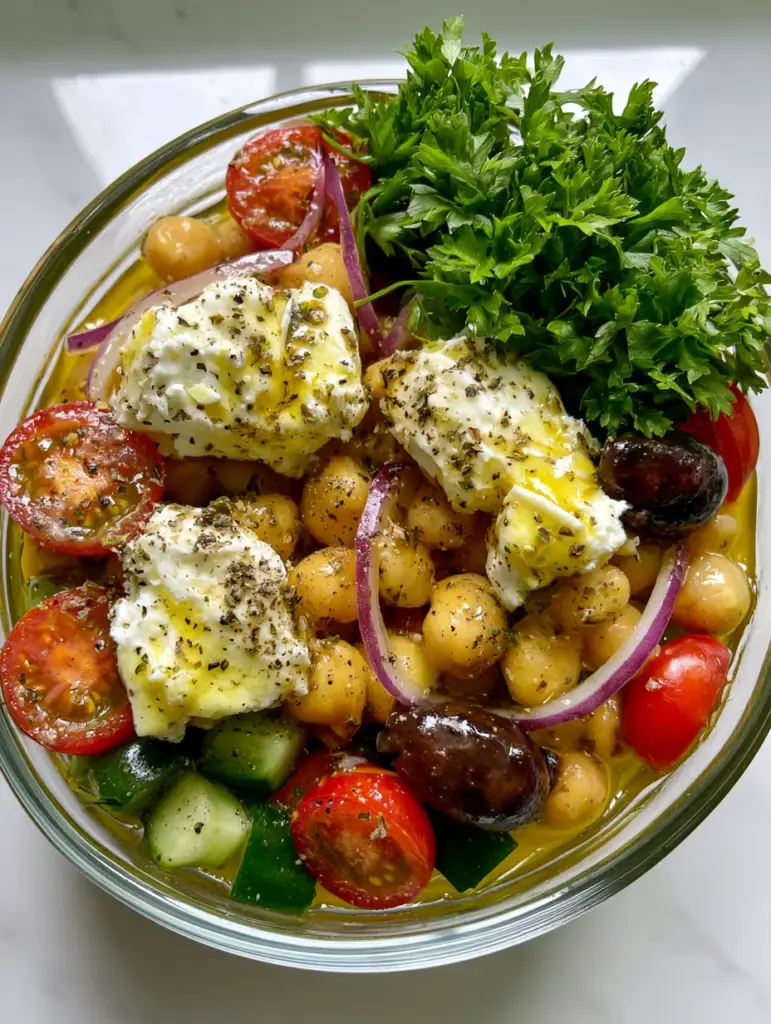
Step-by-Step Instructions: Building the Masterpiece
Step 1: The Foundation of Crunch
Begin by dicing your Persian cucumbers into uniform 1/2-inch (1.25cm) pieces. In culinary terms, this is a “medium dice.” Place them at the bottom of a large mixing bowl. The cucumbers act as the structural base of the salad, providing the weight needed to support the lighter ingredients.
Step 2: Preparing the Vibrant Aromatics
Halve the heirloom cherry tomatoes longitudinally. This exposes the interior and allows the lemon-herb vinaigrette to penetrate the fruit. Slice the red onion into those signature translucent crescents; they should be thin enough to see light through them. Add both to the bowl along with the rinsed chickpeas and glossy Kalamata olives.
Step 3: Mastering the Emulsified Vinaigrette
In a small bowl or jar, combine the lemon juice, Dijon mustard, minced garlic, and salt. Slowly stream in the extra virgin olive oil while whisking vigorously. You are looking for a “visual cue” of the liquid turning from two separate layers into a singular, opaque, golden-yellow sauce. The Dijon mustard acts as a bridge, holding the oil and acid together in a stable emulsion.
Step 4: The Art of the Toss
Drizzle the thick vinaigrette over the cucumber and chickpea mixture. Fold gently with a large spoon or spatula. You want the chickpeas to look “plump and glistening” with a visible coating of herbs. Ensure every vegetable is hydrated before adding the delicate toppings.
Step 5: Final Assembly and Garnish
Transfer the salad into your glass containers. Nestled on top, place the large, irregular chunks of feta cheese. Do not mix them in yet; keeping them on top prevents the cheese from turning gray or mushy. Dust the cheese with a generous amount of dried oregano and coarse cracked black pepper. Finally, scatter the jagged-edged fresh flat-leaf parsley across the top for a burst of “bright, jagged” greenery.
Expert Tips for a Bistro-Quality Finish
- The “Salt” Rule: Feta and olives are naturally salty. Taste your vinaigrette before adding extra salt to the salad to avoid over-seasoning.
- Temperature Matters: Serve this salad slightly below room temperature. If it’s too cold, the high-quality olive oil might solidify; if too warm, the cucumbers lose their “snap.”
- Herb Freshness: Only chop the parsley right before serving. If it sits in the dressing too long, it loses its jagged edges and becomes limp.
- Make it a Potluck Star: If you’re taking this to a gathering, follow our potluck recipe guide and keep the dressing on the side until 10 minutes before serving.
How to Store and Preserve the Crunch
This Greek Salad is an exceptional candidate for meal prepping. In a sealed glass container, it will stay fresh for up to 4 days. Because we are using chickpeas and firm cucumbers, the salad doesn’t wilt as quickly as a lettuce-based salad.
Refrigeration: Store at 38°F (3°C). If the oil in the dressing thickens in the fridge, let the container sit on the counter for 10 minutes and give it a gentle shake before eating. Freezing: Do not freeze this salad. The cell walls of the cucumbers and tomatoes will collapse, resulting in a mushy texture upon thawing.
What to Pair with Your Mediterranean Salad
While this salad is a full meal on its own thanks to the chickpeas, it also pairs beautifully with other side dishes. If you are hosting a larger dinner, consider serving it alongside our Slow Cooker Potatoes for a comforting contrast to the cold vegetables. For a lighter, crunchier side, these Ranch Cucumber Chips offer a fun twist on the cucumber theme.
If you’re looking for more unique salad variations, you might enjoy our Chinese Chicken Salad or the refreshing Napa Cabbage Salad for a different flavor profile.
Frequently Asked Questions
Yes, you can use cooked-from-scratch chickpeas or even white cannellini beans, though chickpeas provide the best firm texture for this Mediterranean profile.
The key is using Persian cucumbers, which have lower water content than English cucumbers. Also, keep your feta chunks large and on top of the salad until you are ready to eat.
When stored in an airtight glass container, this salad maintains its structural integrity and crunch for up to 4 days, making it ideal for meal prep.
Yes, all the ingredients—cucumbers, tomatoes, chickpeas, olives, and feta—are naturally gluten-free. Just ensure your dried spices have no cross-contamination.
Using a stabilizer like Dijon mustard and whisking or shaking the oil into the lemon juice vigorously creates a thick, creamy sauce that clings to the vegetables instead of pooling at the bottom.
The Perfect Greek Salad Recipe Card
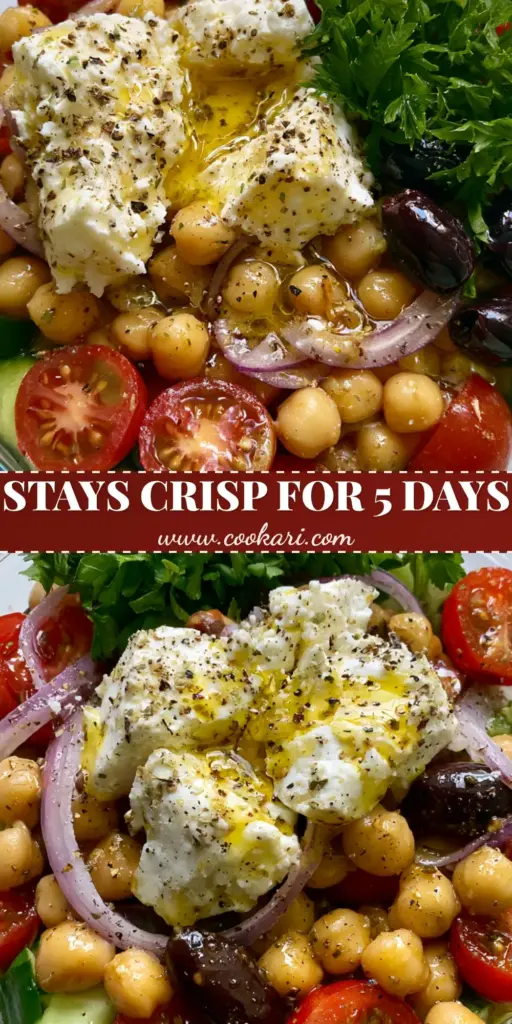
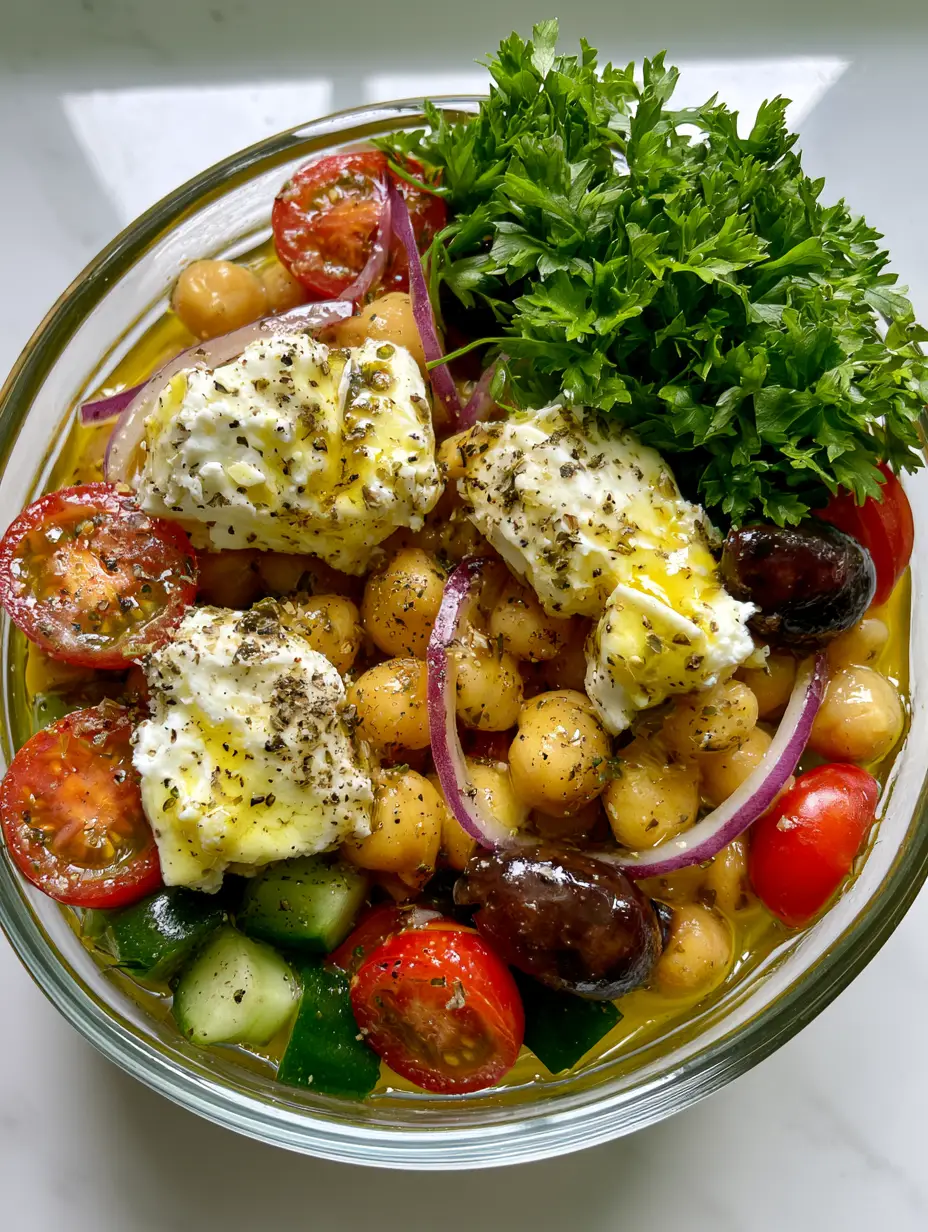
Greek Salad with Chickpeas and Emulsified Lemon-Herb Vinaigrette
Ingredients
Equipment
Method
- Dice the Persian cucumbers into 1/2-inch cubes and halve the cherry tomatoes. Slice the red onion into paper-thin crescents.
- In a glass jar, combine olive oil, lemon juice, mustard, and minced garlic. Shake or whisk vigorously until the mixture is a thick, golden-yellow emulsion.
- Combine cucumbers, tomatoes, chickpeas, onions, and olives in a bowl. Fold in the vinaigrette until everything is glistening.
- Divide into glass containers. Top with chunky feta, dried oregano, cracked black pepper, and fresh parsley.
Notes
Keep the feta chunks large to prevent them from dissolving into the dressing.
Share Your Culinary Creation!
This Greek Salad is a testament to how simple ingredients, when treated with professional technique, can create a world-class meal. Whether you’re prepping for a busy work week or hosting a backyard brunch, the vibrant colors and bold Mediterranean flavors are sure to impress. We want to see your results!
Did yours have those perfect “translucent crescents” of onion? Did the dressing emulsify into that beautiful “golden-yellow” hue? Leave a comment below and let us know your favorite tweaks. Don’t forget to follow us on Pinterest for more visually stunning recipe inspiration!