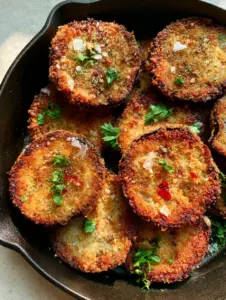
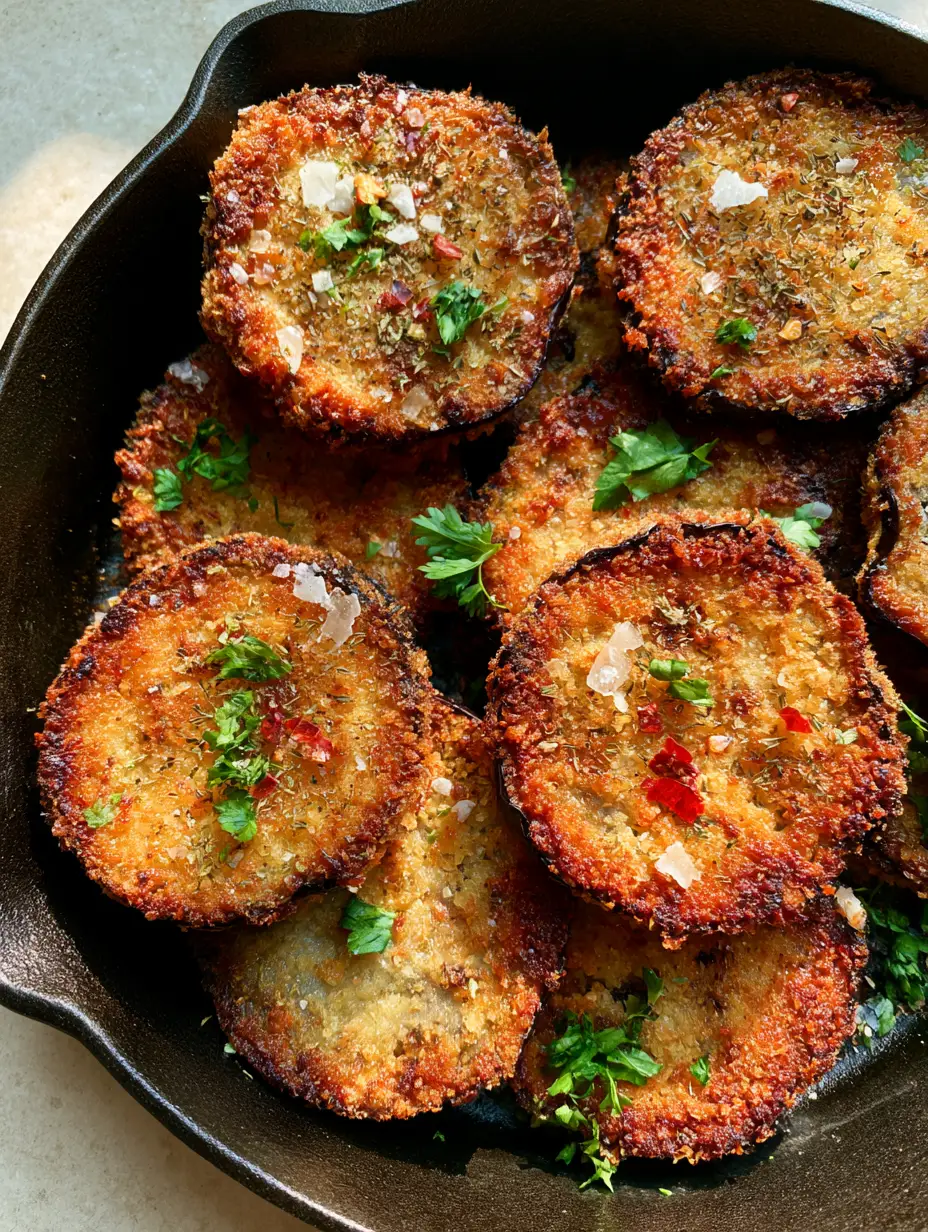
The quest for the perfect skillet fried eggplant ends here, right in the heart of a seasoned cast iron pan. If you have ever struggled with soggy, oil-laden slices, this method is your culinary turning point. We are moving away from heavy batters and embracing a high-contrast, deep golden-brown Panko crust that delivers an audible crunch with every single bite.
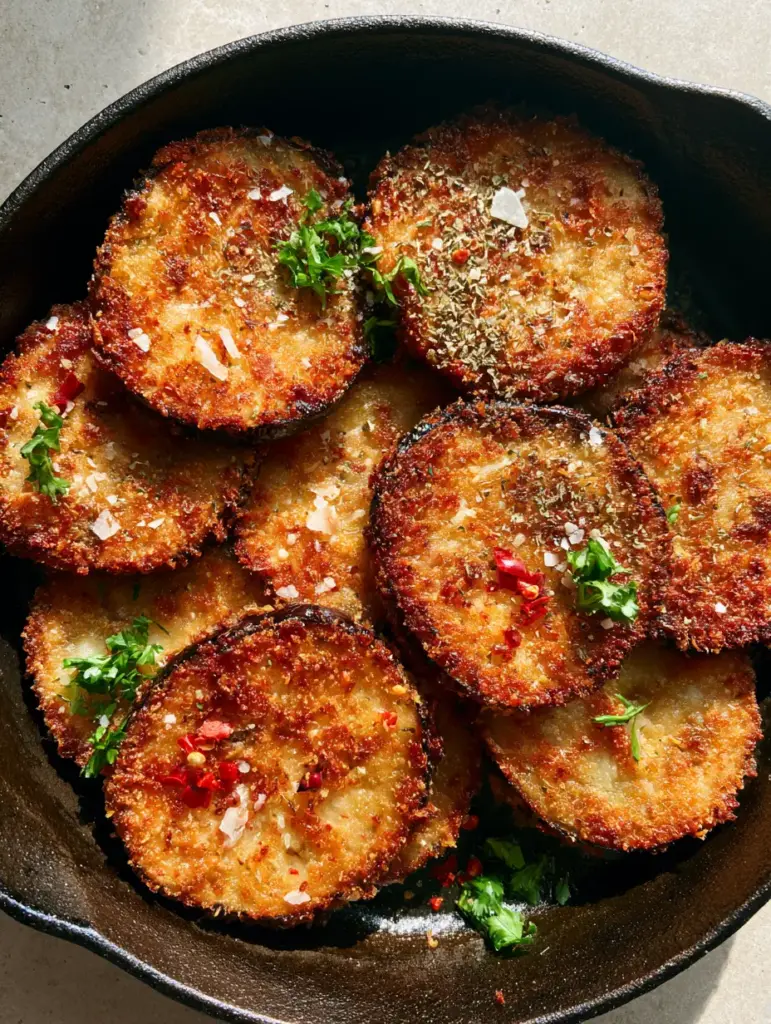
Imagine thick, tender rounds of eggplant encased in a dry, shatteringly crisp breading that defies the typical greasiness of fried foods. This skillet fried eggplant is elevated by the sharp textures of Maldon sea salt flakes and the nutty richness of finely grated aged Parmesan cheese. It is a visual and sensory masterpiece, designed to stand out as the star of your dinner table.
To achieve the professional results seen in our macro photography, we focus on moisture control and heat management. By utilizing the heat retention of a black cast iron skillet, we ensure even browning and a texture that stays firm. Let’s dive into the science of the crunch and the art of the perfect sear.
Why This Crispy Eggplant Method Outperforms the Rest
- Unrivaled Texture: The combination of Panko breadcrumbs and a hot cast iron surface creates a crust that is exceptionally dry and crunchy, never mushy.
- Symphony of Flavors: We layer the seasoning using dried oregano in the breading, followed by fresh parsley, vibrant red chili flakes, and Maldon salt for a finishing punch.
- Scientific Moisture Removal: Our “sweating” technique ensures the eggplant remains creamy on the inside without absorbing excess oil during the frying process.
- Aesthetic Excellence: This dish is a showstopper, featuring high-contrast colors from bright green herbs to the deep, golden hues of the breading.
Essential Components for the Perfect Gold-Brown Crust
Every ingredient in this skillet fried eggplant recipe serves a specific structural or flavor purpose. To achieve that professional, high-resolution finish, we must select the right building blocks.
Globe Eggplant: Look for a firm, heavy eggplant with shiny, unblemished skin. We need 1 large eggplant (approx. 1lb or 450g) to yield thick, meaty slices that hold up to the breading process.
Panko Breadcrumbs: Use 2 cups (120g) of Japanese-style Panko for that signature jagged, airy texture. Unlike traditional breadcrumbs, Panko doesn’t pack down, allowing for better oil drainage and a lighter feel.
All-Purpose Flour: You will need 1/2 cup (60g) to create the initial dry layer. This flour acts as the “glue” that allows the egg wash to adhere perfectly to the slick surface of the eggplant.
Large Eggs: Two large eggs, well-beaten, provide the protein structure needed to anchor the heavy Panko coating to the vegetable. They are the essential bridge in our dredging station.
Finely Grated Aged Parmesan: 1/2 cup (50g) of Parmesan is mixed directly into the breading. As it hits the skillet, the cheese lacy-fries into the Panko, adding a savory umami depth and extra crispness.
Neutral Frying Oil: Use 1/2 cup (120ml) of grapeseed or avocado oil. These oils have high smoke points, allowing us to sear the eggplant at the necessary temperature without the oil breaking down or smoking.
Dried Oregano: 1 tsp (2g) mixed into the Panko provides an earthy, aromatic backbone that complements the sweetness of the eggplant. This is the “secret” herb visible in our macro shots.
The Finishing Touches: We use 1 tbsp (4g) of fresh chopped Italian parsley, a pinch of dried red chili flakes for heat, and a generous sprinkle of Maldon sea salt flakes for that gourmet, crystalline crunch.
Must-Have Tools for Superior Searing
To replicate the rustic, high-resolution look of our skillet fried eggplant, the equipment is just as vital as the ingredients. A 12-inch (30cm) black cast iron skillet is the gold standard here.
Cast iron provides unparalleled heat emissivity, which means it radiates heat into the food more effectively than stainless steel or non-stick pans. This is how we achieve the deep, even browning across the entire surface of the eggplant slices.
You will also need a wire cooling rack set over a baking sheet. Placing the fried eggplant directly onto paper towels can trap steam, leading to a soggy bottom. A wire rack allows air to circulate, keeping the Panko crust dry and brittle.
Step-by-Step Guide to the Ultimate Skillet Fry
The Critical Prep: Sweating the Eggplant
Slice the eggplant into rounds approximately 3/4 inch (2cm) thick. Lay them out on a clean surface and sprinkle both sides generously with kosher salt.
Let the slices sit for 20 to 30 minutes. You will see “beads” of moisture forming on the surface; this process removes bitterness and collapses the eggplant’s spongy cell structure so it doesn’t soak up oil like a sponge.
After 30 minutes, rinse the slices quickly under cold water and pat them bone-dry with a lint-free kitchen towel or heavy-duty paper towels. If they aren’t dry, the flour won’t stick.
Mastering the Triple-Dredge Station
Set up three shallow bowls. In the first, place your flour seasoned with a bit of black pepper. In the second, the beaten eggs. In the third, combine the Panko, grated Parmesan, and dried oregano.
Press each eggplant slice firmly into the flour, shaking off any excess. Dip it into the egg wash, ensuring full coverage, then press it into the Panko mixture.
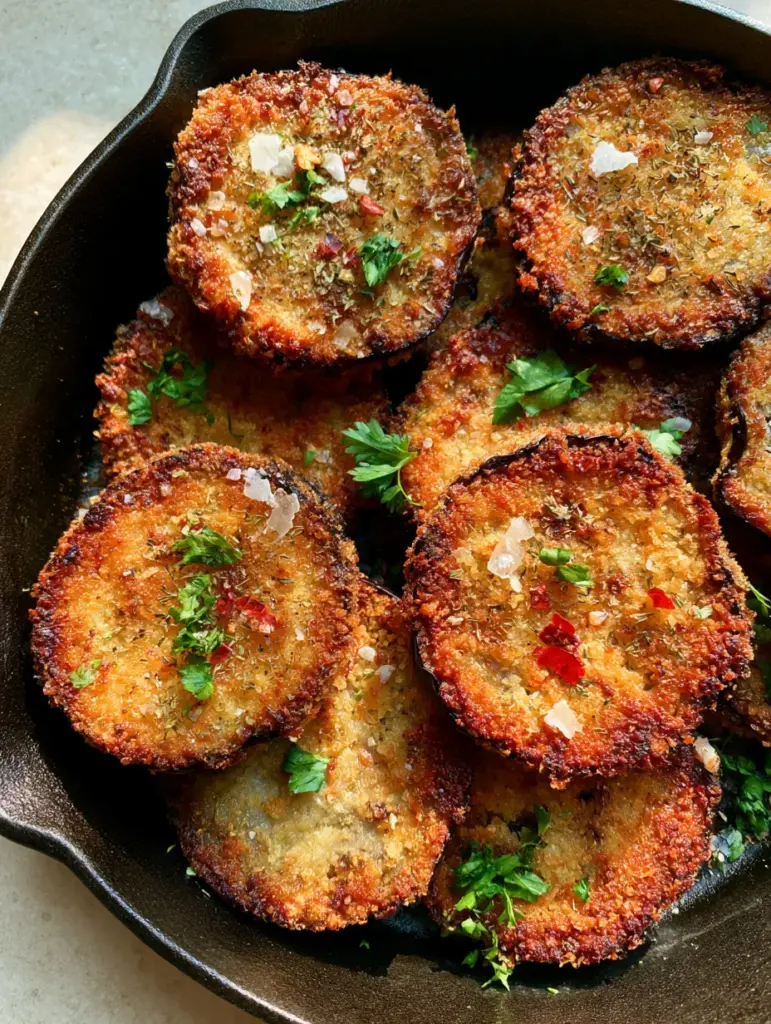
Apply firm pressure to the Panko so the crumbs embed themselves into the egg layer. This creates the dense, jagged crust that looks so incredible under natural daylight lighting.
The Art of the Cast Iron Sear
Place your cast iron skillet over medium-high heat and add the oil. Wait until the oil is shimmering and just barely starting to wisps of smoke (about 350°F or 175°C).
Carefully lay 3 to 4 eggplant slices into the pan, ensuring they do not touch. Overcrowding the pan drops the oil temperature, which leads to greasiness rather than a crisp fry.
Fry for 3-4 minutes per side. Listen for a consistent sizzling sound—if the sizzle dies down, your oil is too cool. Flip once the edges are visibly dark golden-brown and the crust feels rigid when touched with tongs.
The Finishing Flourish
Immediately move the eggplant to the wire rack. While still hot and glistening slightly from the oil, shower the slices with Maldon sea salt flakes and the chopped fresh parsley.
Scatter the dried red chili flakes across the pan for a pop of vibrant color. This final step ensures the salt and herbs adhere to the crust before it fully sets.
Culinary Secrets for Failure-Proof Frying
- Oil Management: Always clear out any burnt Panko bits between batches using a fine-mesh skimmer to prevent a bitter, burnt taste in subsequent slices.
- Thickness Matters: If slices are too thin, they will overcook and become mushy before the crust is browned. Stick to the 3/4 inch (2cm) rule for the best texture.
- Don’t Be Shy with Salt: Eggplant loves salt. The Maldon flakes added at the end aren’t just for looks; they provide a burst of flavor that cuts through the richness of the fry.
- Temperature Check: If you don’t have a thermometer, drop a single Panko crumb into the oil. If it sizzles instantly and vigorously, you are ready to cook.
Preserving the Crunch: Storage and Reheating
While skillet fried eggplant is best enjoyed immediately for maximum crunch, you can store leftovers in an airtight container in the refrigerator for up to 2 days.
To reheat, avoid the microwave at all costs, as it will make the eggplant rubbery and the breading soft. Instead, place the slices on a rack in a 375°F (190°C) oven or air fryer for 5-7 minutes.
This dry-heat method will revitalize the Panko crust and bring back that “just-fried” texture. You may want to add a fresh sprinkle of Parmesan after reheating to brighten the flavors.
Perfect Pairings for Your Skillet Creation
This eggplant is incredibly versatile. For a lighter lunch, serve it alongside a crisp Chinese chicken salad to provide a fresh, acidic contrast to the fried breading.
If you prefer a more traditional route, these slices are spectacular when served as a main dish alongside fried eggplant with rice for a filling, plant-based meal.
For those looking for a healthier alternative to the deep fry, you can adapt these seasonings for an air-fried breaded eggplant version that still delivers great texture with less oil.
Looking for more skillet inspiration? Our skillet zucchini and mushrooms make a wonderful companion side dish that uses the same pan-searing techniques.
Common Questions About Frying Eggplant
Yes! Substitute the all-purpose flour with a 1-to-1 gluten-free flour blend and use gluten-free Panko-style breadcrumbs. The technique remains exactly the same.
For this recipe, we recommend leaving the skin on. It helps the slices maintain their structural integrity in the skillet and provides a beautiful color contrast against the golden breading.
The key is ensuring the eggplant slices are bone-dry after sweating. The flour must adhere to a dry surface to create the base layer for the egg wash and Panko to cling to.
A neutral oil with a high smoke point is best. We recommend grapeseed, avocado, or vegetable oil. Avoid extra virgin olive oil for high-heat frying as it can burn and turn bitter.
Sogginess is usually caused by two things: failing to salt (sweat) the eggplant to remove moisture beforehand, or frying in oil that isn’t hot enough, which causes the eggplant to absorb oil rather than sear.
The Ultimate Skillet Fried Eggplant Recipe Card
Skillet Fried Eggplant: The Ultimate Extra-Crispy Panko Recipe
Ingredients
Equipment
Method
- Slice eggplant into 3/4 inch (2cm) rounds. Salt both sides and let sit for 30 minutes to remove moisture. Rinse and pat completely dry.
- Prepare three bowls: flour in the first; beaten eggs in the second; Panko, Parmesan, and oregano mixed in the third.
- Coat each slice in flour, then egg, then press firmly into the Panko mixture to create a thick crust.
- Heat oil in a cast iron skillet over medium-high heat. Fry slices for 3-4 minutes per side until deep golden-brown and crunchy.
- Transfer to a wire rack. Immediately garnish with Maldon salt, parsley, and chili flakes.
Notes
The cast iron skillet is essential for the high-contrast golden browning.
Join the Cookari Community!
We hope this skillet fried eggplant becomes a staple in your kitchen. The contrast between the creamy interior and the jagged, Parmesan-crusted exterior is truly a culinary delight that any home cook can master.
If you loved this recipe, please leave a comment below and let us know how your eggplant turned out! We love seeing your creations, so don’t forget to tag us or share your photos on Pinterest.
For more restaurant-quality recipes delivered straight to your inbox, sign up for our newsletter today. Happy cooking!