There is a specific kind of culinary magic that happens when humble pantry staples meet the vibrant, sun-drenched flavors of the Mediterranean. This greek chickpea salad is the embodiment of that magic, offering a nutrient-dense meal that is as visually stunning as it is delicious.
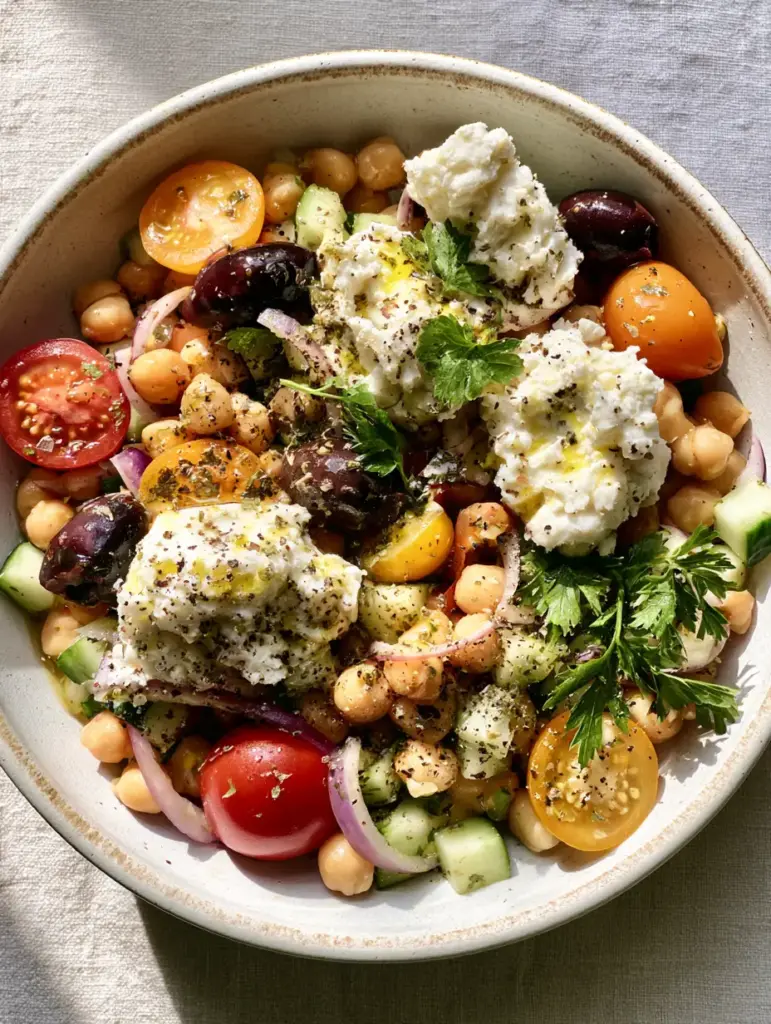
Imagine a rustic white ceramic bowl overflowing with plump, golden garbanzo beans, their earthy creaminess contrasted by the sharp snap of diced English cucumbers. The visual appeal is elevated by a kaleidoscope of halved red and yellow heirloom cherry tomatoes, providing a juicy sweetness that balances the briny bite of glossy kalamata olives.
Every forkful offers a symphony of textures, from the thin, crescent-shaped red onion moons to the large, chunky crumbles of creamy white feta cheese that slowly soften into the zesty lemon-herb vinaigrette. Finished with a shower of vibrant green flat-leaf parsley and coarse black pepper, this salad is a handheld masterpiece of fresh, handheld smartphone-style photography come to life.
Why This Vibrant Greek Chickpea Salad Is a Nutritional Powerhouse
- Plant-Based Protein Foundation: Using plump chickpeas ensures a satisfying, high-fiber base that keeps you full for hours without the midday energy crash.
- Textural Complexity: From the crunch of the cucumber to the creaminess of the feta, every ingredient is chosen to provide a varied sensory experience.
- Heirloom Antioxidants: The use of both red and yellow heirloom tomatoes isn’t just for show; these varieties offer a broader spectrum of vitamins and lycopene.
- Anti-Inflammatory Dressing: Our house-made vinaigrette uses extra virgin olive oil and fresh lemon juice, providing healthy fats and Vitamin C.
- Pro-Level Meal Prep: Unlike leafy greens, the components of this greek chickpea salad actually improve after a few hours of marinating, making it the king of lunch prep.
The Anatomy of a Perfect Mediterranean Chickpea Salad
To achieve the specific visual and flavor profile described in our blueprint, we must select ingredients with surgical precision. Each component serves a functional and aesthetic purpose in the final bowl.
The Pulse: Canned vs. Dried Chickpeas
For this specific greek chickpea salad, we utilize 2 cans (15 oz / 425g each) of chickpeas. Canned chickpeas are ideal here because their texture is consistently soft yet firm enough to hold up against the acidic dressing.
If you choose to use dried beans, you must soak them for 12 hours and simmer until they are “al dente.” The goal is a plump, golden appearance that glistens under the soft natural daylight of your kitchen.
The Crunch: Why English Cucumbers Matter
We specify 1 large (approx. 300g) English cucumber for a reason. Unlike standard slicing cucumbers, the English variety has a thinner, non-bitter skin and much smaller seeds.
This allows us to dice them into uniform cubes that provide a consistent “snap” in every bite without the need for peeling, which preserves that vibrant green rim seen in our visual prompt.
The Acid & Fat: Crafting the Lemon Herb Vinaigrette
A salad is only as good as its dressing. You will need 1/3 cup (80ml) of high-quality extra virgin olive oil and 3 tbsp (45ml) of freshly squeezed lemon juice.
We also incorporate 1 tsp (5g) of dried oregano. These dried herb specks are crucial for that “glistening” visual effect where the herbs cling to the chickpeas and vegetables.
Essential Equipment for Culinary Forensics
To replicate the look of a professional food blog photo, you don’t need a degree, but you do need the right tools. A sharp chef’s knife is non-negotiable for creating those clean, “red onion moons” and uniform tomato halves.
You will also need a large rustic ceramic bowl to provide the neutral, bright backdrop that makes the colors of the vegetables pop. A small glass jar is the secret weapon for the vinaigrette—shaking the dressing ensures a perfectly emulsified liquid that coats rather than drowns.
Finally, a pepper mill is essential. Pre-ground pepper lacks the visual “coarseness” and aromatic punch required for the final garnish described in our blueprint.
Step-by-Step Instructions for the Perfect Greek Chickpea Salad
1. Prepare the Chickpea Foundation
Drain the canned chickpeas into a fine-mesh strainer and rinse them thoroughly under cold running water until the foam disappears. This removes excess sodium and the metallic taste of the canning liquid.
Spread the rinsed chickpeas onto a clean kitchen towel and pat them dry. This is a critical culinary step; if the chickpeas are wet, the lemon-herb vinaigrette will slide off rather than being absorbed into the outer skin.
2. Precision Knife Work for Visual Impact
Slice the English cucumber into 1/2-inch (1.25cm) thick rounds, then stack them to create even dice. Halve the red and yellow heirloom cherry tomatoes longitudinally to reveal their juicy interiors.
For the red onion, cut it in half from pole to pole, peel, and then slice into paper-thin crescents (moons). These thin slices ensure the onion flavor is a gentle hum rather than an overpowering bite.
3. Emulsifying the Zesty Dressing
In a small bowl or jar, combine the olive oil, lemon juice, 1 clove of minced garlic, a pinch of kosher salt, and the dried oregano. Whisk vigorously until the mixture thickens slightly and turns an opaque yellow.
Taste the dressing. It should be bright and zesty. If it feels too sharp, add a tiny drop of honey (5ml) to balance the acidity without making it sweet.
4. The Assembly and “The Fold”
Place the dried chickpeas, cucumbers, tomatoes, onion moons, and 1/2 cup (75g) of glossy kalamata olives into your rustic white bowl. Drizzle three-quarters of the dressing over the top.
Using a large spoon, gently fold the ingredients together. You want to coat everything evenly without bruising the delicate heirloom tomatoes. Let the salad sit for 10 minutes to allow the chickpeas to marinate.
5. The Final Artisanal Touches
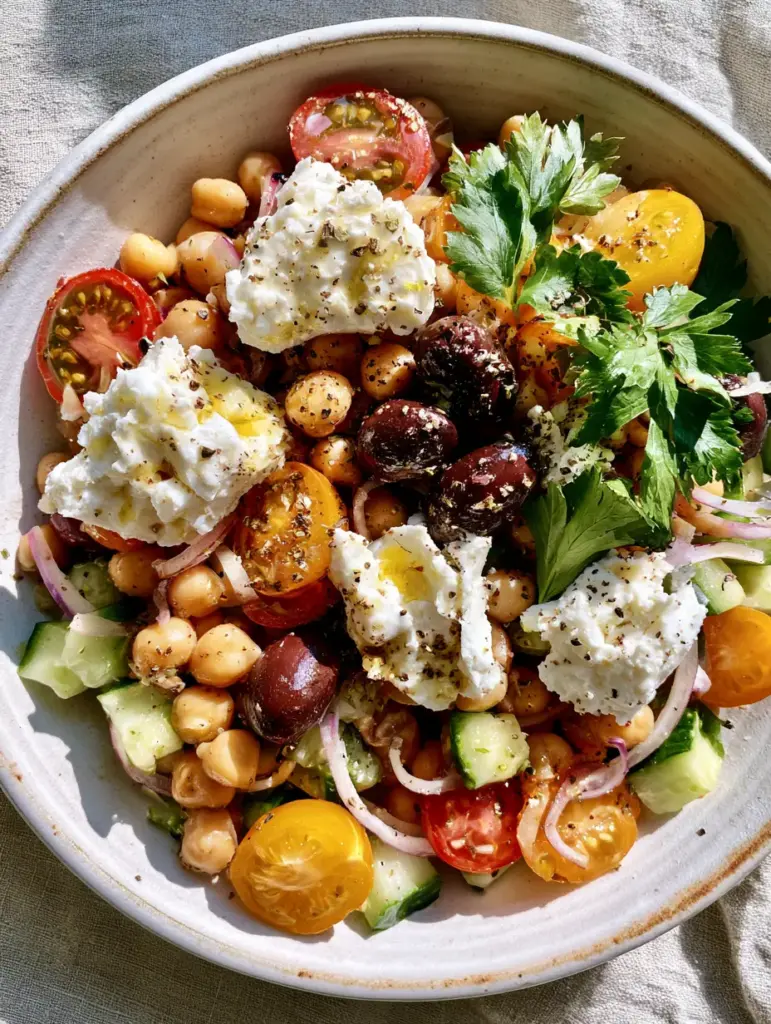
Just before serving, top the salad with 1/2 cup (110g) of large, chunky crumbles of creamy feta cheese. Do not over-mix once the feta is added, as you want to maintain those distinct white blocks.
Garnish with a handful of roughly chopped fresh flat-leaf parsley and a generous sprinkle of coarse cracked black pepper. The final result should look like a hand-held smartphone photo taken in bright, soft natural daylight.
Expert Tips for Recipe Success
- The Temperature Rule: Always serve this salad at room temperature or slightly chilled. If the olive oil is too cold, it will solidify and lose its glistening sheen.
- Onion Mellowing: If you find raw red onion too pungent, soak the slices in ice water for 5 minutes, then pat dry before adding to the salad.
- Salt Timing: Don’t salt the cucumbers too early. Salt draws out moisture, which can make the salad watery if left to sit for more than 24 hours.
- Feta Quality: Look for feta sold in brine. It is significantly creamier and more “chunky” than the pre-crumbled dry versions sold in plastic tubs.
Storage and Meal Prep Strategy
This greek chickpea salad is a meal prepper’s dream. It stays fresh and crisp in an airtight container in the refrigerator for up to 4 days.
If you are making this for a week of lunches, keep the feta and parsley in separate small containers and add them just before eating. This prevents the parsley from wilting and the feta from absorbing too much of the tomato juice.
Note that this recipe does not freeze well. The high water content of the cucumbers and tomatoes will cause them to turn mushy upon thawing. Always enjoy this dish fresh or refrigerated.
How to Pair Your Mediterranean Bowl
While this salad is a complete meal on its own, it also serves as a fantastic side dish. Try pairing it with a grilled Greek chicken salad for a double dose of Mediterranean flair.
If you’re hosting a summer gathering, it sits beautifully alongside a chickpea pasta salad or even a Mediterranean chickpea salad variation for a bean-centric buffet.
For those looking for a cross-cultural fusion, the clean flavors of this salad act as a palate cleanser after a spicy spicy asian salad or a crunchy crunchy asian salad.
Frequently Asked Questions
Absolutely, though we recommend hearty greens like massaged kale if you plan to store it. Spinach should only be added immediately before serving.
Yes! Use 1.5 cups of dried chickpeas, soak them for 12 hours, and simmer until tender but firm. This yields roughly the same amount as two 15oz cans.
The secret is to dry the chickpeas thoroughly after rinsing and to wait to add the salt and feta until just before serving if you are making it ahead.
To make this recipe vegan, simply omit the feta cheese or replace it with a plant-based almond-based or tofu-based feta alternative.
Slice them into thin ‘moons’ or crescents. This provides the flavor of red onion without the overwhelming texture of large chunks.
The Ultimate Greek Chickpea Salad Recipe
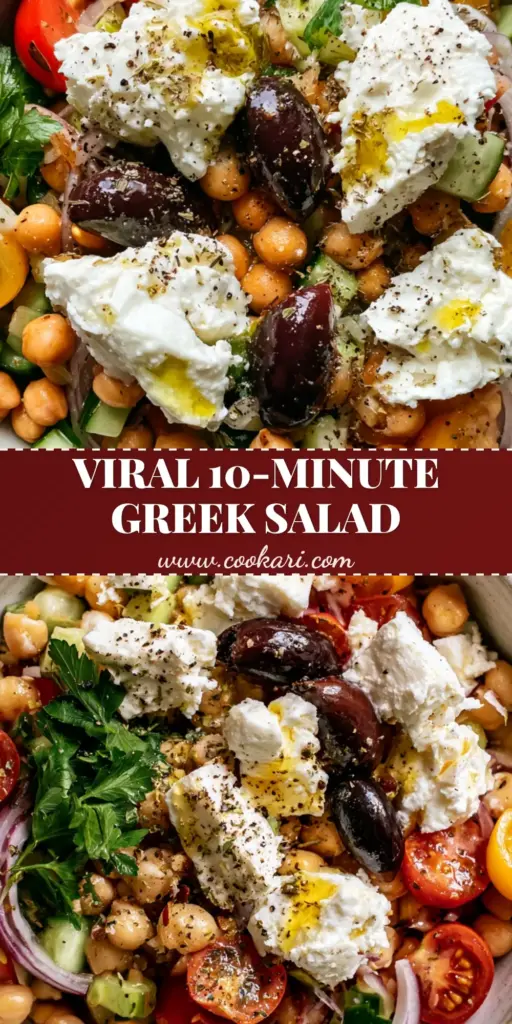
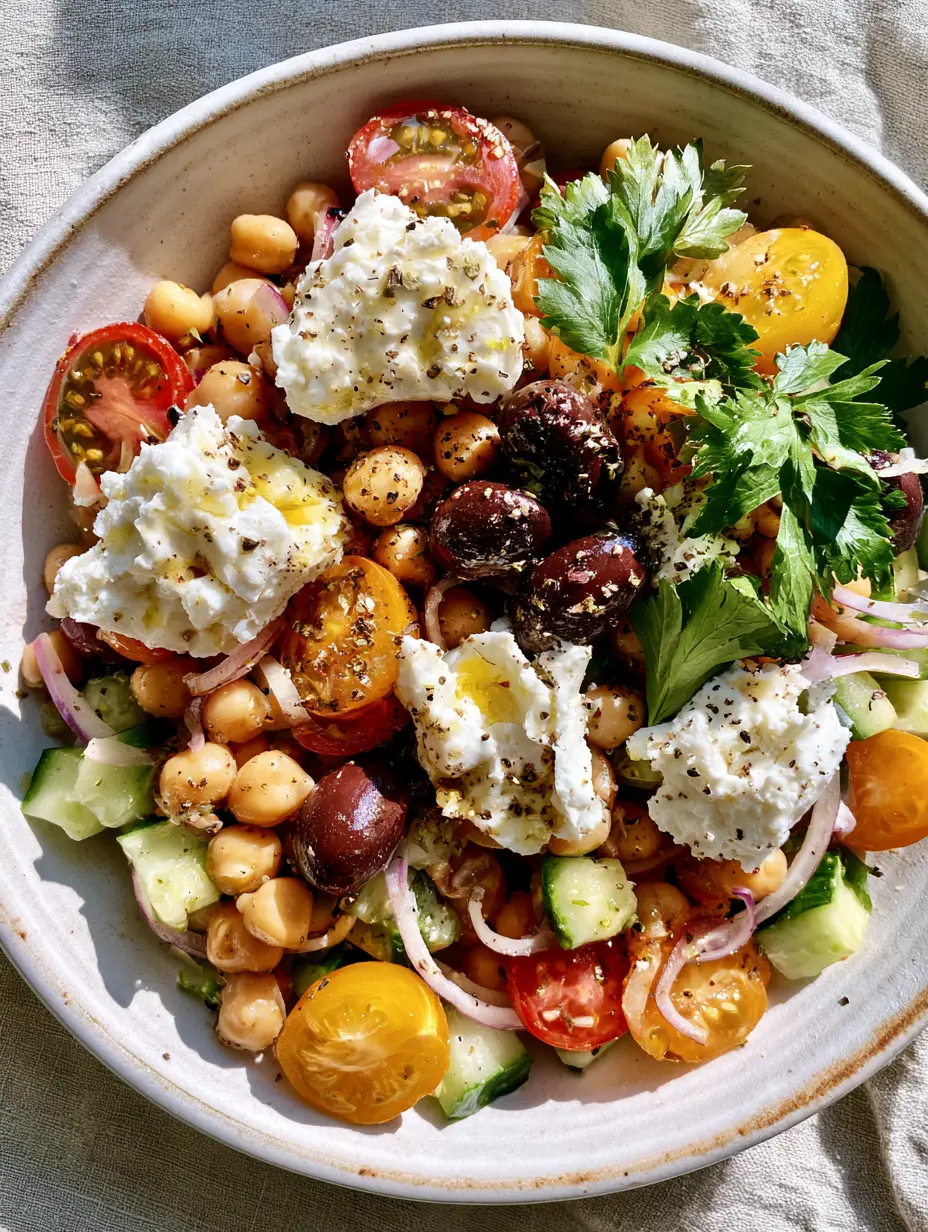
Greek Chickpea Salad: The Ultimate Mediterranean Protein Bowl
Ingredients
Equipment
Method
- Rinse canned chickpeas in a strainer and pat thoroughly dry with a kitchen towel to ensure dressing adherence.
- Dice the English cucumber, halve the red and yellow heirloom tomatoes, and slice the red onion into thin crescent moons.
- In a jar, combine olive oil, lemon juice, and dried oregano. Shake until emulsified and specks of oregano are visible throughout.
- Toss the chickpeas and vegetables with the dressing in a rustic white bowl. Top with large feta chunks, glossy olives, fresh parsley, and coarse black pepper.
Notes
Use high-quality feta in brine for the best creamy, chunky texture.
Join the Mediterranean Culinary Community
Bringing the flavors of the Greek isles into your home has never been easier than with this vibrant greek chickpea salad. Whether you’re fueling a busy workday or looking for a bright side dish for your next BBQ, this recipe delivers on every level of flavor, texture, and nutrition.
If you enjoyed this recipe, please leave a comment below and let us know your favorite way to customize your Mediterranean bowls! Don’t forget to follow us on Pinterest for more visually stunning recipe inspiration.