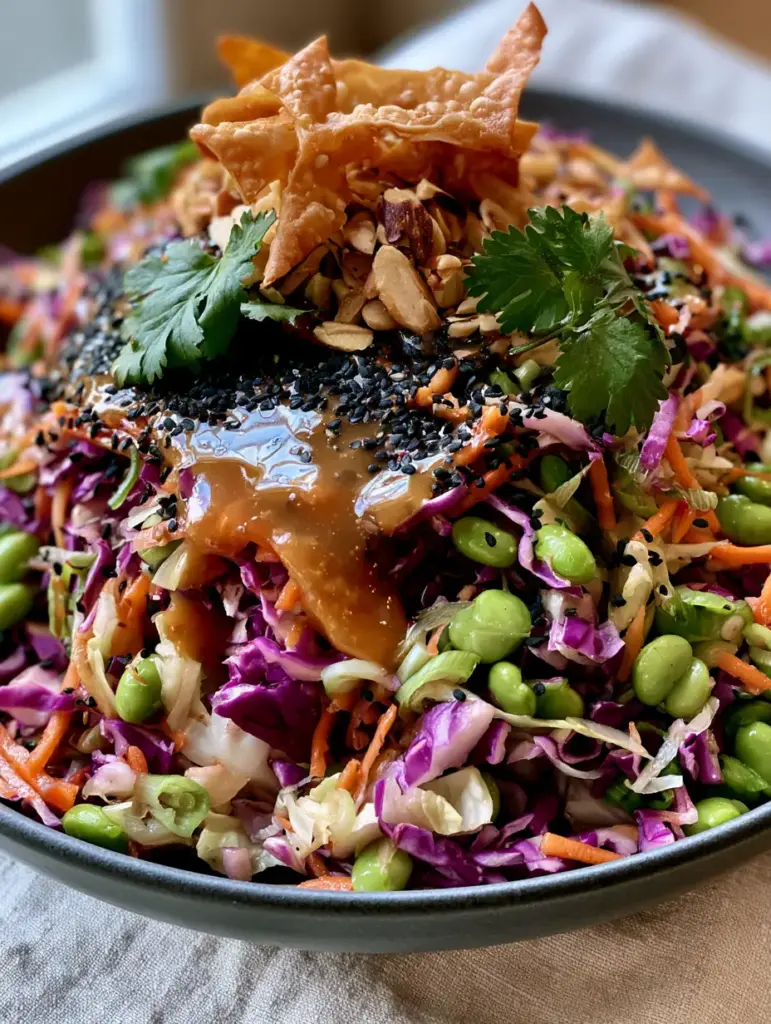
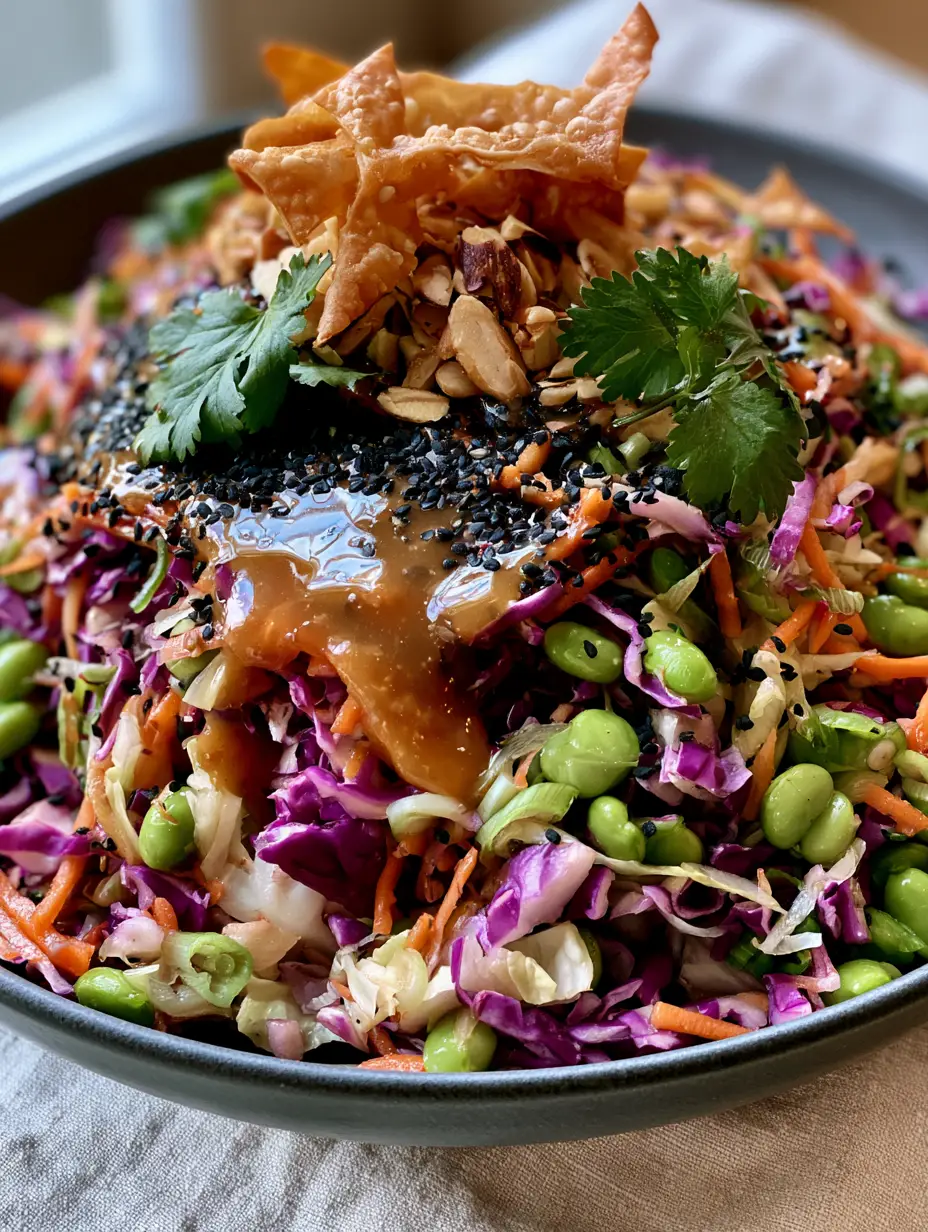
There is a specific kind of magic that happens when the sharp crunch of cold cabbage meets the velvet richness of a glossy, amber-hued dressing. This Asian Chopped Salad is not just a side dish; it is a meticulously constructed architectural feat of texture and umami. When you look at the vibrant purple and green ribbons settled into a charcoal ceramic bowl, you aren’t just looking at vegetables—you’re looking at a symphony of culinary physics.
Inspired by the heavy hitters of restaurant-style salads, this recipe focuses on the structural integrity of every bite. We aren’t settling for soggy leaves or watery vinaigrettes. Instead, we are building a dense mound of finely shredded Napa and purple cabbage, punctuated by the snap of steamed edamame and the airy shatter of golden fried wonton strips. Whether you are looking for a light lunch or a show-stopping dinner starter, this salad delivers a sensory experience that rivals any high-end bistro.
The secret lies in the light reflections shimmering off the thick, sesame-infused dressing. By balancing the acidity of rice vinegar with the deep, nutty notes of toasted sesame oil, we create a coating that clings to every julienned carrot and almond sliver. Grab your sharpest knife and a wide bowl; we are about to elevate your salad game to professional heights.
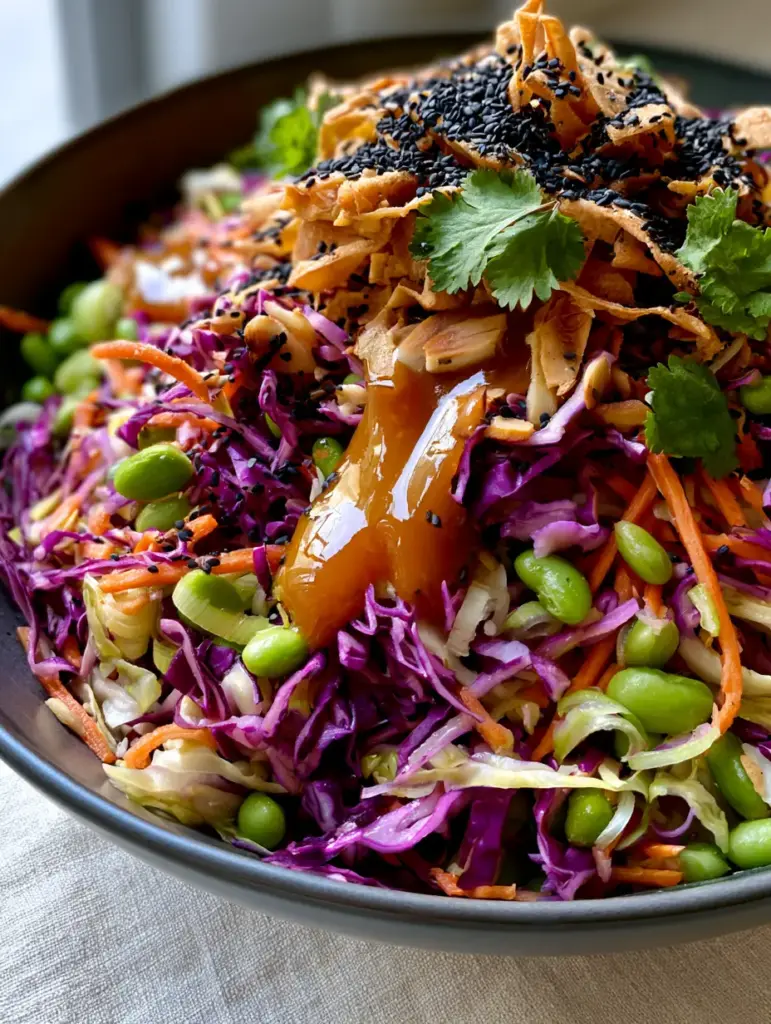
The Architecture of the Perfect Crunch
- Visual Contrast: The deep charcoal bowl provides a dramatic backdrop for the neon-bright julienned carrots and lush green scallions.
- Dual-Cabbage Foundation: Using both Napa cabbage for its soft crinkle and purple cabbage for its rigid snap creates a complex mouthfeel.
- Protein-Packed Texture: Bright green steamed edamame adds a buttery, soft pop that contrasts against the toasted almond slivers.
- Garnish Intensity: A heavy dusting of black sesame seeds and fresh cilantro leaves provides the final aromatic and visual layer.
Sourcing the Foundation: Every Ingredient Explained
To achieve the result seen in professional food photography, every component must be chosen with intention. This Asian Chopped Salad relies on the freshness of its produce and the quality of its pantry staples.
Napa Cabbage (4 cups / 300g): This is the workhorse of the salad. Its ruffled edges are perfect for trapping the sesame ginger dressing, ensuring no bite is dry.
Purple Cabbage (3 cups / 225g): Beyond its stunning color, purple cabbage provides the necessary “heft” to the salad base, staying crunchy even after being dressed.
Julienned Carrots (1 cup / 125g): These provide a natural sweetness and a rigid texture that stands up to the heavier cabbage shreds.
Steamed Edamame (1 cup / 155g): Use shelled edamame that has been lightly steamed until tender-crisp. They provide a much-needed earthy protein boost.
Fried Golden Wonton Strips (1 cup / 50g): These are the “croutons” of the East, offering a salty, oily shatter that is essential for the “crunchy” experience.
Toasted Almond Slivers (1/2 cup / 50g): Toasting these in a dry pan until fragrant unlocks their oils, making them far more flavorful than raw almonds.
Scallions (4 large): Use both the white and green parts, sliced thinly on a bias to release their mild, peppery bite without overpowering the dish.
Fresh Cilantro (1/2 cup): These bright green leaves add a floral, citrusy top note that cuts through the richness of the sesame oil.
Black Sesame Seeds (2 tbsp / 18g): These offer a striking visual contrast and a subtle, smoky nuttiness that white seeds lack.
Sesame Ginger Dressing: A blend of soy sauce (or tamari), rice vinegar, honey, fresh grated ginger, garlic, and toasted sesame oil. This thick, amber liquid is what binds the elements together.
Essential Tools for Precision Slicing
Achieving that “macro-shot” precision requires the right equipment. You don’t need a professional kitchen, but a few specific tools will make the process seamless.
A very sharp Chef’s knife is non-negotiable for finely shredding the cabbage into thin ribbons. If your knife is dull, you will bruise the cabbage instead of slicing it, leading to a watery salad. Alternatively, a mandoline slicer can yield paper-thin results for the purple cabbage, which is naturally tougher than the Napa variety.
For the carrots, a julienne peeler is a game-changer, creating uniform matchsticks that look beautiful in the bowl. You will also need a small whisk and a glass jar to properly emulsify the sesame ginger dressing until it reaches that glossy, amber consistency we are looking for.
Step-by-Step: Constructing the Masterpiece
Preparing the Cabbage Base
Start by removing the outer leaves of the Napa and purple cabbage. Cut each head in half and remove the core. Slice the cabbage into very fine ribbons, no wider than 1/8 inch (3mm). This fine shred is what creates that “dense mound” effect in the bowl. Mix them in a large basin of ice water for 5 minutes, then spin them completely dry. Cold, dry cabbage is the secret to maximum crunch.
Steaming and Cooling the Edamame
If using frozen shelled edamame, steam them for 3-4 minutes until they turn a vibrant, bright green. Immediately plunge them into an ice bath to stop the cooking process. This preserves the color and ensures they don’t turn mushy. Pat them dry before adding to the salad; moisture is the enemy of a glossy dressing.
Building the Visual Layers
In a wide matte-finish charcoal ceramic bowl, place the shredded cabbages as your foundation. Toss them gently with the julienned carrots and sliced scallions. Do not over-mix at this stage; you want the colors to remain distinct. Sprinkle the steamed edamame across the top, ensuring they are distributed evenly for a pop of green against the purple.
The Final Flourish and Dressing
Just before serving, nestle a cluster of golden-brown crispy wonton strips and toasted almond slivers in the center. Drizzle the thick, amber sesame ginger dressing generously over the middle, letting it catch the light. Finish with a heavy dusting of black sesame seeds and a handful of fresh cilantro leaves. The result should look like a professional handheld smartphone photo—sharp, textured, and inviting.
Expert Tips for a Restaurant-Quality Salad
- The Dry Factor: Ensure every vegetable is bone-dry after washing. Even a teaspoon of water will dilute the dressing and ruin the glossy sheen.
- Emulsify the Dressing: Whisk your oil into the vinegar and soy sauce slowly. You want a thick, stable emulsion that coats the spoon.
- Toast Your Nuts: Never use raw almonds. Toasting them for 3 minutes in a pan until they are fragrant makes a world of difference in the flavor profile.
- Wonton Timing: Only add the wonton strips at the very last second. They lose their “shatter” quickly once they touch moisture.
Pairing and Variations
This Asian Chopped Salad is incredibly versatile. If you want to make it a fuller meal, you might consider pairing it with a side of spicy pickled cucumbers for an extra vinegar kick. For those who love a bit of heat, adding a drizzle of chili oil turns this into a spicy Asian salad that rivals any takeout.
If you enjoy the textural components here, you will likely love a crunchy Asian salad featuring different nut varieties, or even a Thai crunch salad which utilizes a peanut-based dressing. For a Mediterranean twist on the “chopped” concept, our Greek chickpea salad offers a similar level of satisfying crunch with different flavor entities.
Storage and Meal Prep Advice
This salad is a meal-prepper’s dream, with one caveat: keep the “wet” and “dry” separate. You can shred the cabbage and carrots up to 3 days in advance and store them in a sealed container with a dry paper towel. The edamame can also be pre-steamed and kept in the fridge.
However, the dressing, wonton strips, and almonds must be stored separately. Combine them only when you are ready to eat. Once dressed, the salad will stay crisp for about 4-6 hours, but after that, the Napa cabbage will begin to soften. This recipe does not freeze well due to the high water content of the fresh vegetables.
Frequently Asked Questions
Absolutely! Grilled chicken breast, seared shrimp, or crispy tofu cubes pair perfectly with the sesame ginger profile of this salad.
Yes, you can prep the cabbage, carrots, and edamame up to 3 days in advance. However, keep the dressing, wonton strips, and almonds in separate containers and combine them just before serving to maintain the crunch.
The glossy sheen comes from a proper emulsion of toasted sesame oil and honey. Ensure you whisk the oil in slowly to the vinegar base and serve at room temperature; cold oil can look matte.
As written, this recipe is savory and nutty rather than spicy. To add heat, you can add 1 teaspoon of Sriracha or chili flakes to the dressing, or top with fresh sliced jalapeños.
If you can’t find wonton strips, crispy rice noodles or even crushed dry ramen noodles provide a similar salty shatter. For a gluten-free option, use extra toasted almonds or sunflower seeds.
The Ultimate Asian Chopped Salad Recipe
Asian Chopped Salad with Crispy Wontons and Sesame Ginger Dressing
Ingredients
Equipment
Method
- In a small jar or bowl, combine rice vinegar, soy sauce, honey, ginger, and garlic. Slowly whisk in the toasted sesame oil until the dressing is glossy and emulsified.
- Finely shred the Napa and purple cabbage using a sharp knife or mandoline. Julienned the carrots into thin matchsticks.
- Steam the edamame for 3 minutes until bright green. Immediately shock in ice water and pat completely dry.
- Place the cabbages, carrots, edamame, and scallions in a large charcoal bowl. Toss lightly.
- Top with a cluster of wonton strips, toasted almonds, black sesame seeds, and cilantro. Drizzle the amber dressing generously over the center just before serving.
Notes
Toast almond slivers in a dry skillet over medium heat for 2-3 minutes until golden and fragrant.
Join the Culinary Conversation
We hope this Asian Chopped Salad becomes a staple in your kitchen! The combination of textures and the rich, glossy dressing is truly a game-changer for home cooks. If you made this recipe, please leave a comment below and let us know how it turned out. Did you add extra wontons? Did you try a different nut? We love hearing your variations!
Don’t forget to follow us on Pinterest for more visually stunning recipe inspiration. Share your photos with us by tagging @cookari_recipes—we might just feature your creation on our feed!