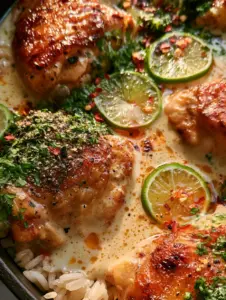
There is a specific culinary magic that happens when high-heat searing meets the tropical richness of stone-pressed coconut. This coconut lime chicken skillet is the physical manifestation of that synergy, offering a restaurant-quality meal that thrives on contrast.
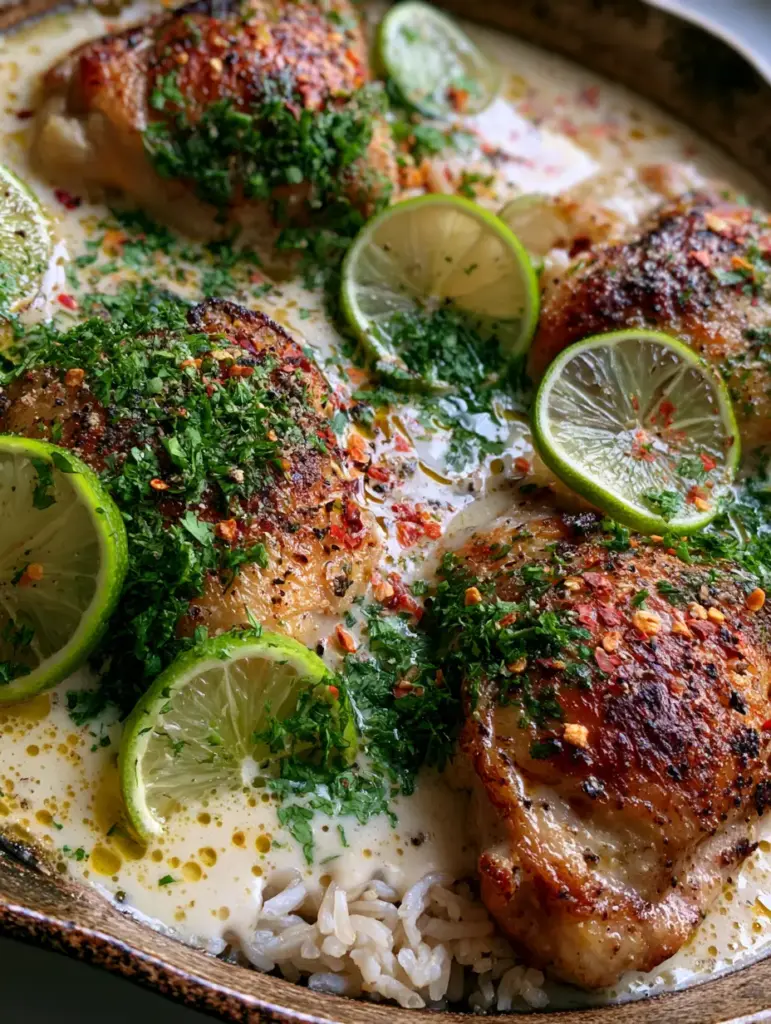
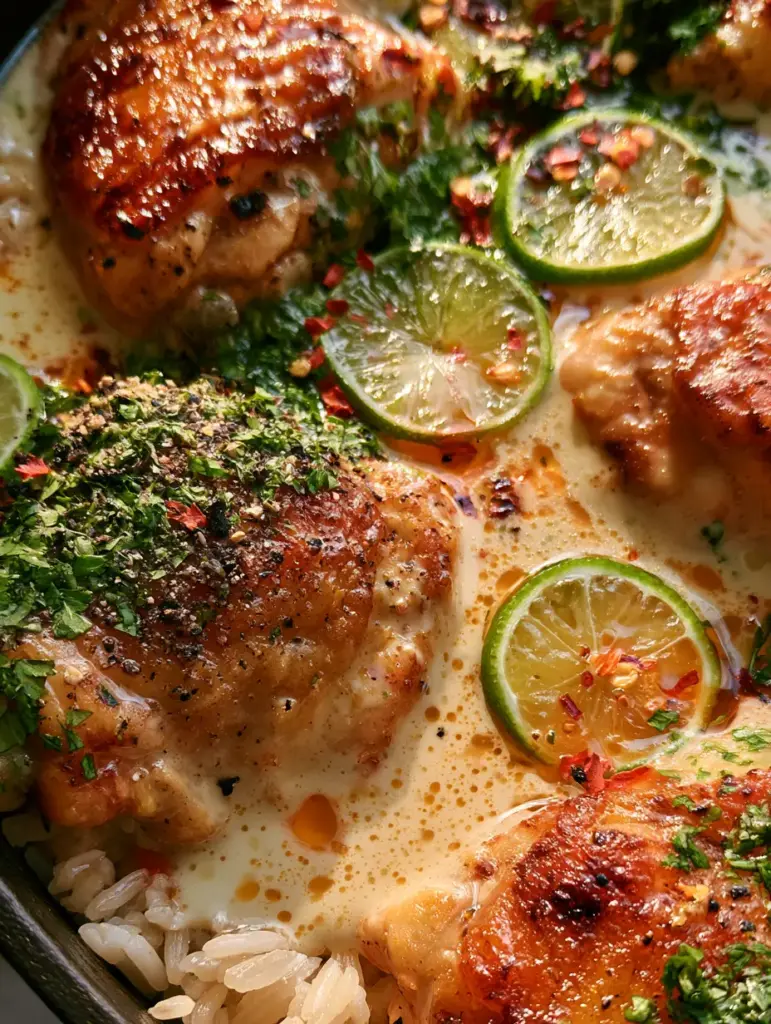
Imagine pulling a rustic cast iron skillet from the stove, its surface shimmering with a velvety, ivory-colored sauce. Nestled within are chicken thighs so golden-brown and crispy that they crackle at the touch of a fork.
Underneath this protein lies a foundation of fluffy jasmine rice, each grain distinct and perfectly steamed to soak up every drop of lime-infused cream. This isn’t just a meal; it is a masterclass in texture and visual harmony.
Why This One-Pan Skillet Recipe Works Every Time
Achieving the perfect balance of fat, acid, and heat is the secret to this dish’s addictive nature. The visual prompt calls for a glossy sheen and tiny oil droplets in the sauce, which indicates a successful emulsification of coconut fats and chicken collagen.
- Textural Contrast: The juxtaposition of the shatteringly crisp chicken skin against the pillowy softness of steamed jasmine rice creates a superior mouthfeel.
- Acidic Brightness: Translucent lime wheels provide a fresh, citrusy punch that cuts through the heavy, ivory-colored coconut milk sauce.
- Searing Excellence: By utilizing a heavy-bottomed cast iron skillet, we ensure even heat distribution for that iconic golden-brown crust.
- Aromatic Depth: A heavy dusting of fresh cilantro and cracked black pepper adds layers of herbal and spicy notes that linger on the palate.
Essential Ingredients for the Ultimate Ivory Coconut Sauce
Every ingredient in this coconut lime chicken skillet serves a specific forensic purpose, from the structural integrity of the protein to the visual droplets of oil in the sauce.
Bone-In, Skin-On Chicken Thighs (4-6 pieces): The skin is vital for achieving the golden-brown visual descriptor, while the bone keeps the meat succulent during the simmering process.
Full-Fat Coconut Milk (1 can / 400ml): Use the highest quality canned variety to ensure a thick, velvety ivory consistency rather than a watery one.
Jasmine Rice (1.5 cups / 300g): This specific grain is chosen for its floral aroma and its ability to remain fluffy and individual after absorbing the sauce.
Fresh Limes (3 large): You will need these for both the juice within the sauce and the translucent, vibrant green wheels used for the final presentation.
Neutral Searing Oil (2 tbsp / 30ml): Choose an oil with a high smoke point, like avocado or grapeseed oil, to achieve the deep sear without burning.
Kosher Salt and Cracked Black Pepper (to taste): Essential for drawing out moisture from the skin during the sear and providing the “heavy dusting” mentioned in the visual prompt.
Red Pepper Flakes (1 tsp / 2g): These provide the bright red scattering that contrasts beautifully against the ivory sauce.
Fresh Cilantro (1/2 cup / 15g): Finely chopped to provide the heavy herbal layer that defines the dish’s freshness.
The Science of Searing: Tools for Success
To replicate the macro close-up photography of this dish, you cannot compromise on your equipment. A 12-inch (30cm) rustic cast iron skillet is the preferred vessel for this recipe.
Cast iron retains heat more efficiently than stainless steel or non-stick pans. This heat retention is what creates the “golden-brown, crispy-skinned” texture that characterizes the chicken thighs in our visual blueprint.
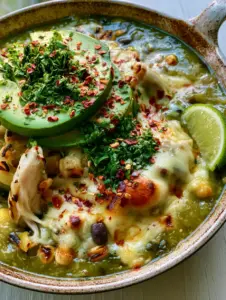
If you enjoy the convenience of one-pan meals like this, you might also love our Salsa Verde Chicken Skillet for a different flavor profile using similar techniques. For those looking for a creamier, vegetable-forward option, our Spinach Artichoke Chicken Skillet is a fantastic alternative.
Mastering the Golden-Brown Chicken Sear
Preparing the Protein for Maximum Crunch
The first step to a perfect coconut lime chicken skillet is moisture management. Use a paper towel to pat the chicken thighs extremely dry; any surface moisture will cause the chicken to steam rather than sear.
Season the skin side generously with kosher salt and cracked black pepper. The salt helps break down the skin proteins, allowing them to crisp up into that coveted golden crust.
Achieving the Perfect Maillard Reaction
Heat your cast iron skillet over medium-high heat until the oil begins to shimmer but not smoke. Place the chicken thighs skin-side down, pressing them slightly to ensure full contact with the metal.
Do not move the chicken for at least 6 to 8 minutes. You are looking for a deep, even golden-brown color—when the skin is ready, it will naturally release from the pan surface.
Developing the Thick, Ivory Coconut Sauce
Building the Flavor Foundation
Once the chicken is seared and removed from the pan, pour off all but one tablespoon of the rendered fat. This fat contains the tiny oil droplets that will eventually decorate the top of your sauce.
Whisk in the thick coconut milk, scraping the bottom of the skillet to incorporate the “fond” (the brown bits). This process, known as deglazing, adds immense savory depth to the ivory sauce.
Balancing Acid and Cream
Squeeze the juice of two limes into the simmering coconut milk. The acid will slightly thicken the proteins in the coconut milk, creating a velvety sheen that coats the back of a spoon.
Add the cracked black pepper and a pinch of red pepper flakes directly into the sauce. This ensures the heat is distributed throughout the liquid foundation of the dish.
Assembling the Skillet for Visual Impact
Preparing the Fluffy Jasmine Rice Bed
While the sauce simmers, prepare your jasmine rice separately to ensure “individual grains.” Rinse the rice under cold water until the water runs clear to remove excess starch.
Steam the rice with a 1:1.5 ratio of rice to water. Once cooked, fluff it with a fork and spread it across the bottom of the cast iron skillet, allowing it to sit beneath the sauce.
The Final Layering Technique
Place the seared chicken thighs back into the skillet on top of the rice and sauce. Be careful not to submerge the crispy skin; you want it to remain above the liquid to maintain its crunch.
Garnish with the translucent green lime wheels, nestling them between the chicken pieces. Finish with a heavy dusting of finely chopped cilantro and a final scattering of red pepper flakes for that vibrant, handheld smartphone photo look.
Expert Tips for a Professional Result
- Fat Selection: Use full-fat canned coconut milk, not the refrigerated carton version. The canned version has the necessary fat content to create the “tiny oil droplets” seen in the prompt.
- Temperature Control: If the sauce starts to break or look curdled, whisk in a tablespoon of room-temperature water to re-emulsify the fats.
- Garnish Timing: Add the cilantro and fresh lime wheels only seconds before serving. This prevents the cilantro from wilting and keeps the lime wheels looking vibrant green.
- Rice Texture: For the fluffiest grains, let the rice sit covered for 10 minutes after the heat is turned off before fluffing.
Storing and Reheating Your Skillet Meal
This dish is best enjoyed immediately to preserve the crispy skin of the chicken. However, leftovers can be stored in an airtight container in the refrigerator for up to 3 days.
When reheating, use an oven or air fryer for the chicken to crisp the skin back up. The rice and sauce can be warmed in a pan with a splash of water or extra coconut milk to restore the velvety texture.
Freezing is not recommended for this specific dish, as the coconut milk sauce may separate and the jasmine rice can become mushy upon thawing.
What to Serve With Coconut Lime Chicken
Because this skillet includes both protein and starch, it is a complete meal on its own. However, a light side can enhance the tropical flavors.
A bright, crunchy salad like our Crunchy Asian Salad provides a wonderful textural counterpoint. Alternatively, for a fruitier finish to your meal, try a refreshing Coconut Key Lime Pie Smoothie.
If you have leftover cilantro and lime, they work perfectly in a fresh Corn and Bean Salsa for lunch the following day.
Frequently Asked Questions
Yes, but be careful not to overcook them as they lack the fat content of thighs. Sear them quickly and reduce the simmering time to ensure the meat stays juicy.
For the specific ‘individual grain’ texture seen in the photo, cooking the rice separately and then layering it into the skillet is recommended. This prevents the rice from becoming a gummy porridge.
The secret is two-fold: pat the chicken skin extremely dry with paper towels before seasoning, and use a preheated cast iron skillet to maintain high, even heat for a proper Maillard reaction.
If you aren’t a fan of cilantro, Thai basil or thinly sliced green onions provide a similar fresh herbal contrast that complements the coconut and lime flavors.
Coconut milk can separate if boiled too vigorously or if the acid (lime juice) is added too quickly to low-fat milk. Use full-fat canned milk and simmer gently to maintain that velvety ivory texture.
The Perfect Coconut Lime Chicken Skillet Recipe
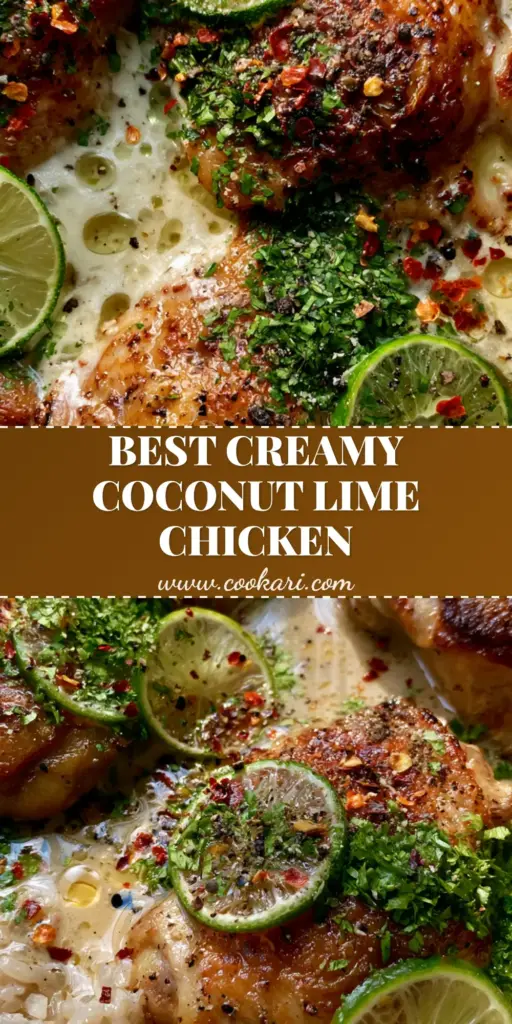
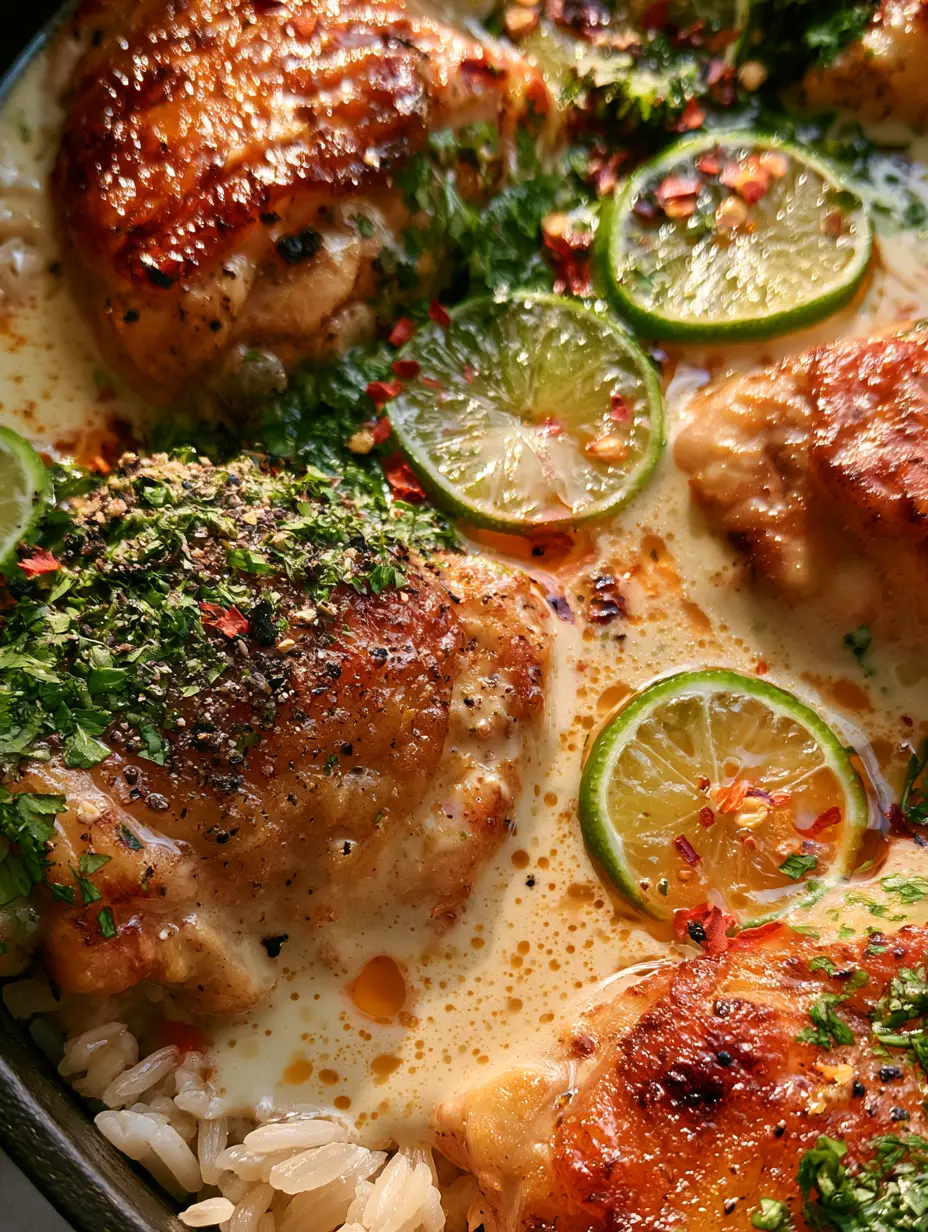
Coconut Lime Chicken Skillet With Crispy Thighs and Jasmine Rice
Ingredients
Equipment
Method
- Pat chicken thighs extremely dry with paper towels. Season generously with salt and cracked black pepper.
- Heat oil in the cast iron skillet over medium-high heat. Place chicken skin-side down and sear for 8 minutes until a deep golden-brown crust forms.
- Remove chicken and excess fat. Whisk in coconut milk and lime juice, scraping up the brown bits to create a thick ivory sauce.
- Let the sauce simmer until it shows a glossy sheen and tiny oil droplets on the surface.
- Spread the steamed jasmine rice across the bottom of the skillet. Place chicken thighs on top, keeping the skin above the liquid.
- Add translucent lime wheels, a heavy dusting of chopped cilantro, and a scattering of red pepper flakes.
Notes
Use canned full-fat coconut milk for the thickest ivory sauce consistency.
Bring the Tropics to Your Kitchen
This coconut lime chicken skillet is more than just a dinner; it’s a sensory experience that combines the rustic charm of cast iron cooking with the vibrant flavors of the Pacific Rim. The ivory sauce, the golden chicken, and the fluffy jasmine rice come together to create a dish that looks as good as it tastes.
If you enjoyed this recipe, please leave a comment below and let us know how your sear turned out! Don’t forget to share your creations on Pinterest and tag us so we can see your beautiful skillet meals.