Gochujang roasted carrots are the ultimate side dish for anyone who craves a perfect balance of spicy, sweet, and smoky flavors. If you are looking for a way to transform humble heritage carrots into a show-stopping centerpiece, this recipe is your new secret weapon. The vibrant, ruby-red glaze clings to every charred crevice, making these carrots look just as incredible as they taste.
Inspired by the bold flavors of Korean cuisine, these gochujang roasted carrots offer a sophisticated upgrade to your standard roasted vegetables. Whether you are hosting a dinner party or just want to level up your weeknight meal, the combination of fermented chili paste and honey creates a glass-like finish that is absolutely addictive. Just like my garlic roasted vegetables, this recipe focuses on high-heat roasting to achieve maximum flavor.
Why You Will Love These Charred Korean-Inspired Carrots
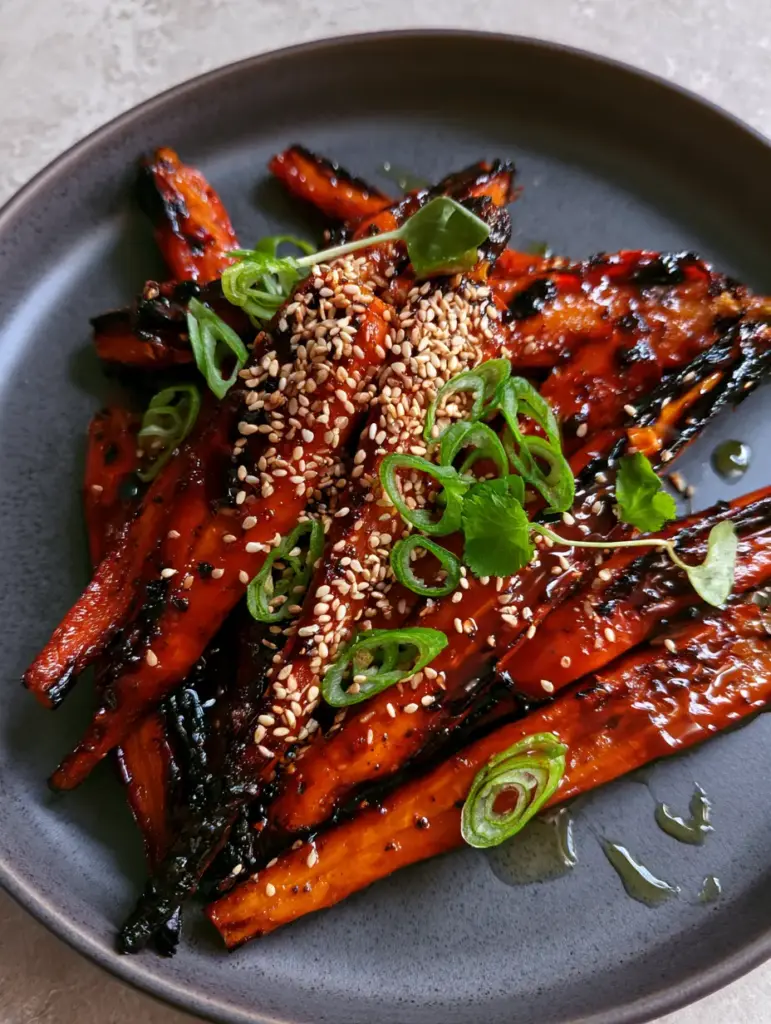
- Sensory Explosion: You get the crunch of toasted white sesame seeds, the bite of fresh scallions, and the citrusy pop of lime droplets.
- Perfect Texture: We use a specific roasting technique to ensure the skin is blistered and charred while the interior remains buttery and tender.
- Visual Masterpiece: The thick, glossy ruby-red gochujang-honey glaze catches the light, making this a highly “pinnable” dish for your food boards.
- Umami-Rich Flavor: Gochujang provides a deep, fermented complexity that pairs perfectly with the natural sugars in the heritage carrots.
The Anatomy of a Perfect Gochujang Glaze
To achieve that signature ruby-red glow seen in professional food photography, the quality of your ingredients matters. Gochujang is a Korean fermented chili paste that acts as the backbone of this recipe. It provides heat, but also a savory depth that you simply can’t get from standard hot sauces.
Combining gochujang with honey is the key to that thick glossy glaze. The honey helps the sauce caramelize against the high heat of the oven, creating those sought-after charred edges. If you enjoy these bold Korean flavors, you might also love my low-carb bang bang chicken for your next meal prep session.
Essential Ingredients for Success
- Whole Heritage Carrots (with green tops): Keeping the tops on (trimmed to 1 inch / 2.5cm) provides a rustic, gourmet aesthetic and a handle for dipping.
- Gochujang Paste: The star of the show. It provides the heat and the vibrant red color.
- Raw Honey: This balances the spice and creates the glass-like finish.
- Toasted Sesame Oil: Adds a nutty aroma that ties the Korean flavors together.
- Fresh Lime Juice: The acid cuts through the richness of the glaze. We use both a squeeze in the glaze and glistening droplets on top for serving.
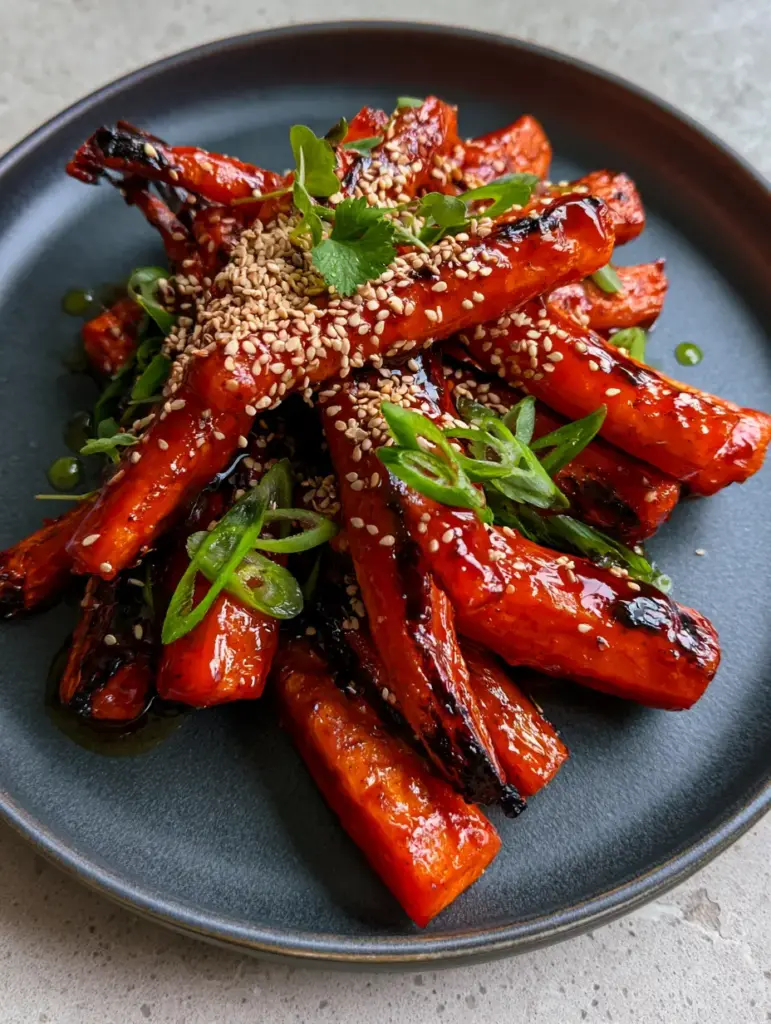
Mastering the Art of Charred and Blistered Carrots
The secret to gochujang roasted carrots isn’t just the sauce; it’s the temperature. You need a hot oven—425°F (220°C)—to ensure the carrots roast quickly enough to blister the skin without turning the vegetable into mush.
Before adding the glaze, we roast the carrots with a simple coating of oil and salt. This allows the Maillard reaction to occur on the carrot skin first. If you apply the sugary glaze too early, it will burn before the carrots are tender. This is a similar technique used for achieving the perfect texture in teriyaki chicken.
Step 1: Preparing the Heritage Carrots
Start by scrubbing your heritage carrots thoroughly. You don’t necessarily need to peel them if they are young and organic; the skin adds to the blistered texture we want. Trim the green tops so only about 1 inch (2.5cm) remains. Pat them completely dry—moisture is the enemy of a good char.
Step 2: The Initial Roast for Blistered Skin
Toss the carrots in 2 tablespoons (30ml) of neutral oil and a generous pinch of flaky sea salt. Spread them out on a preheated baking sheet. Ensure they are in a single layer with space between them. Roast for 15-20 minutes until you see the skin start to caramelize and blister.
Step 3: Whisking the Ruby-Red Glaze
While the carrots roast, whisk together the gochujang, honey, toasted sesame oil, and a splash of rice vinegar. The consistency should be thick but pourable. If it feels too stiff, add a teaspoon of warm water.
Step 4: The Final Glaze and Char
Remove the carrots from the oven and brush them generously with the glaze. Return them to the oven for another 5-8 minutes. Watch closely! You want the glaze to become thick, glossy, and bubbly, catching the light like stained glass.
Expert Tips for the Ultimate Pinterest-Worthy Side Dish
- Don’t Overcrowd the Pan: If the carrots are too close together, they will steam instead of blister. Use two pans if necessary.
- High Quality Gochujang: Look for a brand that lists chili peppers and fermented soy as the primary ingredients rather than corn syrup.
- The Garnish Layering: To get that smartphone photo look, layer your garnishes. Start with the white sesame seeds, then the scallion rounds, and finally the delicate cilantro microgreens.
- Temperature Control: If your glaze is darkening too fast, move the tray to a lower rack in the oven.
For those who love hearty vegetable dishes, these carrots pair beautifully with stuffed baked potatoes for a complete, comforting meal.
How to Store and Reheat Your Roasted Carrots
While gochujang roasted carrots are best served fresh and glistening, they can be stored. Place leftovers in an airtight container in the refrigerator for up to 3 days. To reheat, avoid the microwave as it will make them soggy.
Instead, place them back in a 350°F (175°C) oven for 5-10 minutes. This helps the glaze re-set and the edges crisp back up. If the glaze looks a bit dull after refrigeration, a tiny drizzle of fresh honey or a squeeze of lime juice will bring back that glass-like shine.
Flavor Pairings and Serving Suggestions
These carrots are incredibly versatile. The spicy-sweet profile makes them a great companion for fatty meats like pork belly or grilled ribeye. They also shine as part of a vegetarian spread alongside Sichuan eggplant or a fresh grain bowl.
To emphasize the “heritage” look, serve them on a matte charcoal ceramic plate. The dark background makes the ruby-red glaze and bright green scallions pop, creating a high-contrast visual that performs exceptionally well on Pinterest and Instagram.
Frequently Asked Questions
Check your gochujang label. Some traditional brands use fermented barley or wheat. Look for a certified gluten-free brand if necessary.
You can roast them slightly underdone and store them. When ready to serve, apply the glaze and finish them in a high-heat oven to get that fresh, glossy look.
Gochujang has a medium heat level, but because it is fermented, it offers a deep savory umami flavor. When paired with honey, the spice is significantly mellowed.
For this recipe, we recommend scrubbing them rather than peeling. The skin helps achieve the blistered, charred texture that holds the glaze better.
There is no perfect sub for the fermented depth, but a mix of Sriracha and a little miso paste can mimic the spicy-savory profile in a pinch.
The Ultimate Gochujang Roasted Carrots Recipe
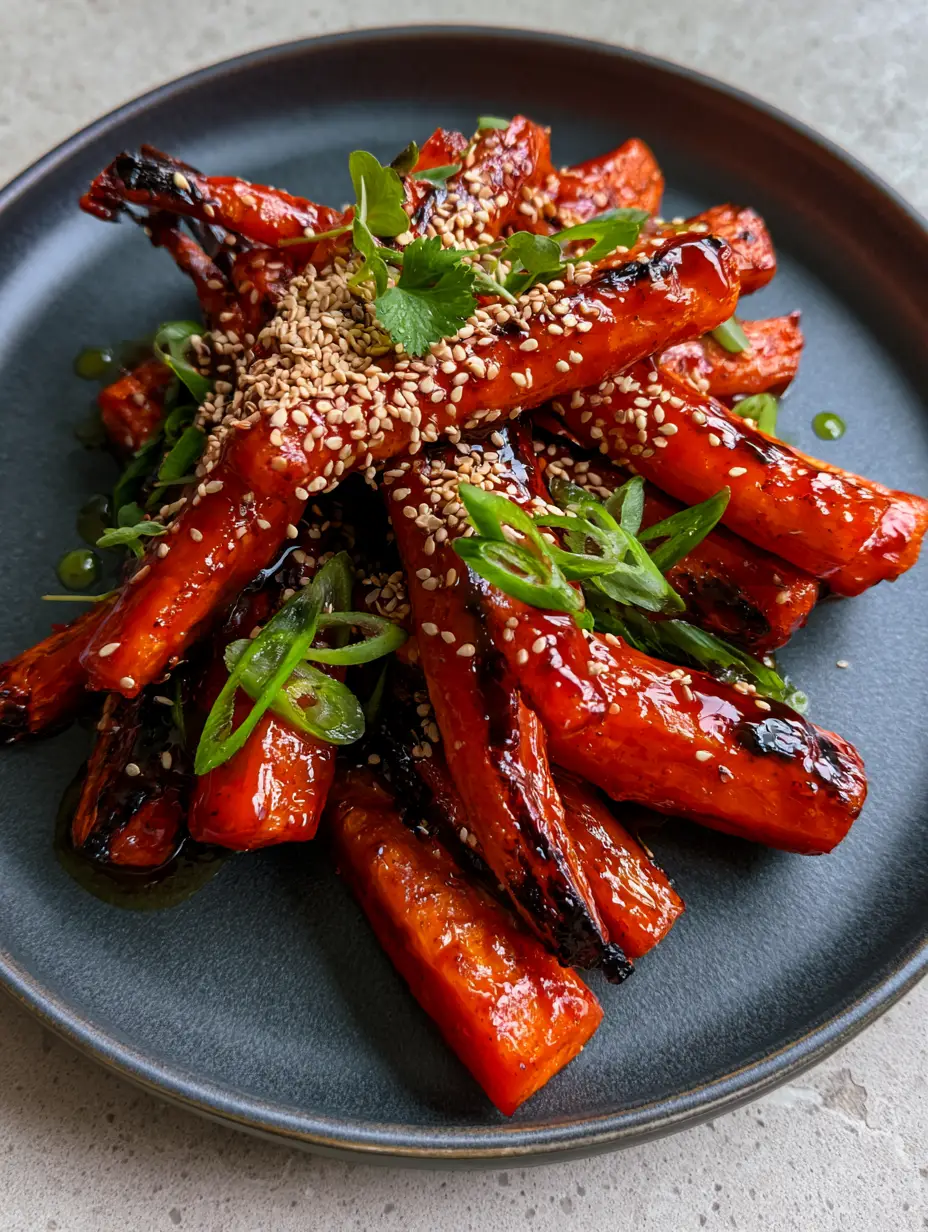
Gochujang Roasted Carrots with Honey Glaze and Lime
Ingredients
Equipment
Method
- Preheat oven to 425°F (220°C). Scrub carrots and pat dry. Toss with oil and sea salt on a baking sheet.
- Roast for 15-20 minutes until the carrots show deep caramelized char marks and the skin begins to blister.
- Whisk gochujang, honey, sesame oil, and vinegar. Brush the thick, ruby-red glaze onto the roasted carrots.
- Roast for another 5-8 minutes until the glaze is glass-like and bubbling.
- Pile on a matte charcoal plate. Top with toasted sesame seeds, scallions, microgreens, and glistening droplets of lime juice.
Notes
Ensure the carrots are completely dry before roasting to get that perfect blistered skin.
Share Your Culinary Creations!
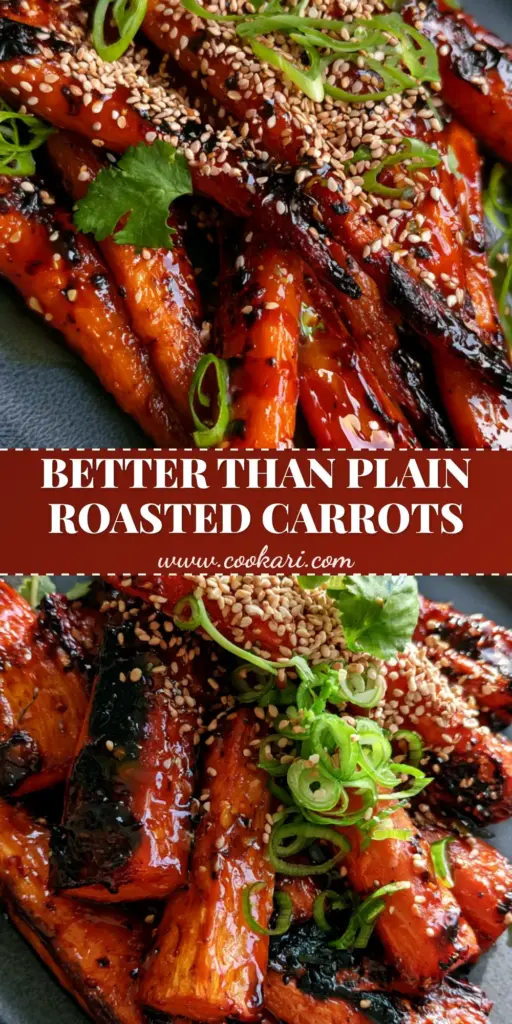
Did you make these gochujang roasted carrots? I want to see your results! The charred skin and glossy glaze are so photogenic, so don’t forget to snap a photo and share it in the comments below.
Be sure to save this recipe to your Pinterest boards so you can find it whenever you need a stunning side dish. Follow cookari_recipes for more bold, flavorful, and visually striking recipes. If you loved this dish, please leave a 5-star rating in the recipe card above!