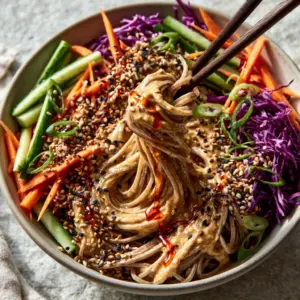
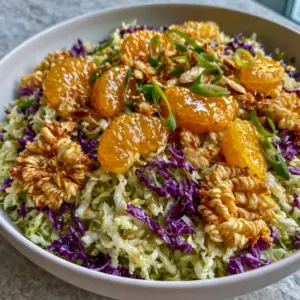
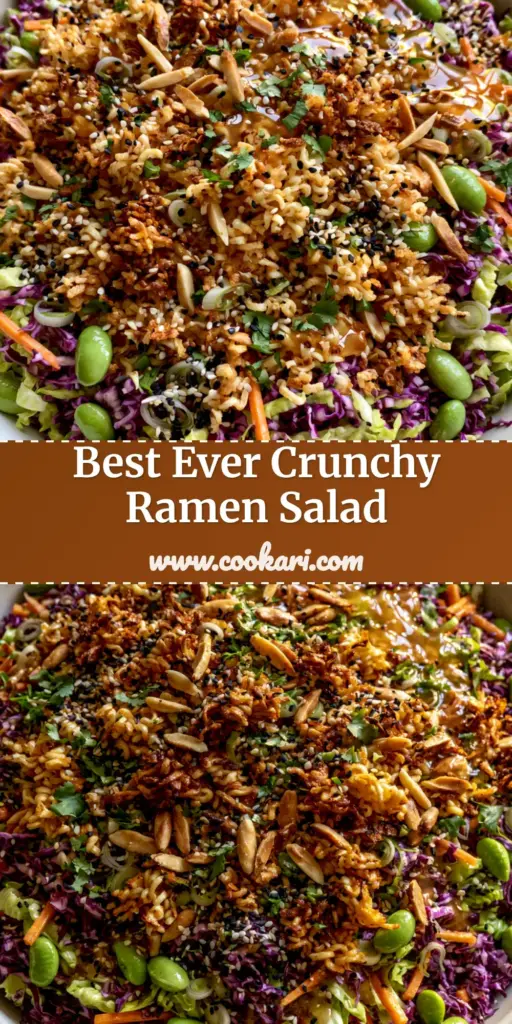
The Asian ramen salad is a sensory masterpiece that redefines the concept of a “crunchy” salad. Imagine a bowl overflowing with vibrant, neon-green Napa cabbage and deep purple ribbons of red cabbage, all tossed in a glossy, translucent amber dressing that catches the light like liquid gold. This isn’t just a side dish; it’s a meticulously layered experience of textures and bold, umami-rich flavors.
What sets this particular Asian ramen salad apart is the forensic attention to the “crunch factor.” We aren’t just tossing in raw noodles; we are deep-toasting them alongside slivered almonds until they reach a specific, burnished golden-brown hue. This process transforms the humble instant noodle into a gourmet crouton that stays crisp even after being drizzled with our signature sesame-ginger vinaigrette.
Whether you are looking for a show-stopping potluck contribution or a refreshing, voluminous lunch, this recipe delivers on every visual and culinary promise. From the bright orange matchstick carrots to the plump, emerald-green edamame, every ingredient is chosen for both its nutritional density and its color-blocking potential in a modern matte-white bowl.
Why You Will Crave This Vibrant Crunchy Salad
- Unrivaled Texture: The contrast between the soft, plump edamame and the brittle, shattered crunch of toasted ramen noodles is addictive.
- Visual Brilliance: The combination of purple cabbage, neon Napa, and orange carrots creates a “rainbow bowl” effect that is perfect for food photography.
- Glossy Amber Finish: Our dressing isn’t just flavorful; it’s engineered with toasted sesame oil and honey to create a shimmering, translucent coat on every leaf.
- Meal Prep Friendly: Unlike lettuce-based salads, the cabbage base holds its structure, making it the perfect crunchy make-ahead meal.
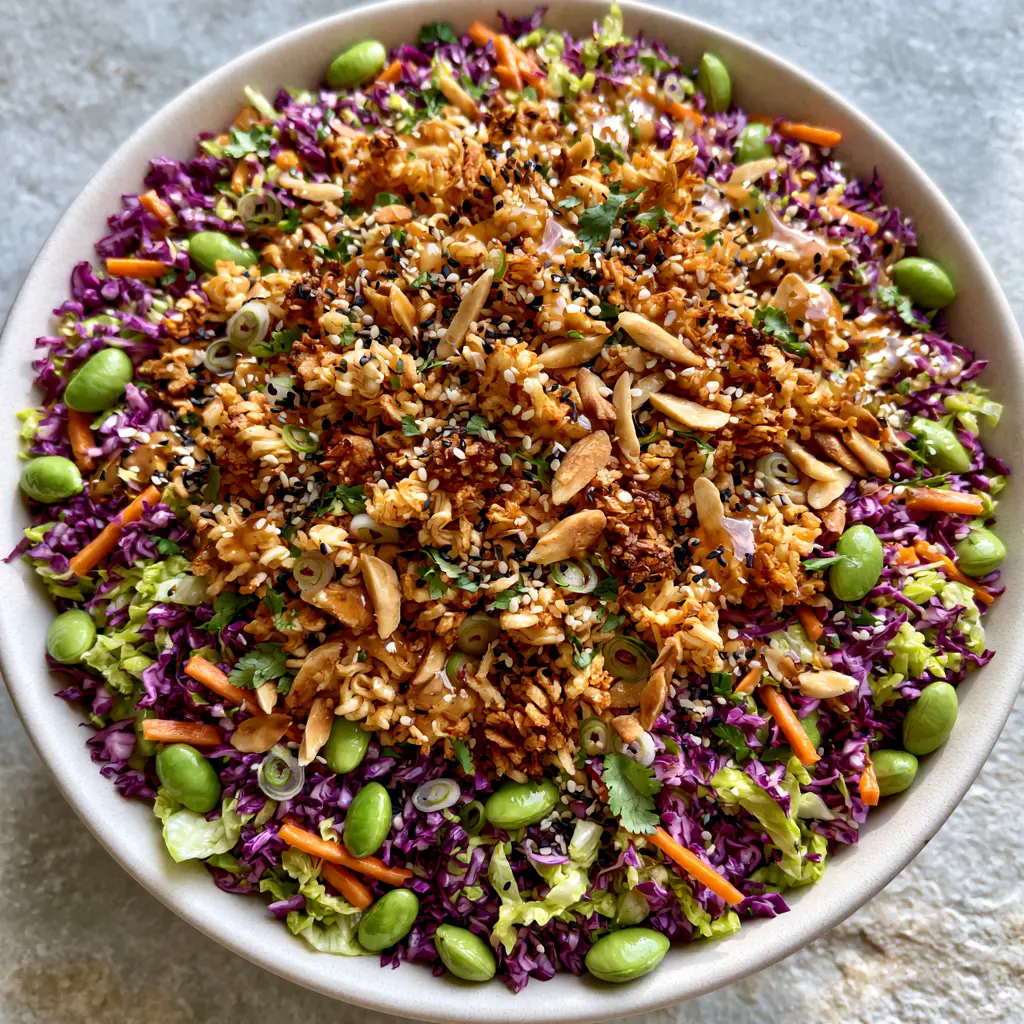
Crispy Components of the Ultimate Asian Ramen Salad
To achieve the exact visual and textural results seen in professional culinary photography, every ingredient serves a specific structural purpose. Here is what you will need for the base and the signature crunch.
Napa Cabbage: Use 1 medium head (approx. 600g). Its ruffled, neon-green edges provide the “voluminous” look and a delicate, sweet crunch that forms the foundation of the salad.
Purple Cabbage: 1/2 small head (250g), finely shredded. This provides the deep color contrast against the green and contains more fiber, helping the salad maintain its “loft” in the bowl.
Instant Ramen Noodles: 2 packs (170g), discarded flavor packets. When broken into small clusters and toasted, these provide the primary “shattered” texture that defines an Asian ramen salad.
Slivered Almonds: 1/2 cup (50g). These are toasted alongside the noodles to add a secondary, nutty crunch and a rich, toasted aroma.
Matchstick Carrots: 1 cup (125g). Buy them pre-cut or julienne them thinly to ensure they integrate perfectly with the shredded cabbage without being too heavy.
Shelled Edamame: 1 cup (150g), thawed. These provide “plump” visual interest and a boost of plant-based protein, balancing the crispiness with a soft, buttery bite.
The Garnish Trio: A mix of black and white sesame seeds, sliced scallions, and fresh cilantro. These “finishing touches” add the micro-detail that makes the dish look restaurant-quality.
The Glossy Amber Sesame Ginger Dressing
The dressing is the “glue” that brings the Asian ramen salad together, providing that essential translucent highlights you see in the sunlit photos.
Toasted Sesame Oil: 2 tbsp (30ml). This is the source of the deep amber color and the unmistakable nutty fragrance.
Rice Vinegar: 1/4 cup (60ml). This provides the bright acidity needed to cut through the richness of the toasted nuts and noodles.
Honey or Agave: 2 tbsp (30ml). Essential for the “glossy” finish and to balance the punchy ginger and soy sauce.
Fresh Grated Ginger & Garlic: 1 tsp (5g) each. These “invisible” ingredients provide the aromatic backbone that makes the salad taste as vibrant as it looks.
Neutral Oil: 1/3 cup (80ml). Use canola or grapeseed oil to emulsify the dressing into a smooth, pourable consistency.
Essential Tools for Precision Prep
To get those perfectly thin ribbons of cabbage and matchstick carrots, a few tools are indispensable. A sharp Chef’s knife is a must, but a mandoline slicer will give you that professional, uniform “shredded” look in half the time.
You will also need a wide, rimmed baking sheet for toasting the noodles. This ensures even heat distribution, preventing the almonds from burning while the noodles turn golden. Finally, a large modern matte-white ceramic bowl is the best vessel to showcase the vibrant colors of the Asian ramen salad.
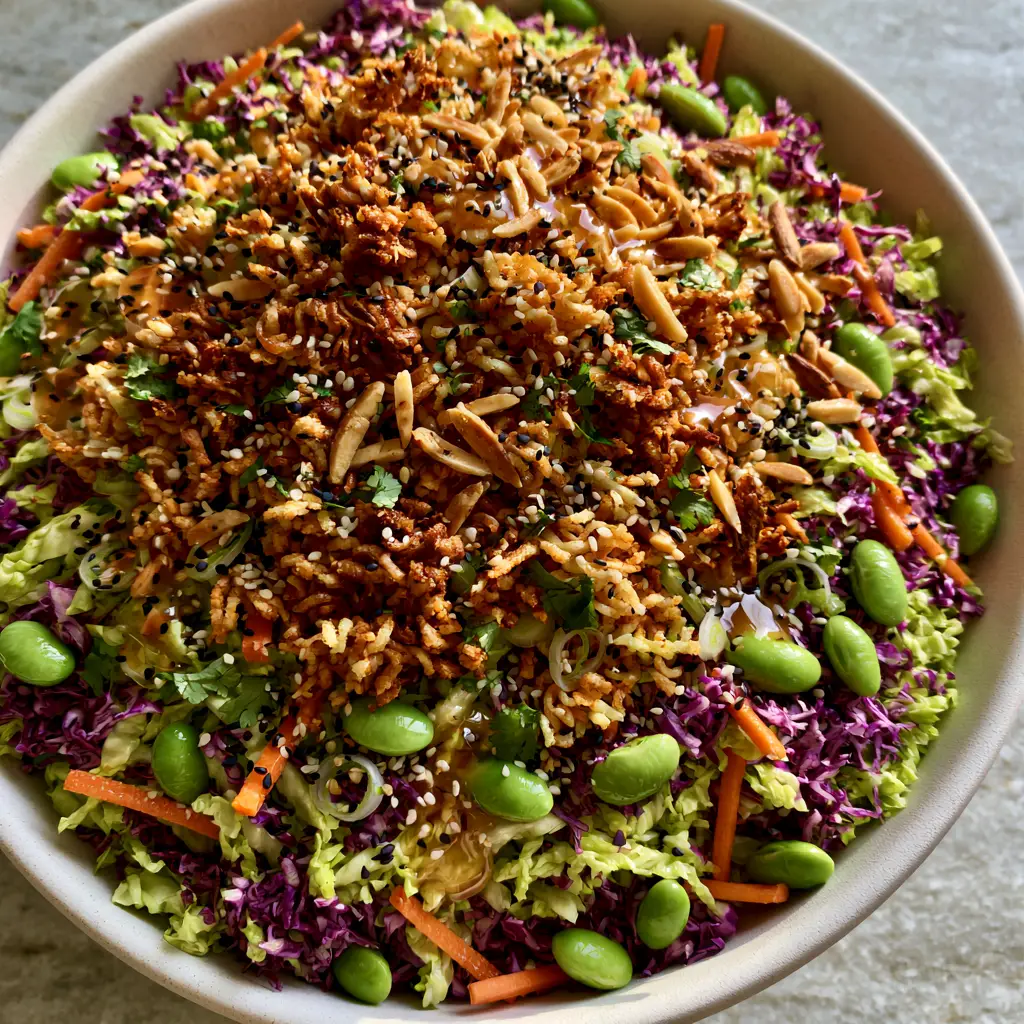
Step-by-Step Instructions for Maximum Crunch
1. Prepare the Cabbage Foundation
Remove any wilted outer leaves from the Napa and purple cabbage. Cut the heads in half, remove the cores, and slice as thinly as possible into long, fine ribbons. Toss them together in a large bowl to create a dense, colorful base of neon-green and deep violet.
2. Achieve the Deep Golden-Brown Toast
Preheat your oven to 350°F (175°C). Break the dry ramen noodles into small, bite-sized clusters—avoid crushing them into dust; you want distinct “shattered” pieces. Spread the noodles and slivered almonds on a baking sheet and drizzle with 1 tbsp (15ml) of neutral oil. Bake for 8–12 minutes, tossing halfway through, until they are a deep, uniform golden-brown and smell intensely nutty.
3. Emulsify the Amber Dressing
In a medium jar or bowl, whisk together the rice vinegar, honey, soy sauce, grated ginger, and garlic. Slowly stream in the neutral oil and toasted sesame oil while whisking vigorously. The dressing should look translucent but thick enough to coat a spoon, with a beautiful amber shimmer.
4. Assemble with Visual Precision
Add the matchstick carrots and thawed edamame to the cabbage base. Drizzle half of the dressing over the vegetables and toss thoroughly. Just before serving, fold in 3/4 of the toasted noodle and almond mixture. This ensures some noodles absorb the dressing while others remain perfectly brittle.
5. The Final Flourish
Transfer the mixture to your wide serving bowl. Top with the remaining toasted noodles for maximum texture. Finish with a generous dusting of black and white sesame seeds, finely sliced scallions, and chopped cilantro flakes. Drizzle the remaining dressing over the top to catch the light.
Expert Tips for Success
- The Anti-Soggy Rule: If you are making this for a potluck, keep the toasted noodles and almonds in a separate airtight container. Only add them seconds before serving to maintain that “ultra-sharp” crunch.
- Rinse the Cabbage: After shredding, rinse the cabbage in ice-cold water and use a salad spinner to dry it completely. Bone-dry cabbage allows the dressing to “stick” rather than sliding off.
- Toast Control: Almonds toast faster than noodles. If your noodles are still pale but the almonds are dark, pull the tray out. A burnt almond can make the whole Asian ramen salad taste bitter.
- Protein Power: For a full meal, this pairs beautifully with grilled chicken, making it a stellar hearty dinner option.
Storage and Make-Ahead Advice
The vegetable base of this Asian ramen salad (cabbages, carrots, edamame) can be tossed with the dressing and stored in the refrigerator for up to 3 days. In fact, the flavors often deepen by the second day. However, the toasted noodles MUST be stored at room temperature in an airtight bag to remain crisp. Do not freeze this salad, as the cabbage will lose its structural integrity upon thawing.
What to Serve With Your Ramen Salad
This salad is a versatile powerhouse that works as a light main or a complex side dish. If you’re hosting a summer barbecue, it provides a refreshing contrast to heavier dishes like a creamy pasta salad or a smoky street corn dip. For an all-salad buffet, try serving it alongside a sweet sunflower crunch salad to offer guests a variety of textures and flavor profiles.
Frequently Asked Questions
Yes, you can prep the cabbage and dressing 2-3 days in advance. However, keep the toasted ramen noodles in a separate airtight container and add them just before serving to prevent them from becoming soggy.
No, do not boil the noodles. For this recipe, the dry noodles are broken into clusters and toasted in the oven or a skillet until golden-brown and crispy.
Standard ramen noodles and soy sauce contain gluten. To make it gluten-free, use certified gluten-free ramen noodles (often made from brown rice) and tamari instead of soy sauce.
The combination of toasted sesame oil and honey (or agave) creates that translucent, shimmering amber look while providing a rich, nutty flavor.
Napa cabbage provides a soft, voluminous texture and bright green color, while purple cabbage adds a firm crunch and deep visual contrast, making the salad more structurally sound.
The Ultimate Crunchy Asian Ramen Salad Recipe
Asian ramen salad With Toasted Crunchy Noodles and Sesame Ginger Dressing
Ingredients
Equipment
Method
- Preheat oven to 350°F (175°C). Spread broken ramen clusters and slivered almonds on a baking sheet, toss with 1 tbsp oil, and bake for 8-12 minutes until deep golden-brown.
- Whisk together rice vinegar, honey, soy sauce, ginger, garlic, and oils until emulsified and glossy.
- Toss shredded cabbages, carrots, and edamame with half the dressing. Fold in most of the toasted noodles.
- Top with remaining noodles, sesame seeds, scallions, and cilantro. Drizzle with remaining dressing.
Notes
Use a salad spinner to ensure cabbage is dry so the dressing adheres.
Closing & Call to Action
The Asian ramen salad is a testament to how simple ingredients, when treated with the right culinary techniques, can become something truly extraordinary. The combination of “shattered” toasted noodles and the glossy amber dressing is a guaranteed crowd-pleaser. If you enjoyed this recipe, please leave a comment below and share your photos with us! Don’t forget to follow Cookari on Pinterest for more visually stunning recipe inspiration.