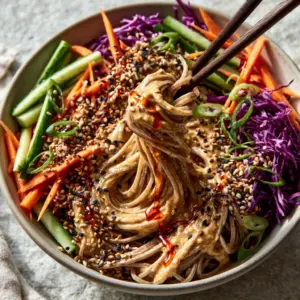
When you crave a meal that is both deeply comforting and vibrantly refreshing, nothing hits the mark quite like a perfectly executed sesame noodle salad. This dish is a masterclass in textural contrast, pairing the earthy, tender bite of buckwheat soba with the high-definition crunch of raw, julienned vegetables.
The star of the show is undoubtedly the sauce—a glossy, thick, tan elixir that coats every strand of noodle with a “coat-the-back-of-a-spoon” silkiness. In this guide, we will break down the culinary science behind achieving that professional, swirl-ready consistency seen in your favorite modern bistros.
Whether you are looking for a sophisticated desk lunch or a light dinner that doesn’t skimp on flavor, this sesame noodle salad delivers a visually stunning and nutritionally dense experience that will keep you coming back for seconds.
The Unbeatable Sensory Appeal of This Chilled Soba Masterpiece
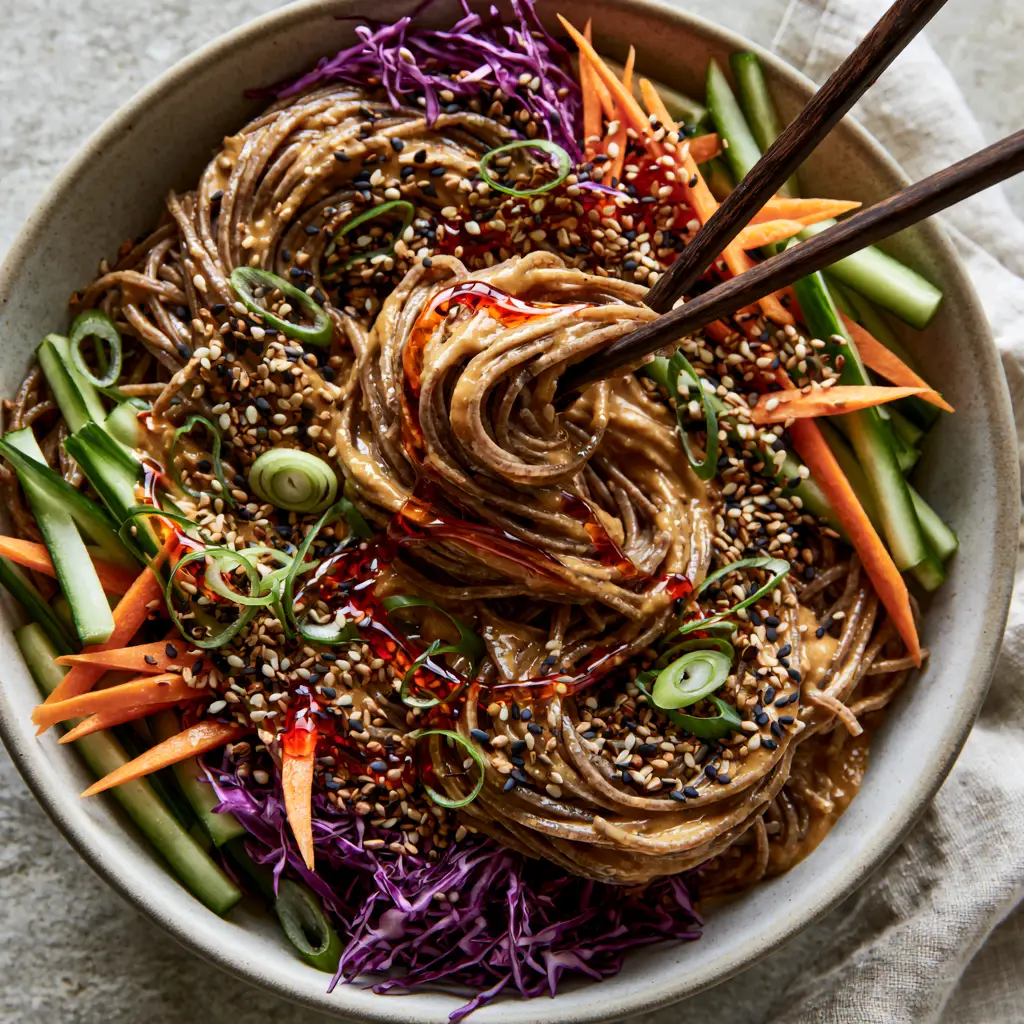
- Perfectly Coated Textures: The buckwheat noodles are expertly swirled and drenched in a creamy peanut sesame sauce that is thick enough to cling but thin enough to remain elegant.
- Vibrant Visual Contrast: From the bright orange julienned carrots to the deep shredded purple cabbage, every color pop represents a different nutritional profile and crunch level.
- Aromatic Garnish Layers: The dual-tone toasted white and black sesame seeds add a nutty aroma that complements the translucent red chili oil drizzle.
- Professional Presentation: Designed to look like a high-end smartphone photo, the balance of green scallion rings and dark wooden chopsticks makes this a centerpiece-worthy dish.
The Anatomy of a Perfect Soba Base and Essential Foundations
To achieve the result shown in our visual blueprint, we must start with the right foundation. Not all noodles are created equal, and for an authentic sesame noodle salad, buckwheat is the gold standard.
Buckwheat Soba Noodles (8 oz / 225g): These noodles provide an earthy, nutty flavor profile that wheat-only noodles lack. Look for a brand that uses a high percentage of buckwheat for the most authentic texture.
Fine Sea Salt (1 tsp / 5g): Essential for the noodle boiling water. Even though the sauce is flavorful, seasoning the noodles from the inside out is a professional secret for depth of flavor.
Toasted Sesame Oil (1 tbsp / 15ml): A foundational “invisible” ingredient used to toss the noodles immediately after rinsing to prevent clumping and add a base layer of fragrance.
Crafting the Creamy Tan Sesame Peanut Drip
The sauce is where the magic happens. We are looking for a specific tan hue and a glossy finish that catches the light, as described in our Midjourney prompt.
Creamy Peanut Butter (1/4 cup / 65g): Provides the body and rich, fatty mouthfeel that defines the “creamy” aspect of this salad. Ensure it is smooth rather than chunky for that silky finish.
Toasted Sesame Paste or Tahini (2 tbsp / 30g): This adds the signature “sesame” depth. If you enjoy this flavor profile, you might also love our Ramen Noodle Salad which utilizes similar umami notes.
Soy Sauce or Tamari (3 tbsp / 45ml): This provides the salt and the dark pigment that deepens the tan sauce into a rich, savory dressing.
Rice Vinegar (2 tbsp / 30ml): The necessary acid to cut through the heavy fats of the peanut butter and sesame paste, brightening the entire dish.
Honey or Maple Syrup (1 tbsp / 15ml): Just enough sweetness to balance the salt and acidity, creating a rounded flavor profile.
Fresh Grated Ginger (1 tsp / 5g): Adds a subtle heat and floral note that distinguishes a homemade sauce from a store-bought one.
The Vibrant Garden: Preparing Your Raw Vegetable Toppings
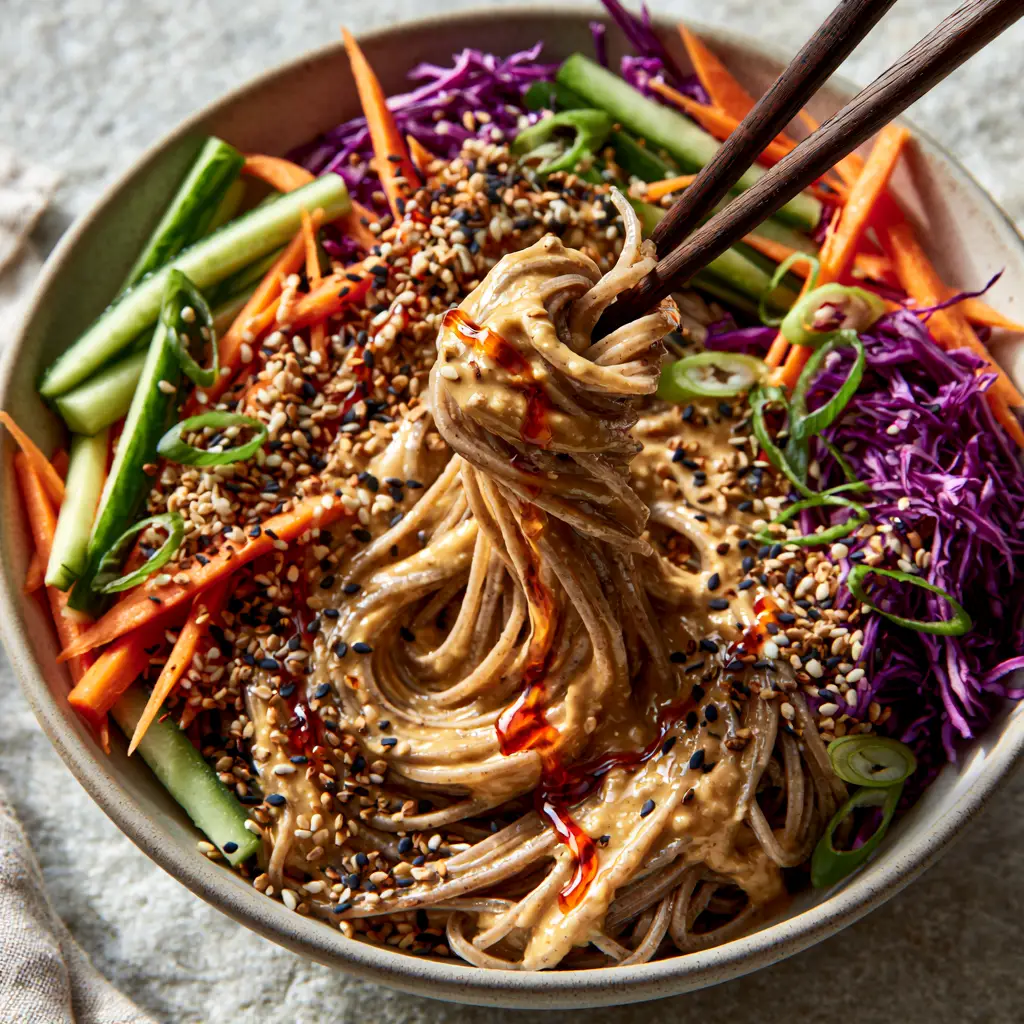
Precision cutting is the key to the professional “modern matte ceramic bowl” look. We aren’t just chopping; we are engineering textures.
English Cucumber (1/2 large): Cut into matchsticks. By removing the watery seeds, you ensure the cucumber stays crisp and doesn’t water down your creamy sauce.
Carrots (2 medium): Julienned into bright orange slivers. These provide a sturdy crunch that stands up well against the soft noodles.
Purple Cabbage (1 cup / 70g): Finely shredded. The vibrant violet hue provides the most striking visual contrast against the tan noodles and orange carrots.
Green Scallions (3 stalks): Sliced into thin rings. Use both the white and light green parts for a sharp, fresh bite that cuts through the richness of the peanut sauce.
Essential Equipment for a Visual Masterpiece
To recreate the high-angle, close-up shot of this sesame noodle salad, you will need a few specific kitchen tools.
A Mandoline Slicer is highly recommended for achieving those perfectly uniform julienned carrots and shredded cabbage. Safety first: always use the guard!
A Large Fine-Mesh Sieve is crucial for the soba. Buckwheat noodles release a lot of starch, and a vigorous cold-water rinse in a sieve is the only way to achieve that “glossy, thin” appearance without them sticking together.
Finally, a Modern Matte Ceramic Bowl provides the neutral, sophisticated backdrop that allows the colors of the vegetables to truly pop, just like in our professional visual prompt.
Step-by-Step Instructions to Culinary Perfection
1. Precision Noodle Preparation
Bring a large pot of salted water to a rolling boil. Add your buckwheat soba and cook according to package instructions, usually 5-7 minutes. The goal is “al dente”—tender but with a slight resistance to the tooth.
Immediately drain the noodles into your fine-mesh sieve and rinse under cold running water for at least 60 seconds. Use your hands to agitate the noodles, washing away the excess starch until the water runs clear and the noodles feel cool and slippery.
2. Emulsifying the Signature Sesame Sauce
In a medium mixing bowl, whisk together the peanut butter, sesame paste, soy sauce, rice vinegar, honey, and grated ginger. At first, the sauce may look like it is breaking or “seizing.”
Slowly whisk in 1-2 tablespoons (15-30ml) of warm water. Watch as the sauce transforms into a smooth, glossy, tan emulsion. It should be thick enough to “coat the back of a spoon” but still pourable.
3. The Professional Vegetable Cut
While the noodles drain, prepare your vegetables. Use your mandoline or a sharp chef’s knife to create the matchstick cucumbers and julienned carrots. Shred the cabbage as finely as possible to ensure it integrates well with the noodles rather than sitting on top of them.
4. The Final Assembly and “The Swirl”
Place the chilled noodles in a large mixing bowl. Pour over 3/4 of the sauce and toss gently with tongs or clean hands until every strand is glossy. Use a pair of dark wooden chopsticks to lift and swirl a generous portion into the center of your matte ceramic bowl.
Arrange the cucumbers, carrots, and purple cabbage in distinct sections or a controlled pile on top. This maintains the “clean, modern” aesthetic of the dish.
5. Finishing Touches for Visual Impact
Garnish heavily with a mix of toasted black and white sesame seeds. Scatter the thin scallion rings over the top. Finally, take your translucent red chili oil and create a deliberate drizzle over the vegetables and noodles, ensuring it “catches the light” for that final gourmet touch.
Expert Tips for Sesame Noodle Success
- The Ice Bath Shortcut: If you are in a rush, plunge the rinsed noodles into a bowl of ice water to lock in the texture and ensure they are perfectly chilled for the salad.
- Sauce Thickness: If your peanut butter is particularly stiff, you may need an extra splash of water. The sauce should have a silky, flowy movement.
- Toast Your Seeds: Even if you buy “toasted” sesame seeds, giving them 2 minutes in a dry pan until they are fragrant will 10x the aroma of your sesame noodle salad.
- Chili Oil Control: If you prefer less heat, use a strained chili oil (no flakes) to achieve the red translucent look without the intense spice.
Optimal Storage and Meal Prep Advice
This sesame noodle salad is an excellent candidate for meal prep. Store the dressed noodles and the raw vegetables in separate containers to maintain the maximum crunch of the carrots and cucumbers.
The noodles will keep well in the refrigerator for up to 3 days. If the sauce thickens too much in the cold, simply add a teaspoon of warm water and toss again before serving to restore the glossy sheen.
We do not recommend freezing this dish, as the fresh vegetables will lose their structural integrity and the sauce may break upon thawing.
What to Serve with Your Sesame Noodle Salad
This dish is quite filling on its own, but it also pairs beautifully with other vibrant textures. For a complete Asian-inspired spread, consider serving it alongside a crisp Hawaiian Fruit Salad for a sweet, tropical contrast.
If you want to add more protein, grilled tofu skewers or chilled poached shrimp are excellent additions that won’t overshadow the delicate buckwheat flavor.
Frequently Asked Questions
Yes! Ensure you use 100% buckwheat soba (as some brands contain wheat) and swap the soy sauce for tamari or liquid aminos.
Absolutely. You can prep the noodles and sauce 2-3 days ahead. For the best texture, keep the vegetables separate until you are ready to serve.
A mandoline slicer is the most efficient tool for uniform julienned carrots and cucumbers, though a very sharp chef’s knife and a steady hand will also work.
Chinese sesame paste uses toasted seeds and is much darker/nuttier, while tahini uses raw or lightly toasted seeds. Both work, but sesame paste provides a deeper tan color.
This usually happens if they aren’t rinsed enough. You must rinse them vigorously in cold water for at least a minute to remove the heavy surface starch.
The Ultimate Sesame Noodle Salad Recipe
[Image-Pin]
Sesame Noodle Salad with Creamy Peanut Sauce and Fresh Crunchy Vegetables
Ingredients
Equipment
Method
- Cook buckwheat soba in salted boiling water for 5-7 minutes until al dente.
- Drain in a fine-mesh sieve and rinse under cold water for 60 seconds to remove starch.
- Combine peanut butter, sesame paste, soy sauce, rice vinegar, honey, and ginger. Add warm water 1 tbsp at a time until glossy and smooth.
- Gently coat noodles in the sauce using tongs.
- Top with carrots, cucumber, and cabbage. Finish with sesame seeds, scallions, and a red chili oil drizzle.
Notes
Use a mandoline for perfectly uniform vegetable matchsticks.
[Image-Pin-2]
Closing and Call to Action
This sesame noodle salad is more than just a meal; it’s a sensory experience that combines professional culinary technique with stunning visual artistry. From the earthy soba to the radiant red chili oil, every element is designed to satisfy both your palate and your aesthetic sensibilities.
Did you master the “soba swirl”? We want to see your creations! Leave a comment below and let us know how your salad turned out. Don’t forget to share this recipe with fellow home cooks and follow us on Pinterest for more visually-inspired culinary blueprints!
[Image-Pin-3]