Mastering the art of Japanese zucchini at home brings that iconic teppanyaki steakhouse experience directly to your kitchen. This recipe focuses on achieving a specific culinary paradox: a deeply caramelized, charred exterior paired with a vibrant, firm green center that snaps when bitten. It is the ultimate side dish for those who crave umami-rich flavors and professional-grade textures.
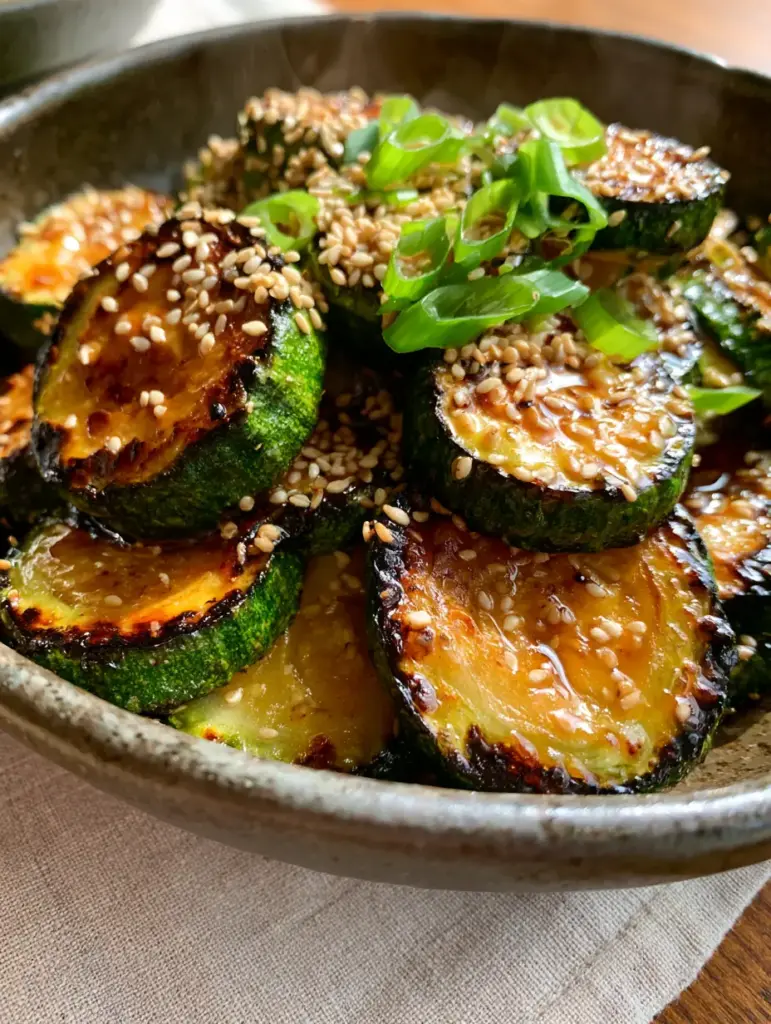
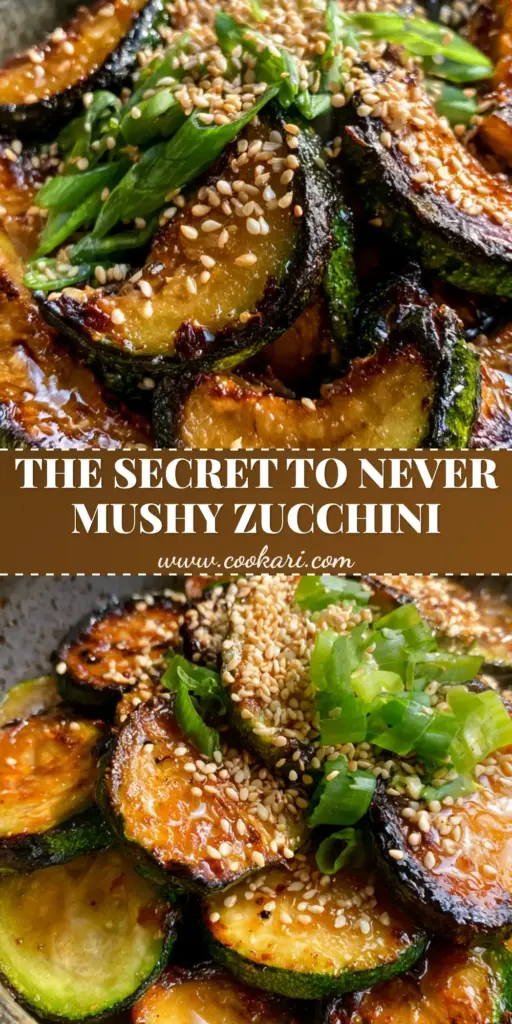
When you look at a bowl of perfectly prepared Japanese zucchini, you should see a shimmering glaze of soy and melted butter reflecting the light. The edges of each half-moon slice must be golden-brown and slightly crisp from a high-heat sear. Topped with the nutty crunch of toasted sesame seeds and the bite of fresh scallions, this dish is a sensory masterpiece.
If you have been searching for fresh zucchini recipes that move beyond basic steaming, this technique is your answer. We are utilizing high-heat chemistry to transform a humble squash into a restaurant-quality delicacy. Let’s dive into the science and soul of this Japanese-inspired classic.
Why This Hibachi-Style Preparation Wins Every Time
- The Maillard Reaction: By using a heavy-bottomed skillet, we create a complex, savory crust on the zucchini’s surface that tastes like a professional grill.
- Structural Integrity: Unlike soggy vegetable dishes, these half-moons maintain a crisp-tender heart that prevents the dish from becoming mushy.
- Balanced Umami: The combination of soy sauce and butter creates a rich, “smack-your-lips” glaze that clings to every piece.
- Visual Brilliance: The contrast between the dark charred edges, the bright green skin, and the white sesame seeds makes this a photogenic addition to any meal.
The Foundation: Selecting Your Ingredients for Success
To achieve the result shown in our visual blueprint, you must start with the right raw materials. Not all squash is created equal when it comes to high-heat searing. Choosing medium-sized zucchini ensures that the seeds are small and the flesh is dense enough to withstand the heat of the pan.
2 Medium Zucchini (approx. 600g): Look for firm, heavy squash with smooth, dark green skin. These will provide the “vibrant, firm green center” described in our visual guide. Avoid overly large “baseball bat” zucchini as they contain too much water and will turn to mush in the skillet.
1 tbsp (15ml) Avocado Oil: You need an oil with a high smoke point to achieve those caramelized charred edges without the oil breaking down and smoking out your kitchen. Grapeseed oil is a suitable alternative, but avoid extra virgin olive oil for this specific high-heat application.
2 tbsp (30g) Unsalted Butter: Butter provides the “glossy soy-butter glaze” that defines this dish. We use unsalted butter to maintain complete control over the sodium levels, as the soy sauce provides significant saltiness already.
1.5 tbsp (22ml) Soy Sauce: This provides the deep mahogany color and the fermented umami backbone. If you are gluten-free, Tamari is an excellent 1:1 substitution that yields the same shimmering reflection.
Toppings for Texture and Aroma: We finish the dish with 1 tsp (5g) toasted white sesame seeds for a nutty crunch, 2 thinly sliced scallions (green parts only) for brightness, and a heavy crack of black pepper to cut through the richness of the butter.
Essential Tools for a Professional Sear
To replicate the authentic teppanyaki style, your choice of cookware is paramount. A cast-iron skillet or a heavy-duty carbon steel pan is the gold standard here. These materials retain heat efficiently, ensuring that the temperature doesn’t drop the moment the cold zucchini hits the surface.
A wide, flat-bottomed surface is also necessary to prevent crowding. If the zucchini slices overlap, they will steam rather than sear, losing that “deeply caramelized” edge we are hunting for. If you don’t have a large enough pan, it is better to work in two batches than to compromise the texture.
You will also need a sharp chef’s knife to ensure clean, uniform half-moon cuts. Uniformity isn’t just for aesthetics; it ensures that every piece of Japanese zucchini cooks at the same rate, reaching that perfect crisp-tender state simultaneously.
The Step-By-Step Path to Caramelized Perfection
Precision Prep: The Half-Moon Cut
Wash and dry your zucchini thoroughly, as any surface moisture will impede the searing process. Trim the ends and slice the zucchini lengthwise down the middle. Lay the flat sides down and cut them into 1/2-inch (1.25cm) thick half-moons.
This thickness is the “sweet spot” for Japanese zucchini. It is thick enough to develop a heavy char on the flat surfaces while the interior remains “crisp and hot” as seen in the rising steam of our reference photo. If you cut them too thin, they will overcook before the char develops.
High-Heat Execution: The First Sear
Place your heavy skillet over medium-high heat and add the avocado oil. Wait until the oil is shimmering and just starting to whisps of smoke. This is the sensory cue that the pan is ready to create that “deep golden-brown crust.”
Add the zucchini half-moons in a single layer. Do not stir them immediately! Let them sit undisturbed for 2-3 minutes. You are looking for a visual change: the edges touching the pan should turn a dark, toasted brown. Resist the urge to fiddle with the vegetables; patience is the key to professional caramelization.
The Glaze Phase: Integrating Soy and Butter
Once the first side is beautifully charred, toss the zucchini to sear the other side for another 1-2 minutes. Now, reduce the heat to medium. Add the 2 tbsp (30g) of butter to the center of the pan. As it melts and begins to foam, pour in the soy sauce.
The mixture will bubble vigorously. Toss the zucchini constantly for about 30-45 seconds. This “shimmering glaze” should reduce slightly and coat every piece of squash, clinging to the charred edges. This is where the dish goes from “cooked vegetable” to “culinary experience.”
Finishing Touches: Aroma and Crunch
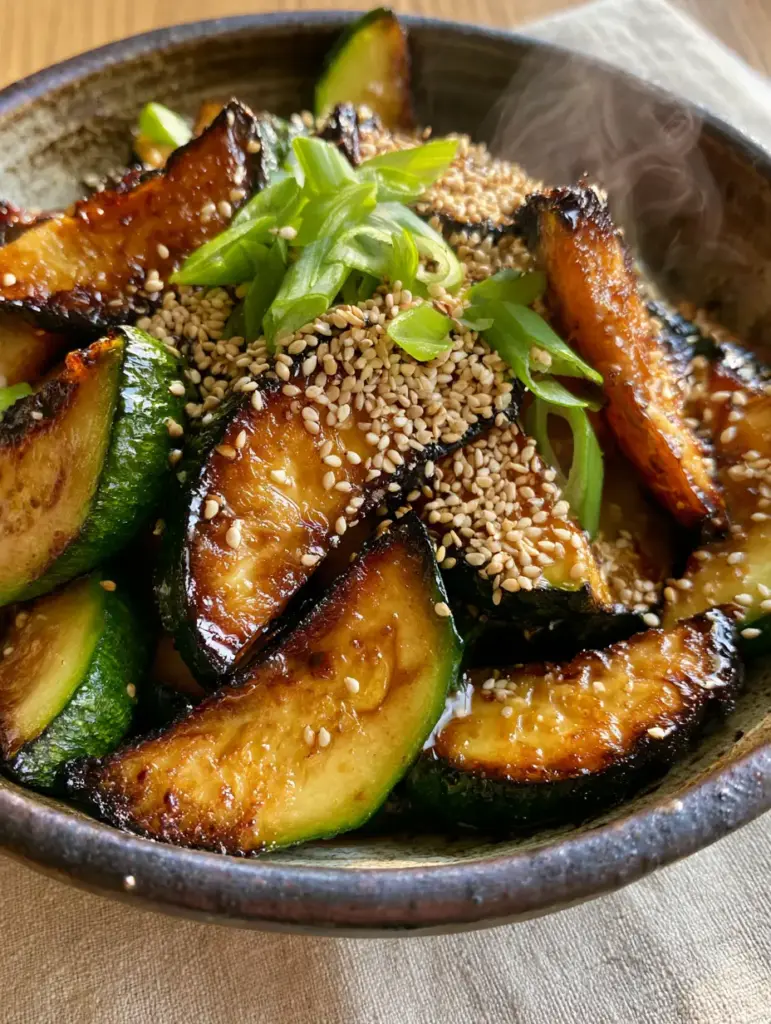
Remove the pan from the heat immediately to prevent the butter from burning. Transfer the zucchini to a rustic dark ceramic bowl. The heat from the squash will continue to release “visible steam rising,” signaling freshness to your guests.
Sprinkle the toasted white sesame seeds generously over the top. Follow with a handful of freshly sliced bright green scallions and a final crack of black pepper. The contrast of the bright greens against the dark glaze is the hallmark of expertly prepared Japanese zucchini.
Expert Tips for Success in the Kitchen
- Dry the Zucchini: Use a paper towel to pat the cut surfaces of the zucchini dry before they hit the pan. This removes excess moisture that causes steaming.
- Don’t Oversalt Early: Salt draws out water. If you salt the zucchini too early, it will weep in the pan and prevent a crust from forming. Let the soy sauce provide the seasoning at the end.
- The Butter Timing: Never add the butter at the start of the process. Butter has a low smoke point and will burn before the zucchini develops its char. Always add it during the final minute of cooking.
- Crowd Control: If you are making a double batch, use two pans. Overcrowding is the number one reason home-cooked Japanese zucchini ends up soft and gray instead of charred and green.
Mastering the Texture: Cues to Watch For
When you are at the stove, you are looking for specific sensory markers. The sound should be a constant, aggressive sizzle. If the sizzling slows down, your pan has lost too much heat, and you need to increase the flame. If the soy sauce smells like it’s burning rather than caramelizing, your heat is too high.
Visually, the “vibrant green center” should still look alive. It shouldn’t look translucent or yellowish, which are signs of overcooking. The goal is a hot, cooked exterior with a middle that still feels “firm” when pressed with a spatula. This is what separates this recipe from a standard skillet zucchini and mushrooms dish.
Optimal Storage and Reheating Guidelines
Like most high-heat vegetable dishes, Japanese zucchini is best enjoyed immediately while the “visible steam” is still rising. However, if you have leftovers, they can be stored in an airtight container in the refrigerator for up to 3 days.
To reheat and preserve as much texture as possible, avoid the microwave. Instead, toss the zucchini back into a hot, dry skillet for 1-2 minutes until heated through. The glaze will liquify again, though the zucchini will lose some of its initial “snap.” This recipe does not freeze well, as the cell structure of the zucchini collapses upon thawing, resulting in a mushy mess.
Perfect Pairings for Your Japanese Zucchini
This dish is a versatile superstar. It pairs perfectly with hibachi-style grilled chicken, steak, or shrimp. If you are looking to build a full vegetarian feast, consider serving it alongside other zucchini recipes to showcase the vegetable’s versatility.
For a lighter lunch, it serves as a fantastic topping for a bowl of steamed jasmine rice. You can even pair it with garlic butter zucchini if you want to explore different flavor profiles in one sitting. The salty-sweet soy glaze also complements the earthy tones of sautéed zucchini and mushrooms beautifully.
Frequently Asked Questions
Yes! To make this keto-friendly, replace the soy sauce with liquid aminos or coconut aminos, which have fewer carbs, and ensure you use plenty of butter for healthy fats.
Tamari is the best gluten-free substitute. For a different flavor profile, you can use coconut aminos or a dash of Worcestershire sauce mixed with water, though soy sauce provides the most authentic teppanyaki flavor.
No, you should keep the skin on. The skin provides the ‘vibrant green center’ look and helps the half-moons hold their shape during the high-heat cooking process.
Use an oil with a high smoke point like avocado oil, grapeseed oil, or canola oil. Avoid extra virgin olive oil or butter for the initial sear, as they will burn at the temperatures required for caramelization.
Soggy zucchini is usually caused by overcrowding the pan or using low heat. To get charred edges, use a heavy skillet on medium-high heat and ensure the zucchini is in a single layer so it sears instead of steams.
The Ultimate Japanese Zucchini Recipe
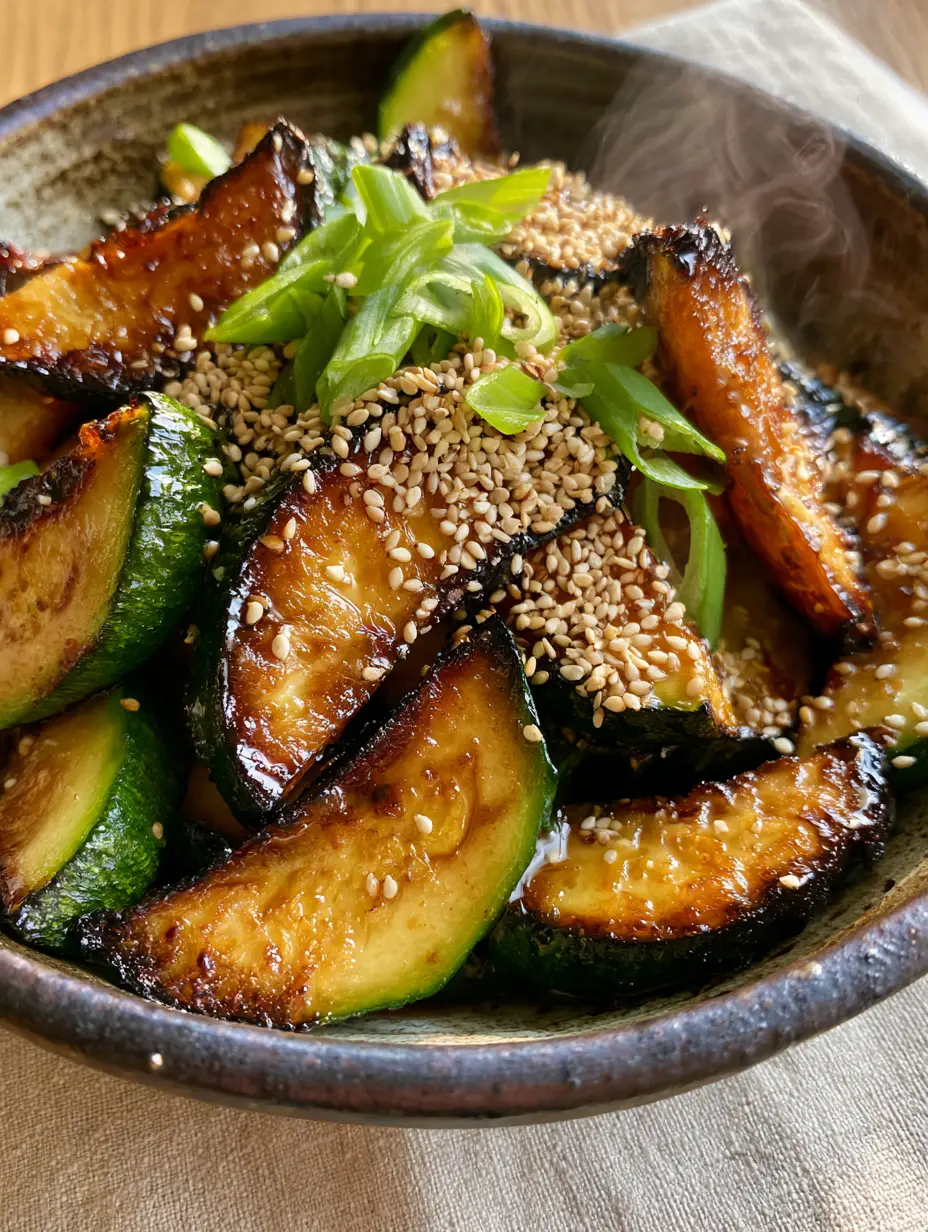
Japanese Zucchini with Soy Butter Glaze and Toasted Sesame Seeds
Ingredients
Equipment
Method
- Slice the zucchini lengthwise, then cut into 1/2-inch thick half-moons. Ensure they are dry before cooking.
- Heat avocado oil in a heavy skillet over medium-high heat until shimmering. Add zucchini in a single layer and sear for 2-3 minutes undisturbed until edges are deeply caramelized and charred.
- Flip the zucchini and cook for 1-2 minutes. Reduce heat to medium, add butter and soy sauce. Toss for 30-45 seconds until a shimmering glaze coats every piece.
- Remove from heat. Transfer to a bowl and top with toasted sesame seeds, sliced scallions, and cracked black pepper. Serve while steam is rising.
Notes
Add the soy and butter only at the very end to avoid a bitter, burnt taste.
Closing Thoughts and Your Next Culinary Adventure
Creating authentic Japanese zucchini at home is a rewarding skill that elevates any weeknight dinner. By focusing on the temperature of your pan and the timing of your glaze, you achieve a level of flavor that most home cooks miss. The combination of the charred edges and the glossy soy-butter coating is truly addictive.
If you enjoyed this recipe, please leave a comment below and let us know how your sear turned out! We love seeing your creations, so don’t forget to share your photos and pin this recipe to your favorite boards on Pinterest. For more vegetable inspiration, check out our guide on fresh zucchini recipes to keep your kitchen vibrant and delicious.