There is a specific kind of culinary magic that happens when a cold, structural ball of cheese meets the intense, radiating heat of a seasoned cast iron skillet. This Baked Burrata recipe isn’t just an appetizer; it is a sensory event designed to be the centerpiece of your next gathering.
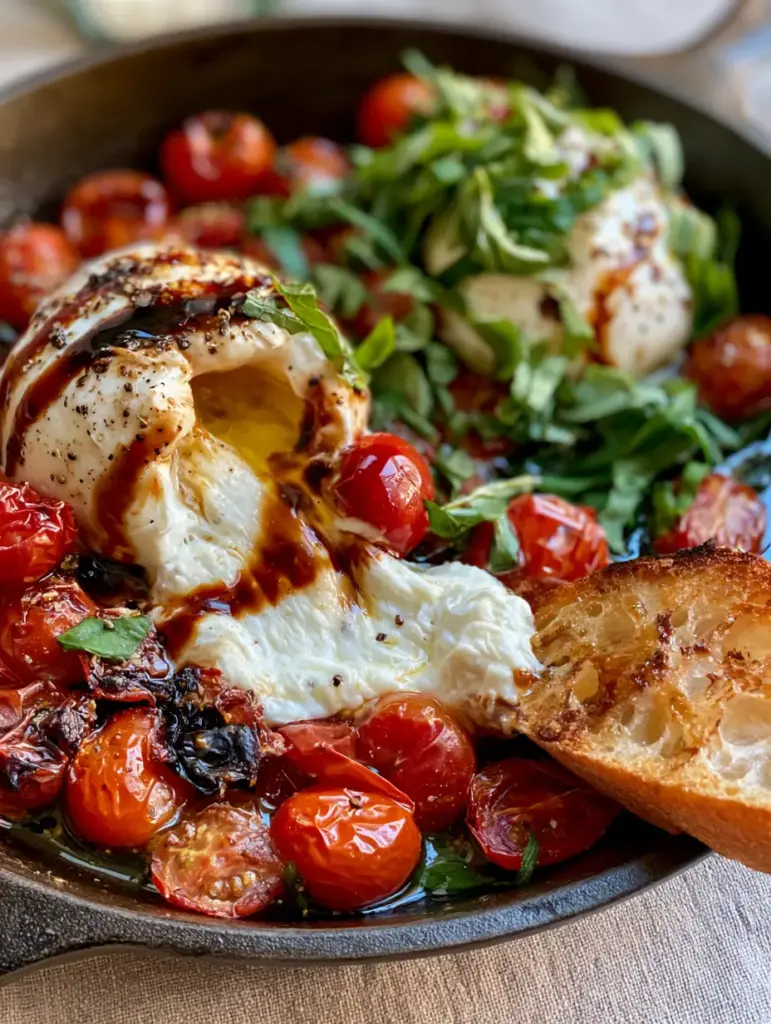
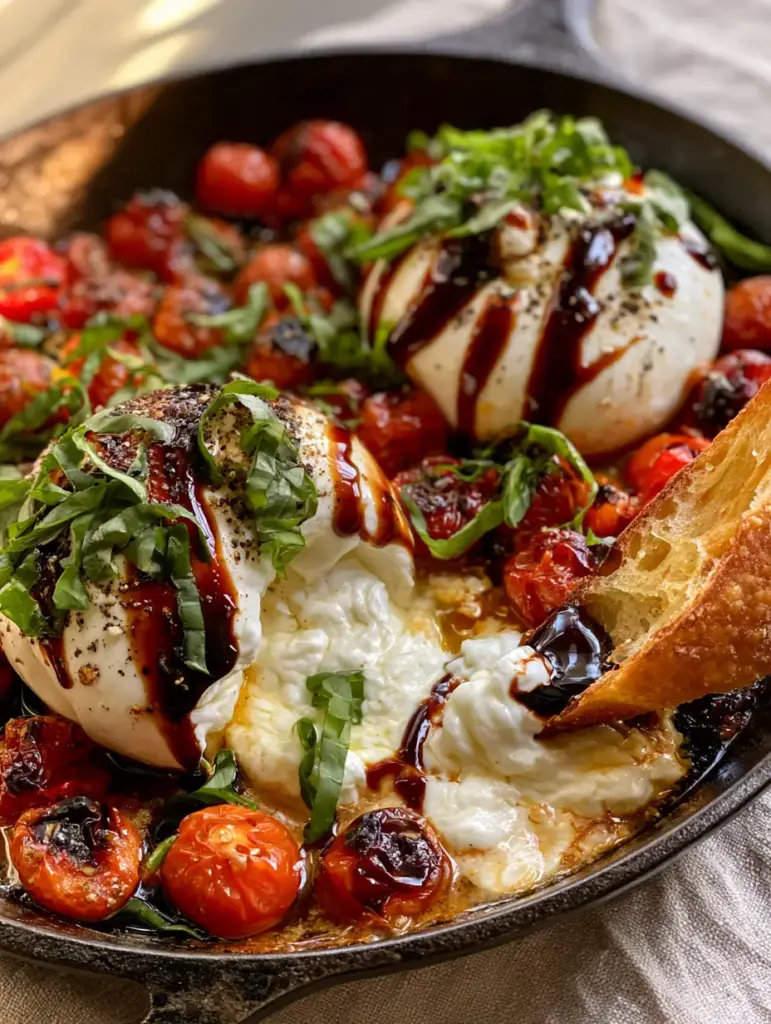
Imagine pulling a heavy, rustic pan from the oven where two large globes of cheese sit nestled among dozens of cherry tomatoes that have been pushed to their absolute limit. The skins are charred and wrinkled, the juices have mingled with seasoned olive oil to create a natural sauce, and the burrata itself has softened into a state of molten perfection.
When you tear into that outer mozzarella shell, the thick, gooey, creamy stracciatella center spills out across the pan, creating a white river of decadence that begs for a piece of crunchy bread. This is the ultimate comfort food for the sophisticated palate, blending Italian tradition with modern rustic presentation.
Why This Molten Cheese Appetizer Works Every Single Time
- The Texture Contrast: You get the snap of the charred tomato skins against the velvety, flowing cream of the stracciatella center.
- Visual Showstopper: The deep mahogany zig-zags of honey balsamic glaze against the vibrant green of fresh basil chiffonade make this a “camera-eats-first” dish.
- Simple Sophistication: It requires minimal prep time but delivers high-end restaurant results using foundational culinary techniques like blistering and glazing.
- One-Pan Ease: Using a rustic cast iron skillet ensures even heat distribution and makes for a beautiful, stovetop-to-table presentation.
Whether you are serving this as a precursor to a large meal or as the main event for a wine-tasting night, the Baked Burrata delivers a richness that is perfectly balanced by the acidity of the tomatoes and the sweetness of the honey.
If you enjoy dishes that celebrate fresh produce and bold textures, you might also love our roasted cauliflower steaks which utilize similar high-heat roasting techniques to develop deep flavor profiles.
The Essential Elements for the Perfect Baked Burrata
Every ingredient in this recipe serves a specific structural or flavor purpose. To achieve the exact visual and taste profile described, high-quality sourcing is paramount.
Fresh Burrata Cheese: You will need 2 large balls (approx. 8oz/225g each). Burrata is essentially a mozzarella pouch filled with cream and cheese curds; look for globes that feel heavy and plump, indicating a generous stracciatella filling.
Cherry Tomatoes: 2 cups (300g) of firm, bright red cherry tomatoes. These are superior to larger tomatoes for this dish because their high sugar content allows them to blister and char quickly without turning into a watery mush.
Extra Virgin Olive Oil: 3 tbsp (45ml) of high-quality oil. This acts as the heat conductor for the tomatoes and provides the fat needed to emulsify with the escaping tomato juices and balsamic glaze.
Honey Balsamic Glaze: 2 tbsp (30ml) of balsamic vinegar whisked with 1 tsp (7g) of honey. This creates that iconic dark mahogany drizzle that cuts through the fat of the cheese with a sharp, sweet acidity.
Fresh Basil: 1 small bunch, sliced into a fine chiffonade. The volatile oils in fresh basil provide a necessary aromatic lift that brightens the entire skillet just before serving.
Aromatic Seasonings: 1/2 tsp (3g) sea salt and 1 tsp (2g) coarse cracked black pepper. The pepper is essential for adding a biting heat that contrasts the honey glaze, while the salt draws out the tomato juices.
Sourdough Baguette: 1 large loaf, sliced into thick rounds. A hearty sourdough provides the structural integrity needed to scoop up the heavy, molten cheese without breaking.
Must-Have Tools for Skillet Success
To achieve the charred skins and perfectly melted center shown in our visual guide, the equipment you use matters as much as the ingredients.
10-inch Cast Iron Skillet: The heavy iron retains heat exceptionally well, ensuring the tomatoes blister on the bottom while the cheese melts through to the core. If you don’t have cast iron, a heavy stoneware baking dish is the next best option.
High-Heat Silicone Spatula: Useful for gently moving the tomatoes around the cheese balls without puncturing the delicate mozzarella skin prematurely.
Chef’s Knife: A sharp blade is required to achieve a clean “chiffonade” (fine ribbons) of basil rather than bruising the leaves and turning them black.
Step-by-Step Mastery: How to Bake the Perfect Burrata
Preparing the Skillet and Tomatoes
Start by preheating your oven to 400°F (200°C). While the oven reaches temperature, place your cast iron skillet on the stovetop over medium-high heat. Add 2 tbsp (30ml) of olive oil and once it begins to shimmer, toss in the cherry tomatoes.
Listen for the “pop”—that is the sound of the tomato skins expanding. Sear them for 3-4 minutes, shaking the pan occasionally, until you see the first signs of charred, wrinkled skins. This initial stovetop sear ensures the tomatoes are flavorful and juicy before they ever hit the oven.
Positioning the Burrata
Reduce the stovetop heat and use a spoon to create two clear wells in the center of the tomatoes. Carefully place the two balls of burrata into these spaces. Drizzle the remaining 1 tbsp (15ml) of olive oil directly over the cheese globes and season the entire pan generously with sea salt.
At this stage, the cheese should still be firm to the touch, but the surrounding tomatoes should be weeping their juices into the oil, creating a vibrant red emulsion at the base of the pan.
The Roasting Phase
Transfer the skillet to the middle rack of your oven. Bake for 8-10 minutes. You are looking for a specific visual cue: the burrata should look slightly deflated and soft, but not completely collapsed. The tomatoes should be fully burst, releasing their sweet, acidic nectar into the seasoned oil.
While the cheese is roasting, prepare your sourdough. Brush the slices with olive oil and toast them in a separate pan or under the broiler until they reach a deep golden-brown color.
The Final Flourish and Presentation
Remove the skillet from the oven. Using a knife or a fork, gently tear open one of the burrata balls. You want to see that thick, gooey stracciatella spill out onto the pan, mingling with the roasted tomatoes. This creates the “sauce” that makes this dish so addictive.
Drizzle the honey balsamic glaze in a bold zig-zag pattern across the entire skillet. The dark mahogany color will pop beautifully against the white cheese. Finish with a heavy garnish of fresh basil ribbons and a final dusting of coarse cracked black pepper.
Expert Tips for a Flawless Result
- Control the Moisture: If your burrata is stored in liquid (whey), pat it very dry with paper towels before putting it in the pan. Excess moisture will prevent the tomatoes from charring and turn the sauce watery.
- Don’t Overbake: If you leave the burrata in the oven too long, the fats will separate and you’ll lose that creamy, stretchy texture, ending up with a rubbery mozzarella skin and oily liquid.
- The Honey Balance: If your balsamic glaze is too thick to drizzle, warm it for 5 seconds in the microwave to loosen the honey, allowing for those perfect zig-zags.
- Bread Choice Matters: Avoid soft white bread. You need the crunch of a toasted sourdough or ciabatta to provide a textural anchor for the soft cheese.
Smart Storage and Reheating Guidelines
Baked Burrata is best enjoyed immediately while the stracciatella is in its molten state. However, if you have leftovers, they can be stored in an airtight container in the refrigerator for up to 2 days.
To reheat, do not use the microwave, as it will turn the cheese rubbery. Instead, place the leftovers back into a small oven-safe dish and warm at 325°F (165°C) until the cheese is soft again. The texture will be slightly different than the first bake, but the flavors will have deepened.
Note: This dish does not freeze well. The freezing process breaks the delicate emulsion of the cream inside the burrata, resulting in a grainy texture upon thawing.
What to Serve With Your Baked Burrata
This dish is quite rich, so it pairs beautifully with light, acidic sides. We highly recommend serving it alongside a Mediterranean chickpea salad to add a refreshing crunch to the meal.
For those looking for a complete vegetarian feast, consider following this appetizer with a hearty vegetable stew. The acidity of the tomato-based stew complements the creamy leftovers of the burrata perfectly.
If you want to lean into a fusion flavor profile, the charred notes of the tomatoes also work surprisingly well when preceded by a zesty Asian-inspired salad, where the ginger and lime help cleanse the palate between bites of rich cheese.
Commonly Asked Questions about Roasting Burrata
You can prep the tomatoes in the skillet and slice the bread ahead of time, but the actual baking should happen just before serving to maintain the molten texture of the cheese.
Regular balsamic is much thinner and more acidic. For the visual ‘mahogany drizzle’ and balanced sweetness, you should simmer the vinegar with honey until it reduces by half to create a glaze.
Yes, burrata melts beautifully. The outer mozzarella shell softens while the inner stracciatella cream becomes molten and gooey, though it won’t stretch like traditional pizza mozzarella.
Look for the skins to pop and develop small black charred spots. The tomatoes should look slightly wrinkled and start to release a small amount of juice into the oil.
Burrata is often stored in whey. If you don’t pat the cheese completely dry with paper towels before baking, the excess moisture will pool in the pan and prevent the sauce from thickening.
The Ultimate Baked Burrata Recipe
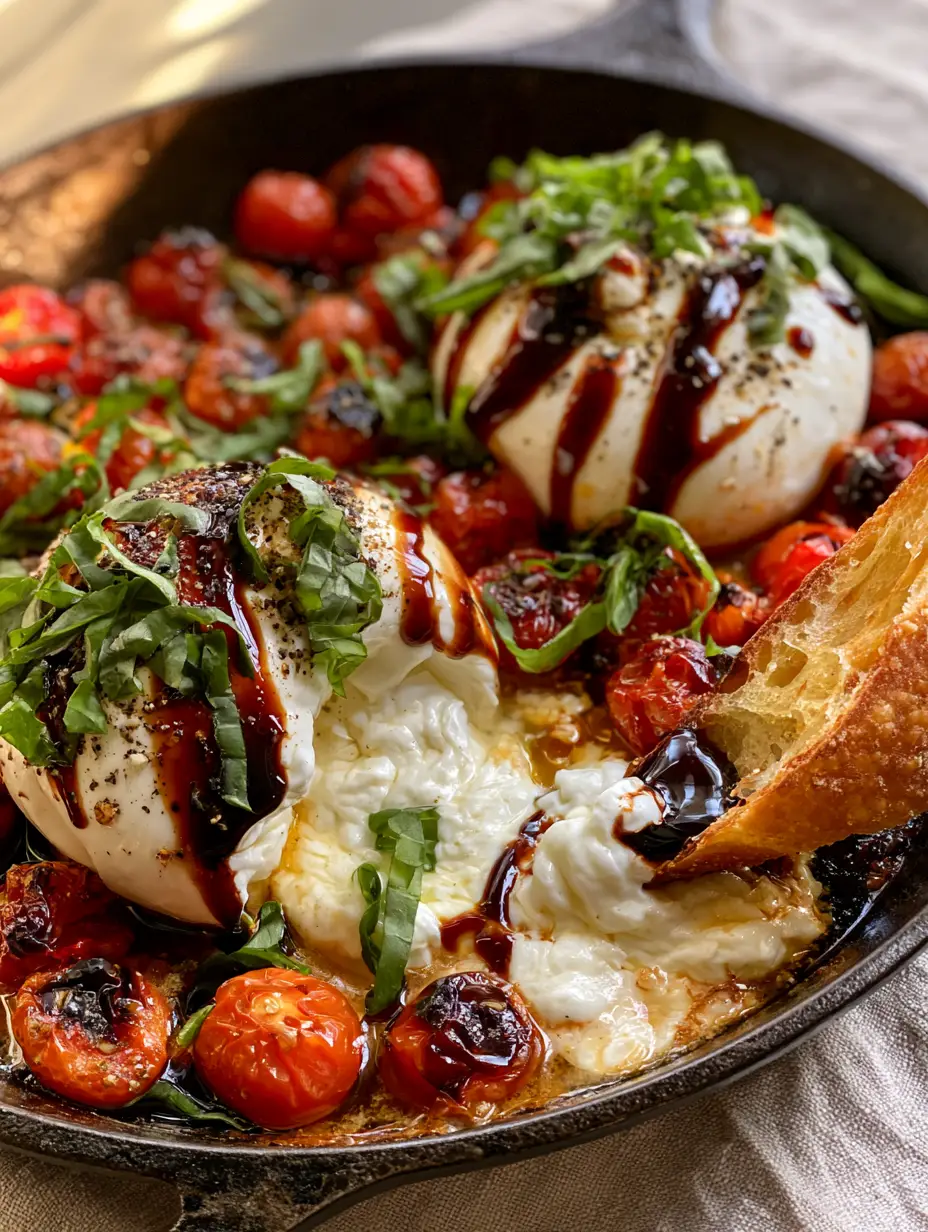
Baked Burrata with Blistered Tomatoes and Honey Balsamic Glaze
Ingredients
Equipment
Method
- Preheat oven to 400°F (200°C). Heat 2 tbsp (30ml) olive oil in a cast iron skillet over medium-high heat. Add cherry tomatoes and sear for 4 minutes until skins are charred and wrinkled.
- Make two spaces in the center of the tomatoes and place the burrata balls. Drizzle with remaining olive oil and season with salt.
- Transfer the skillet to the oven and bake for 8-10 minutes until the cheese is soft and tomatoes have burst.
- Tear open one burrata ball to let the creamy stracciatella spill out. Drizzle with the honey balsamic mixture.
- Top heavily with basil ribbons and cracked black pepper. Serve immediately with toasted sourdough.
Notes
Use a high-quality balsamic for a thick, mahogany finish.
Closing Thoughts on This Skillet Masterpiece
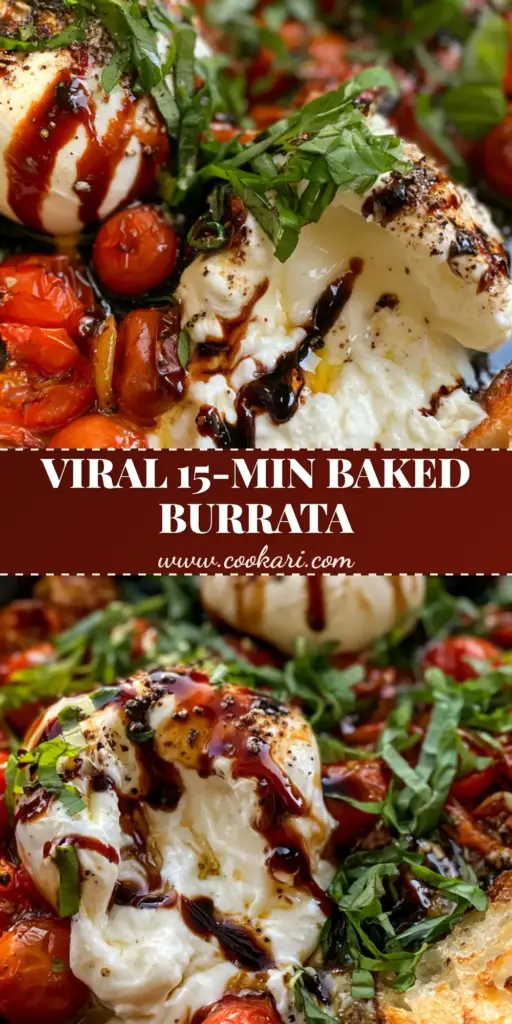
This Baked Burrata is a testament to the idea that the best meals don’t require hours of labor—they require the right ingredients and a little bit of heat. The combination of the blistered cherry tomatoes and the mahogany honey balsamic drizzle creates a flavor profile that is simultaneously rustic and refined.
We invite you to try this recipe for your next dinner party or a cozy night in. If you make it, please leave a comment below and let us know how your tomatoes charred! Don’t forget to share your photos and tag us on Pinterest so we can see your molten cheese masterpieces.