Baked Cauliflower Steaks are the ultimate testament to how heat and fat can transform a humble cruciferous vegetable into a center-of-the-plate masterpiece. If you have ever felt underwhelmed by soggy, flavorless cauliflower, this recipe is your redemption. We are moving beyond the basic roast and leaning into professional searing techniques that produce a deep, mahogany-colored crust.
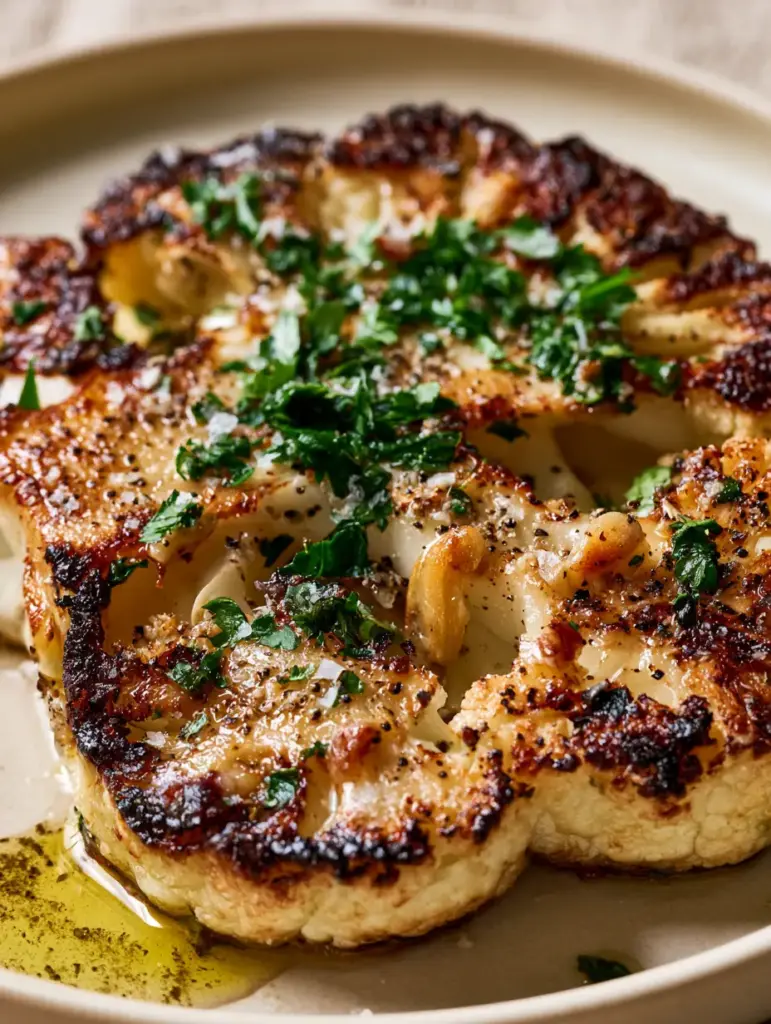
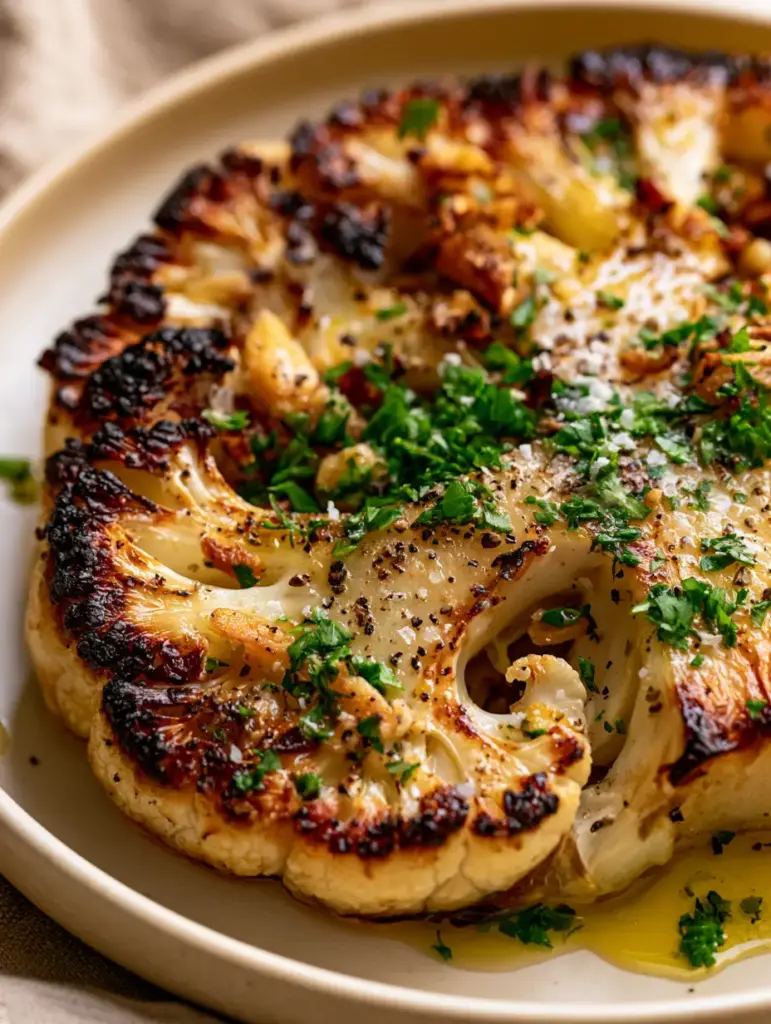
The secret to this specific dish lies in the contrast of textures. Imagine a thick-cut cauliflower slab, its edges deeply caramelized and charred to a smoky crisp, while the center remains tender and succulent. A glistening garlic herb butter glaze coats every crevice, carrying the aroma of roasted garlic cloves and the bright zing of fresh lemon zest directly to your palate.
This isn’t just a side dish; it’s a culinary event. Whether you are serving it as a vegetarian main or a robust accompaniment to a protein, the visual appeal of these steaks on a matte cream ceramic plate is undeniable. The golden herb oil pooling at the base isn’t just for show—it is a concentrated flavor bomb that ties the whole experience together.
Why You Will Crave These Caramelized Cauliflower Slabs
- Deep Forensic Caramelization: By utilizing high-heat roasting, we achieve those dark golden-brown charred edges that provide a nutty, complex flavor profile absent in steamed preparations.
- Textural Harmony: The combination of coarse sea salt flakes, cracked black pepper, and toasted garlic bits creates a satisfying crunch against the soft, buttery interior of the steak.
- Herb-Infused Luxury: The melted garlic herb butter glaze adds a fatty richness that balances the natural earthiness of the cauliflower.
- Visual Sophistication: Garnished with vibrant green minced parsley and bright lemon zest, these steaks look like they belong in a high-end bistro, especially when served on a neutral matte ceramic surface.
The Anatomy of the Perfect Cauliflower Steak: Ingredients and Substitutions
Large Head of Cauliflower: You need a dense, tightly packed head to ensure the “steaks” hold their shape during slicing. Look for one with vibrant green leaves and no brown spots on the florets.
Unsalted Butter (115g / 1/2 cup): Using unsalted butter allows you to control the seasoning precisely. This forms the base of our glistening glaze that creates that signature sheen seen in the visual blueprint.
Extra Virgin Olive Oil (60ml / 1/4 cup): A high-quality oil is necessary for the initial sear, helping to conduct heat evenly across the cauliflower’s surface and preventing the butter from burning too quickly.
Fresh Garlic Cloves (6-8 cloves): We use whole cloves that roast alongside the cauliflower, becoming soft and sweet, plus minced garlic for the herb butter infusion.
Fresh Parsley (15g / 1/2 cup, chopped): This adds a necessary “green” note and a pop of color. The fine mince ensures the herbs stick to the buttery surface rather than falling off.
Lemon Zest (1 tbsp / 6g): Zest provides the essential oils of the fruit without the thinning acidity of the juice, keeping the glaze thick and luxurious.
Red Pepper Flakes (1 tsp / 2g): A subtle background heat that cuts through the richness of the butter glaze. You can omit this if you prefer a completely mild dish.
Coarse Sea Salt and Cracked Black Pepper: These aren’t just seasonings; they are textural elements. The coarse flakes stay intact, providing little bursts of saltiness that highlight the sweetness of the roasted vegetable.
Essential Kitchen Tools for Professional Searing
To achieve the “Extreme Close-up” quality results, you need a heavy-duty rimmed baking sheet. A light-colored aluminum pan is preferred as it allows you to monitor the browning of the cauliflower edges without the risk of sudden scorching that dark pans can cause.
You will also need a sharp Chef’s knife to cut the 1.5-inch (4cm) thick slabs. A thin, flexible spatula is crucial for flipping the steaks halfway through the cooking process without breaking the delicate floret structures. Finally, a small saucepan is needed to emulsify the garlic herb butter glaze to a perfect, pourable consistency.
Forging the Perfect Crust: Step-by-Step Instructions
Phase 1: Precision Slicing and Prep
Start by preheating your oven to 400°F (200°C). Remove the outer green leaves from the cauliflower head but keep the stem intact; the stem is the “glue” that holds the steak together. Slice the cauliflower vertically through the center into 1.5-inch (4cm) thick slabs. You should get 2 to 3 prime steaks from the center of each head.
Phase 2: The Initial Sear and Seasoning
Brush both sides of the steaks generously with olive oil. Arrange them on the baking sheet along with the whole, unpeeled garlic cloves. Sprinkle the top surface with half of your coarse sea salt and cracked black pepper. The salt will begin to draw out a tiny amount of moisture, which, when combined with the oil and high heat, creates the Maillard reaction responsible for those golden-brown charred edges.
Phase 3: The High-Heat Roast
Slide the tray into the oven. Roast for 15-20 minutes until the bottom side is deeply caramelized. You will know it is ready when you smell a nutty, popcorn-like aroma and the edges touching the pan are dark brown. Flip the steaks carefully and roast for another 10-12 minutes.
Phase 4: The Garlic Herb Butter Glaze Infusion
While the cauliflower finishes roasting, melt the butter in a small saucepan over medium-low heat. Add the minced garlic and red pepper flakes. Cook for 2-3 minutes until the garlic is fragrant but not browned. Remove from heat and stir in the chopped parsley and lemon zest. This creates the “glistening butter sheen” that defines the visual recipe blueprint.
Phase 5: The Final Baste and Plating
Pour the warm garlic herb butter over the steaks while they are still hot on the pan. The butter will sizzle and seep into the florets. Transfer each steak to a matte ceramic plate. Squeeze the roasted garlic cloves out of their skins and scatter them over the top. Drizzle any remaining golden herb oil from the pan around the base of the steak.
Expert Tips for Culinary Success
- Don’t Overcrowd the Pan: If the steaks are too close together, they will steam instead of sear. Give them at least 2 inches (5cm) of space to ensure the air circulates for maximum crispness.
- The Stem is Key: If the florets start falling off, don’t panic. Roast the loose bits alongside the steaks—they will become extra crispy “cauliflower popcorn.”
- Temperature Control: If your butter begins to smoke, your heat is too high. You want a gentle bubble to infuse the garlic without bittering the fat.
- Freshness Counts: Always zest the lemon right before serving. The volatile oils in the zest dissipate quickly, and you want that fragrance to be at its peak when the plate hits the table.
Maximizing Your Meal: What to Serve with Baked Cauliflower Steaks
Baked Cauliflower Steaks are incredibly versatile. For a Mediterranean-inspired feast, serve these alongside a fresh Greek chickpea salad or a portion of creamy baked burrata with toasted sourdough. The richness of the cheese complements the charred brassica perfectly.
If you are looking for a more substantial vegetarian spread, consider pairing this with a hearty vegetarian stew or even some cheesy garlic zucchini steaks for a full “steakhouse” vegetable platter. For those who enjoy a bit of starch, a side of one-pot chicken orzo pasta provides a lovely textural contrast to the roasted cauliflower.
Frequently Asked Questions
Absolutely. Simply replace the unsalted butter in the glaze with a high-quality vegan butter substitute or use exclusively extra virgin olive oil.
The secret is to keep the central core intact. Only slice the cauliflower vertically through the stem, which acts as the ‘glue’ holding the florets together.
To maintain the charred texture, reheat the steaks in a skillet over medium heat for 2-3 minutes per side, or in a 350°F (175°C) oven until warmed through.
This usually happens if the oven isn’t hot enough or the pan is overcrowded. Ensure your oven is at 400°F (200°C) and leave space between each steak for air to circulate.
The Definitive Baked Cauliflower Steaks Recipe
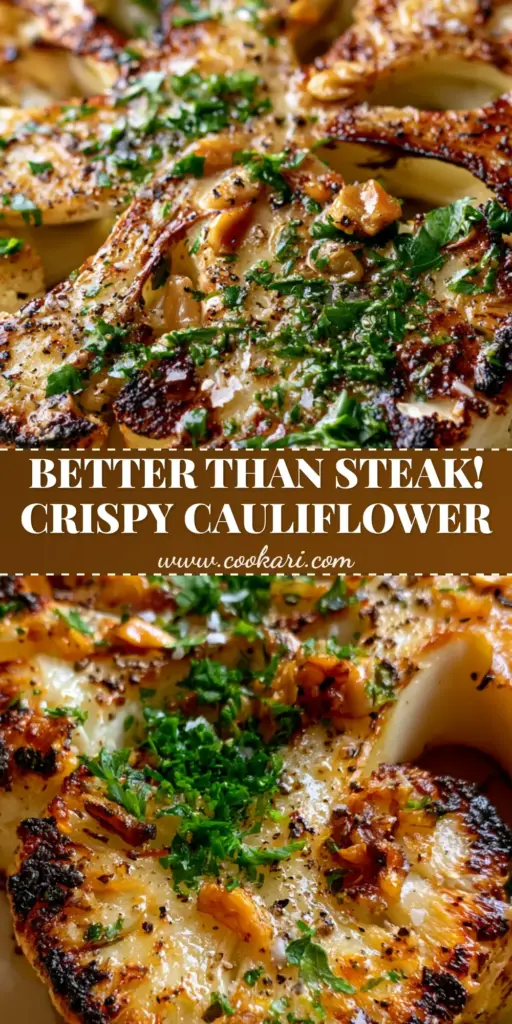
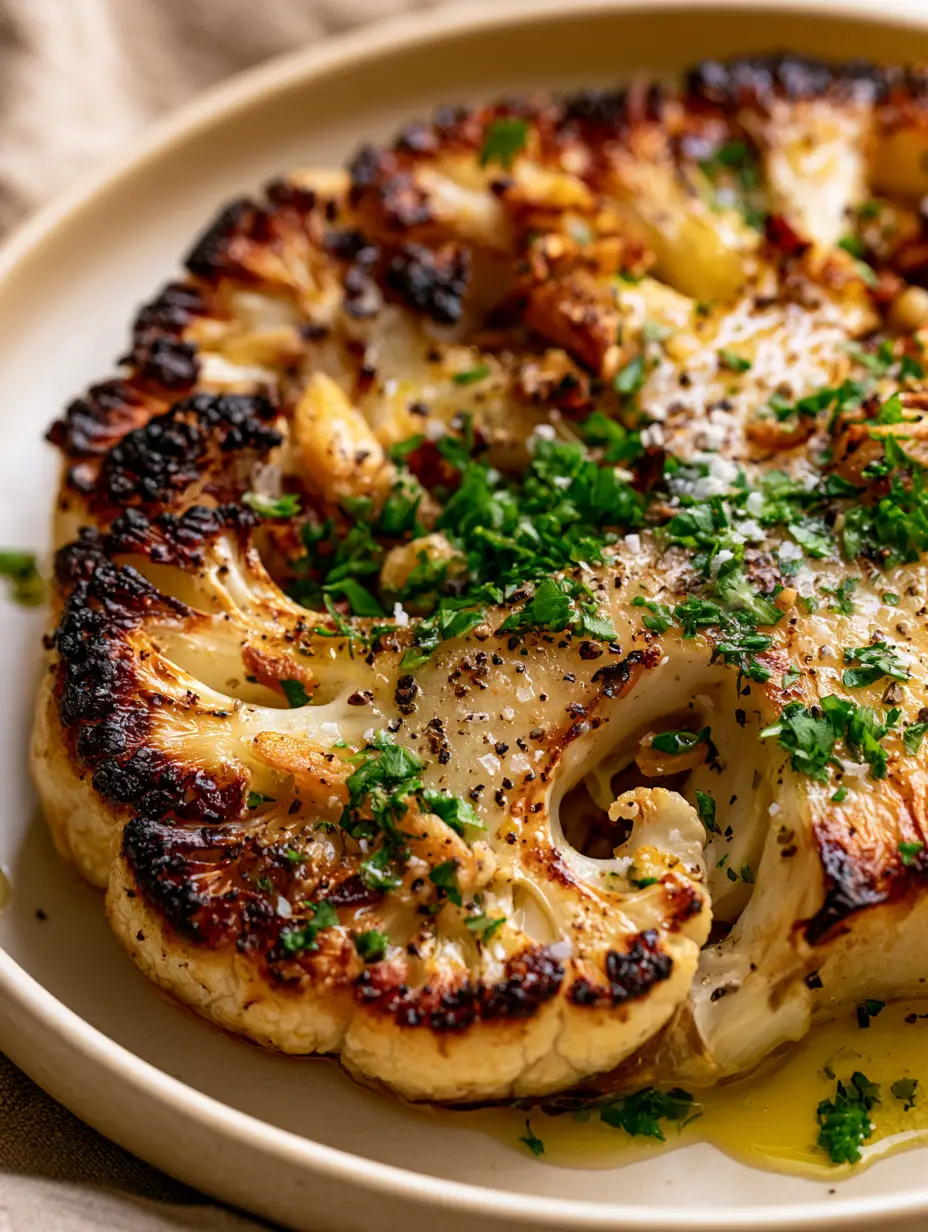
Baked Cauliflower Steaks with Garlic Herb Butter and Charred Edges
Ingredients
Equipment
Method
- Preheat oven to 400°F (200°C). Slice the cauliflower into 1.5-inch (4cm) thick slabs through the core.
- Arrange steaks on a baking sheet. Brush with olive oil and season with coarse sea salt and cracked black pepper. Add whole garlic cloves to the pan.
- Roast for 15-20 minutes, flip, and roast for another 10-12 minutes until edges are deeply caramelized and dark golden-brown.
- In a saucepan, melt butter with minced garlic and red pepper flakes. Stir in parsley and lemon zest.
- Pour the glistening herb butter over the hot steaks. Garnish with roasted garlic bits and additional sea salt flakes.
Notes
Keep the core intact to prevent the steaks from falling apart.
Closing Thoughts and Serving Suggestions
Mastering Baked Cauliflower Steaks is a gateway to high-end vegetable cookery. The transition from a raw, white vegetable to a deeply charred, butter-glistening steak is one of the most satisfying transformations in the kitchen. The final result, with its dusting of parsley and lemon zest against a matte ceramic backdrop, is as much a feast for the eyes as it is for the stomach.
We would love to see your culinary creations! If you enjoyed this recipe, please leave a comment below and share your photos with us on Pinterest. Your feedback helps our community of home cooks grow and thrive.