Fermented summer squash relish is the ultimate way to capture the fleeting magic of garden-fresh produce in a single, bubbling rustic glass jar. If you are looking for a vibrant, enzyme-rich condiment that balances a tangy crunch with a hint of spice, this recipe is designed for you. Unlike vinegar-based pickles, this raw fermentation process creates a complex depth of flavor and tiny fermentation bubbles that signal gut-healthy probiotics are at work.
Imagine a handheld smartphone photo of a mason jar overflowing with bright yellow summer squash and emerald green zucchini. The clear liquid brine sparkles under the morning light, revealing whole yellow mustard seeds and vibrant red chili flakes tucked between translucent white onion slivers. As you lift a wooden spoon out of the jar, the glistening textures and fresh dill aroma promise a sensory experience that no store-bought relish can match.
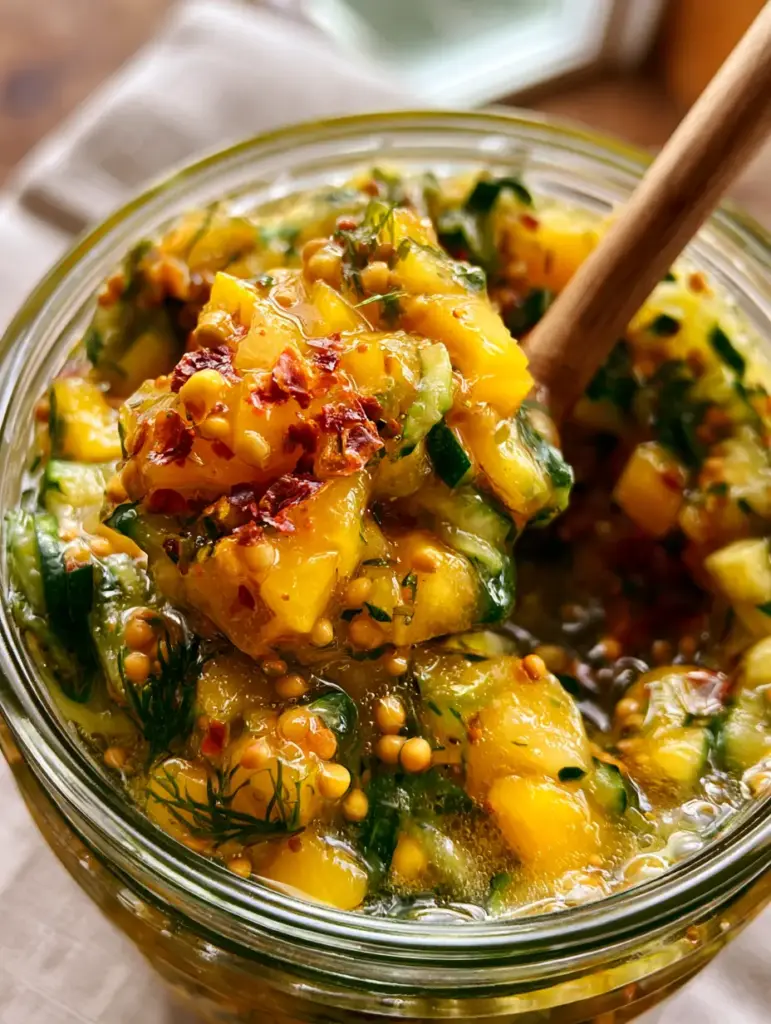
Why You Will Love This Vibrant Probiotic Relish
- Unbeatable Texture: The combination of finely diced yellow squash and shredded green zucchini creates a multidimensional mouthfeel that stays crunchy even after fermentation.
- Visually Stunning: The contrast between the neon yellow, deep green, and flecks of red chili makes this a show-stopping addition to any charcuterie board or kitchen counter.
- Naturally Probiotic: By using a traditional brine method, we invite beneficial bacteria to transform simple vegetables into a tangy, digestive powerhouse.
- Customizable Heat: The dried red chili flakes provide a gentle warmth that you can easily scale up or down based on your palate.
The Anatomy of a Perfect Fermented Summer Squash Relish
To achieve the forensic visual accuracy seen in high-end lifestyle photography, each ingredient serves a specific culinary and aesthetic purpose. We aren’t just making food; we are creating a preserved masterpiece.
Yellow Summer Squash: Choose firm, medium-sized squash. Dicing these into uniform cubes provides the structural “pop” and the primary golden hue of the relish.
Green Zucchini: Shredding the zucchini offers a softer, thread-like texture that binds the diced squash together, ensuring the brine penetrates every crevice.
Sea Salt (Non-Iodized): Vital for creating the brine. Use 2 tablespoons (34g) of high-quality sea salt to ensure a safe fermentation environment without inhibiting the good bacteria.
Whole Yellow Mustard Seeds: These add a classic “pickle” flavor profile and a beautiful spherical texture that mimics the tiny fermentation bubbles.
Dried Red Chili Flakes: These provide the “vibrant red” pops of color mentioned in our visual blueprint and a necessary back-end heat.
Fresh Green Dill Sprigs: Essential for that herbaceous, garden-fresh aroma. Dill also contains tannins which help keep the squash from becoming too soft.
White Onion: Sliced into paper-thin, translucent white onion slivers, these provide a sharp, savory aromatic base that mellows beautifully as it ferments.
Filtered Water: Avoid tap water, as chlorine can kill the wild yeast and bacteria needed for a successful ferment.
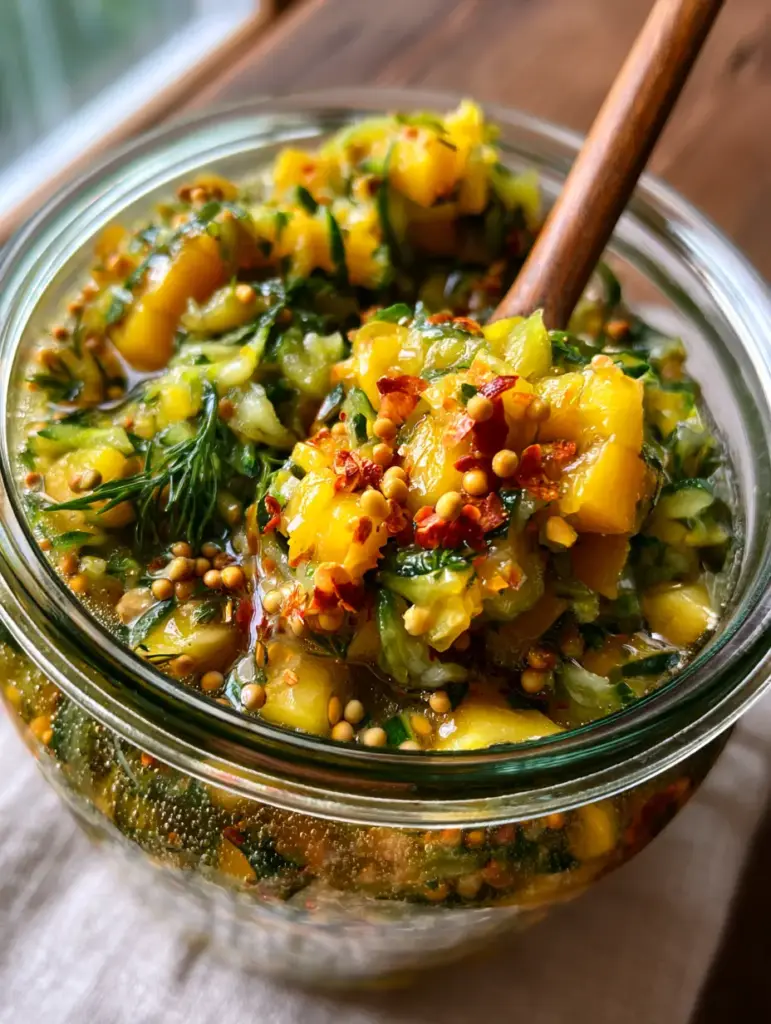
Step-by-Step Instructions for the Perfect Ferment
Phase 1: Prepping the Vegetables for Maximum Crunch
Start by washing 1 lb (450g) of yellow summer squash and 1 lb (450g) of green zucchini. Dice the yellow squash into small, uniform 1/4-inch (6mm) cubes to ensure even fermentation and a beautiful handheld appearance.
For the zucchini, use the large holes of a box grater to create shredded emerald green strands. Place both vegetables in a large bowl and toss with 1 large white onion, thinly sliced into translucent slivers.
Phase 2: Building the Aromatic Brine
In a separate pitcher, dissolve 2 tablespoons (34g) of sea salt into 4 cups (960ml) of filtered water. This creates a 2-3% brine solution, which is the “sweet spot” for vegetable fermentation.
In the bottom of a clean, rustic glass mason jar, place 3-4 sprigs of fresh green dill and 1 tablespoon (15g) of whole yellow mustard seeds. Add 1 teaspoon (5g) of dried red chili flakes for that signature visual spark.
Phase 3: Packing the Jar
Tightly pack the squash and zucchini mixture into the jar. Use a wooden spoon to press the vegetables down firmly, removing any large air pockets. You want the jar to look “overflowing” but still have space for the liquid.
Pour the brine over the vegetables until they are completely submerged. It is critical that no vegetable matter is exposed to air, as this can lead to mold. Use a glass fermentation weight if necessary to keep the relish under the clear liquid brine.
Phase 4: The Fermentation Window
Cover the jar with a loose lid or a fermentation airlock. Place the jar on a wooden farm table or counter away from direct sunlight. Within 2-3 days, you should see tiny fermentation bubbles rising to the top—this is the visual cue that your fermented summer squash relish is alive!
Taste the relish after 5 days. It should be tangy, salty, and slightly effervescent. Once the flavor reaches your desired level of “zip,” move the jar to the refrigerator to slow down the process.
Expert Tips for Fermentation Success
- Check the Bubbles: If you don’t see tiny fermentation bubbles by day 3, your room might be too cold. Move the jar to a slightly warmer spot, like the top of the refrigerator.
- Weight it Down: “Under the brine, all is fine.” Ensure your translucent white onion slivers aren’t floating to the surface.
- Seasonal Variation: Summer squash is high in water. If your relish looks a bit cloudy, don’t panic! That is often just the healthy Lactobacillus doing its job.
- Tannin Hack: If you want extra-crunchy relish, add a clean grape leaf or a piece of oak leaf to the jar; the tannins prevent cellular breakdown.
Storage and Preservation
Your fermented summer squash relish will keep in the refrigerator for up to 6 months. The flavor will continue to develop and sharpen over time. Do not freeze this relish, as the ice crystals will destroy the crisp cellular structure of the squash and zucchini.
What to Serve With Fermented Relish
This relish is a versatile workhorse in the kitchen. Its bright acidity cuts through rich, fatty dishes perfectly. Try it as a topping for these raw vegan jerk tacos to add a fermented tang to the spice. It also works beautifully as a garnish for a warm coconut tofu soup.
If you are hosting a summer gathering, serve this relish alongside a refreshing cucumber mocktail for a gut-healthy, sophisticated appetizer spread. It even elevates simple raw vegan tacos into a gourmet experience.
Frequently Asked Questions
It is best to avoid table salt because it often contains iodine and anti-caking agents, which can inhibit the growth of healthy bacteria and darken the color of your vegetables.
No, you can use all yellow squash or all zucchini. However, the mix of diced yellow squash and shredded zucchini provides the best contrast in texture and visual appeal.
If you see fuzzy mold on the surface, smell a putrid or ‘off’ odor, or if the vegetables have turned extremely mushy, discard the batch. A sour, vinegary smell is normal and desirable.
Cloudiness is a completely normal sign of active lactic acid fermentation. It indicates that the beneficial bacteria are flourishing and transforming the vegetables into a tangy relish.
The Ultimate Fermented Summer Squash Relish Recipe
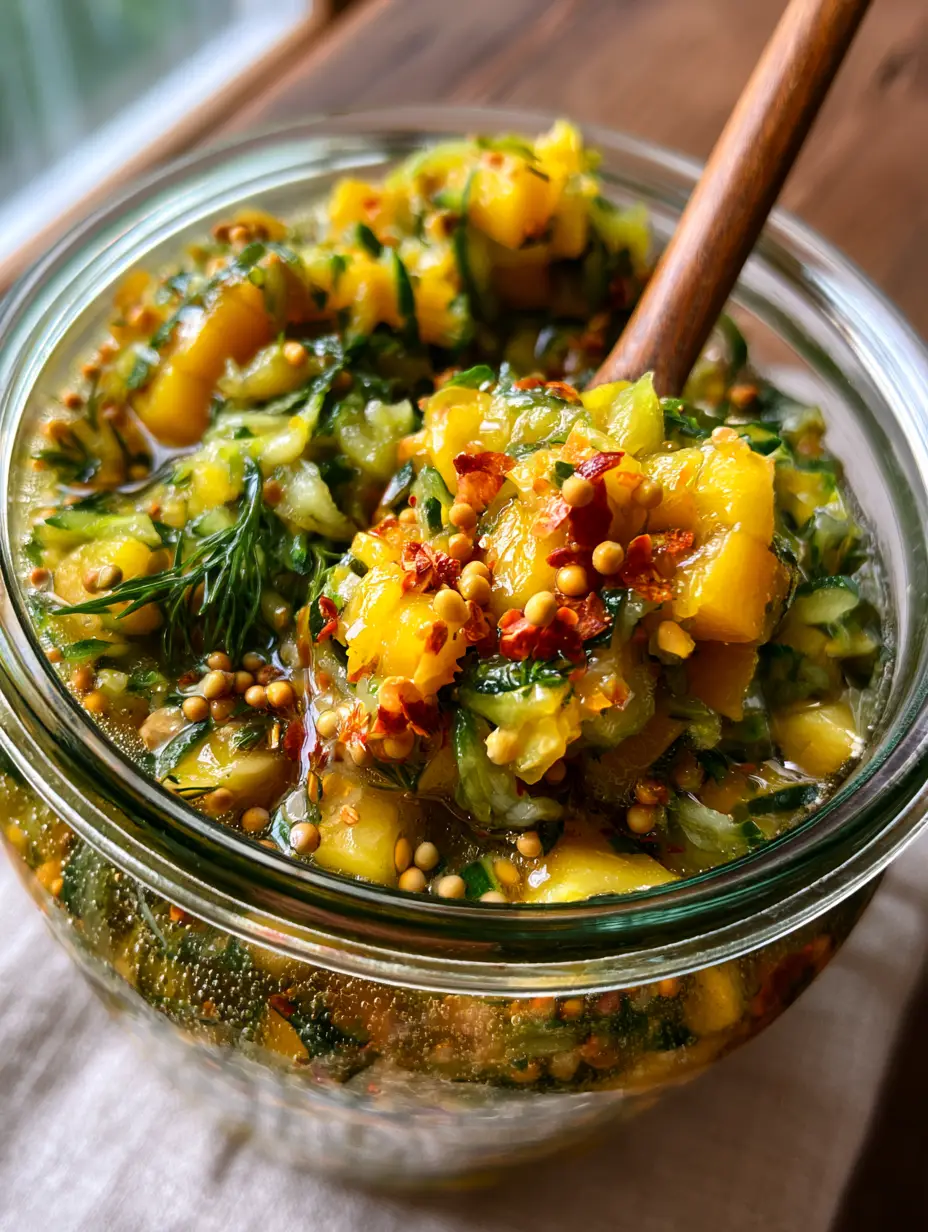
Fermented Summer Squash Relish: A Zesty, Probiotic-Rich Summer Condiment
Ingredients
Equipment
Method
- Dice the yellow squash into uniform cubes and shred the green zucchini. Thinly slice the onion into translucent slivers.
- Place dill, mustard seeds, and chili flakes at the bottom of a clean rustic glass jar.
- Tightly pack the vegetables into the jar using a wooden spoon, leaving 1 inch of headspace.
- Dissolve salt in filtered water and pour over the vegetables until completely submerged.
- Store at room temperature for 5-7 days until tiny fermentation bubbles appear and the relish tastes tangy.
Notes
Use only non-iodized salt for the best fermentation results.

Join the Cookari Community!
Did you catch those tiny fermentation bubbles in your jar? We want to see your results! Save this recipe to your Pinterest boards by clicking the Pin button so you never lose this summer staple. Follow @cookari_recipes for more probiotic-rich inspiration.
If you made this fermented summer squash relish, please leave a 5-star rating in the recipe card above and upload a photo of your rustic glass jar in the comments below. Happy fermenting!