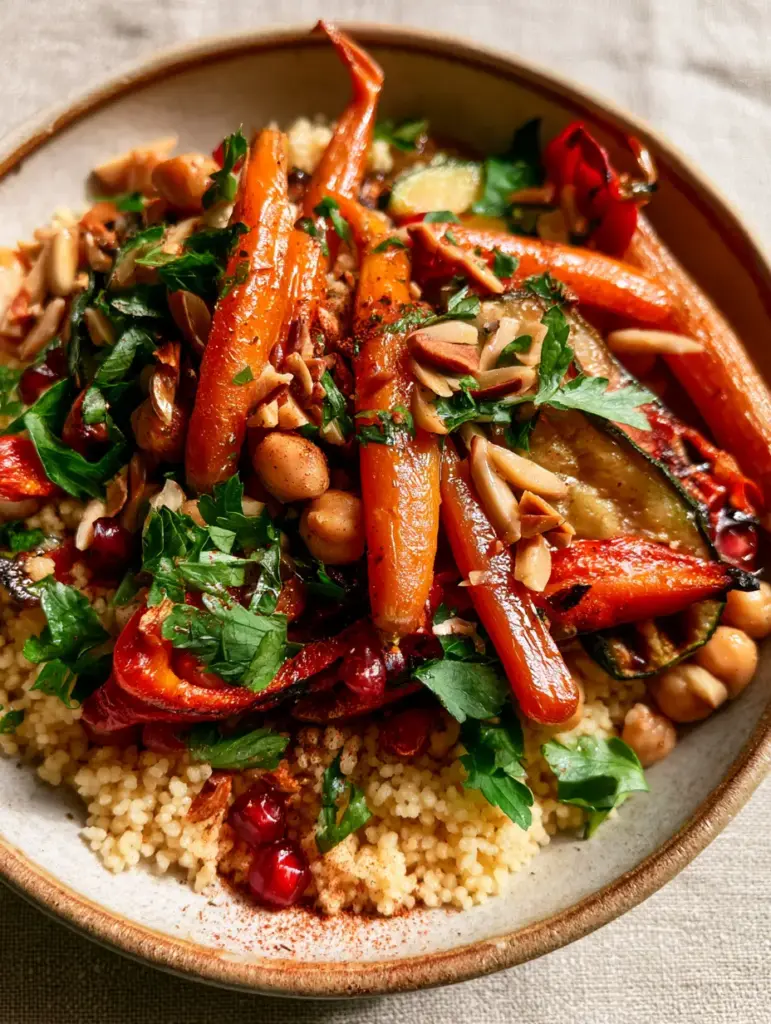
Moroccan couscous is more than just a side dish; it is a vibrant, golden centerpiece that brings the aromatic soul of North Africa straight to your dining table. This specific recipe focuses on achieving that elusive, ultra-fluffy texture that Pinterest foodies dream of, topped with a mountain of caramelized vegetables.
If you have ever struggled with clumpy or bland grains, this Moroccan couscous guide will change your culinary game forever. We are combining traditional steaming methods with modern roasting techniques to create a dish that is as visually stunning as it is delicious.
Why This Vibrant Moroccan Couscous Recipe Works
- Textural Harmony: We pair tender, steamed golden grains with the crunch of toasted almond slivers and the pop of fresh pomegranate seeds.
- Complex Aromatics: The inclusion of Ras el Hanout provides a warm, reddish-brown dusting of flavor that balances sweet and savory notes.
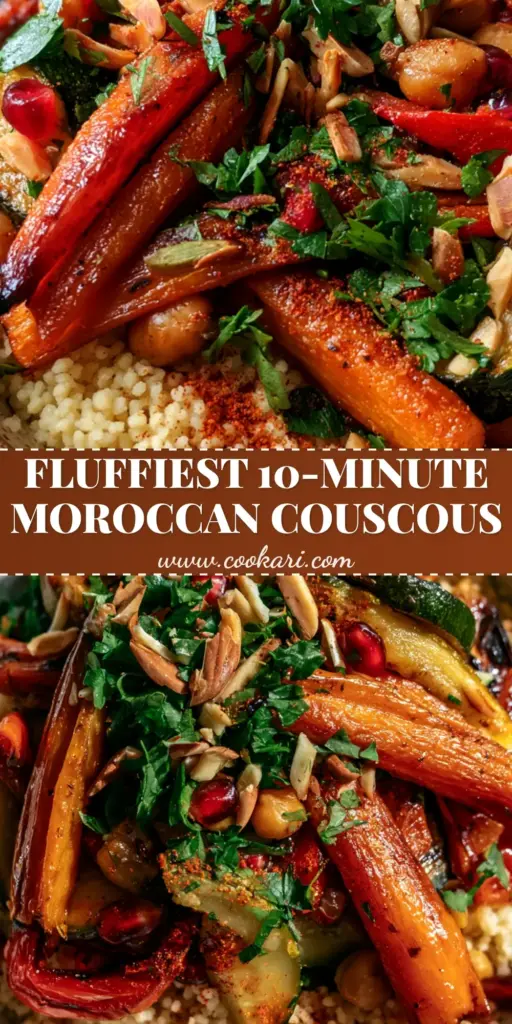
- Visual Brilliance: The contrast between charred red bell peppers and bright green flat-leaf parsley makes this a high-performing dish for social sharing.
- Nutrient Dense: Packed with caramelized carrot batons and tender boiled chickpeas, it is a complete plant-based powerhouse.
For those looking to expand their repertoire of healthy, vegetable-forward meals, this dish fits perfectly alongside our other high-protein recipes that prioritize whole food ingredients and bold seasoning.
The Essential Ingredients for Authentic Moroccan Flavors
To recreate the Moroccan couscous seen in professional food photography, you must start with the right components. Every ingredient serves a specific purpose in building the final flavor profile.
Dried Couscous (Semolina): Use 2 cups (340g) of high-quality Moroccan-style couscous. Unlike Israeli couscous, these tiny grains are designed to be steamed until they are light and airy.
Ras el Hanout: This “head of the shop” spice blend is crucial. Use 1.5 teaspoons (7.5ml) to provide that signature warmth and reddish-brown hue across the vegetables.
Carrots and Zucchini: You will need 3 large carrots cut into 3-inch (7.5cm) batons and 2 medium zucchinis cut into thick rounds. The carrots provide sweetness through caramelization, while the zucchini offers a tender, moist bite.
Red Bell Peppers and Yellow Squash: 1 large red pepper, sliced into strips, and 1 yellow squash, cubed. Roasting the peppers until charred adds a smoky depth that complements the Moroccan couscous perfectly.
Chickpeas: 1 can (15 oz / 425g) or 1.5 cups of boiled chickpeas. These add the necessary protein and a creamy texture to the vegetable mountain.
Garnishes: Do not skip the 1/4 cup (35g) of toasted almond slivers for crunch, 1/4 cup (40g) of fresh pomegranate seeds for acidity, and a handful of fresh chopped parsley for brightness.
If you love the Mediterranean profile of this dish, you might also enjoy our stuffed baked eggplant which utilizes similar warm spices and roasted vegetable techniques.
Mastering the Fluff: Step-by-Step Instructions
Phase 1: Preparing the Caramelized Vegetable Topping
Preheat your oven to 400°F (200°C). Tossing your carrot batons and red bell pepper strips in 2 tablespoons (30ml) of olive oil and a pinch of salt is the first step toward flavor development.
Spread the carrots and peppers on a large baking sheet. Roast for 20-25 minutes until the carrots show dark, caramelized edges and the peppers have developed slight char marks.
Meanwhile, in a large skillet over medium-high heat, sauté the zucchini rounds and yellow squash with a teaspoon of oil. You want them tender but not mushy, maintaining their vibrant colors.
Combine the roasted and sautéed vegetables in a bowl with the boiled chickpeas. Gently toss with 1 teaspoon (5ml) of Ras el Hanout so the spices bloom against the residual heat of the vegetables.
Phase 2: Steaming the Perfect Moroccan Couscous
While the vegetables finish, focus on the grains. Bring 2 cups (480ml) of salted water or vegetable broth to a boil. Precision matters here to avoid soggy grains.
Place the dry Moroccan couscous in a heat-proof ceramic bowl. Pour the boiling liquid over the grains, ensuring they are fully submerged. Cover the bowl immediately with a tight-fitting lid or plastic wrap.
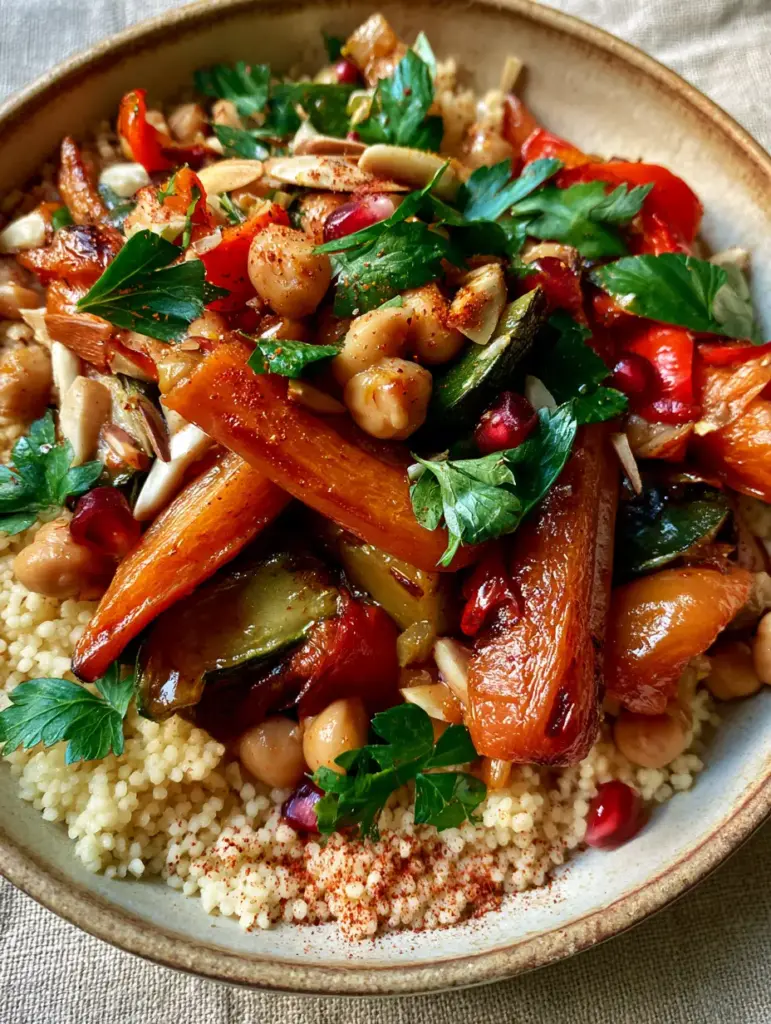
Let the grains sit undisturbed for 5 to 7 minutes. This allows the steam to penetrate the heart of each semolina granule, creating that “ultra-fluffy” result mentioned in our visual blueprint.
Using a fork, fluff the grains vigorously. Do not use a spoon, as this will mash the grains together. The goal is perfectly separated, golden grains that feel light as air.
Phase 3: Assembly and The Finishing Touches
Transfer the fluffed Moroccan couscous to a large rustic ceramic serving bowl. Create a small well in the center of the grains.
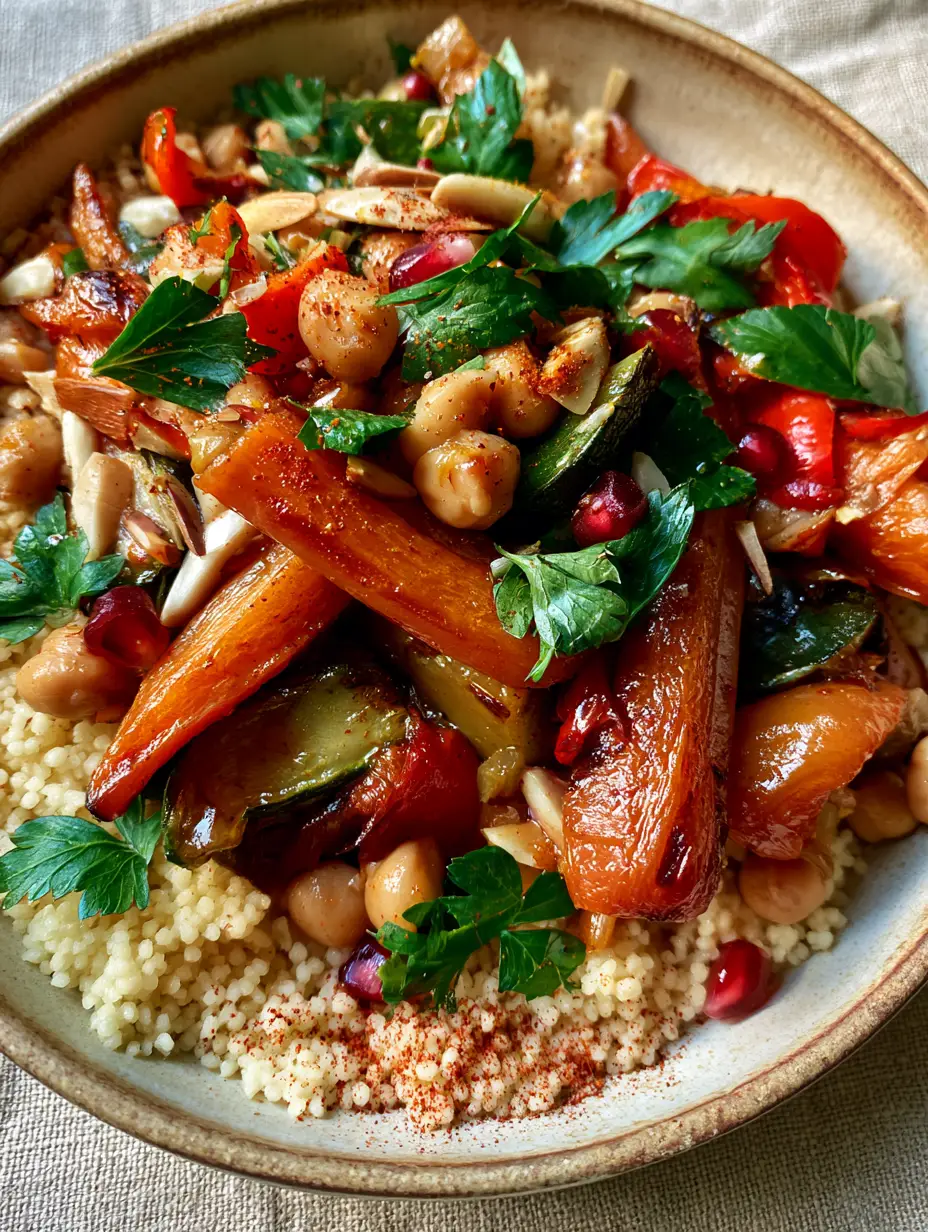
Pile the warm vegetable mixture—the carrots, zucchini, squash, chickpeas, and peppers—into a “vibrant mountain” in the center of the bowl.
The Final Garnish: Scatter the fresh chopped parsley generously over the top. Follow with the toasted almond slivers and a handful of ruby-red pomegranate seeds. Finish with one last dusting of Ras el Hanout for aromatic impact.
This dish is a fantastic alternative to a southwest quinoa salad when you want something with more traditional North African roots and warmer spice profiles.
Expert Tips for Pinterest-Perfect Couscous
- Toast the Grains: For extra nuttiness, toast the dry couscous in a dry pan for 2 minutes before adding water. This prevents the grains from sticking together.
- Side-Lighting for Photos: If you are snapping a photo for Pinterest, use warm natural side-lighting from a window to highlight the moisture on the vegetables and the texture of the grains.
- The Almond Factor: Always toast your almond slivers just before serving. The contrast between the soft grains and crunchy nuts is a hallmark of a professional dish.
- Quality of Spice: Not all Ras el Hanout blends are equal. Look for one that contains rose petals and cinnamon for the most authentic aroma.
Storage, Reheating & Meal Prep
Moroccan couscous stores beautifully, making it an excellent choice for weekday lunches. Place leftovers in an airtight container and refrigerate for up to 4 days.
To reheat, add a tablespoon of water or broth to the grains to prevent them from drying out. Microwave for 60-90 seconds, then re-fluff with a fork before eating.
While you can freeze the couscous grains, the stewed yellow squash and sautéed zucchini may become too soft upon thawing. For the best experience, we recommend enjoying the vegetables fresh.
What to Serve With Moroccan Couscous
This recipe is hearty enough to stand alone as a vegetarian main, but it also pairs exceptionally well with protein-heavy sides. Consider serving it alongside a one-pot chicken and veggie skillet to feed a larger crowd.
For a complete feast, add a bowl of paleo ranch dressing or a garlic-tahini drizzle to provide a creamy element that cuts through the spice of the Ras el Hanout.
Frequently Asked Questions
Yes, you can substitute the semolina grains with a gluten-free couscous alternative made from corn or cassava, or use quinoa as a textural substitute.
Use a 1:1 ratio of liquid to couscous, never boil the grains in a pot like pasta, and always fluff with a fork rather than a spoon.
While it looks like a grain, Moroccan couscous is actually tiny granules of rolled semolina flour, making it a form of pasta.
It is a complex North African blend typically containing cumin, ginger, cinnamon, coriander, turmeric, and sometimes dried rose petals.
The Ultimate Moroccan Couscous Recipe Card
Moroccan Couscous with Roasted Vegetables and Ras el Hanout
Ingredients
Equipment
Method
- Toss carrot batons and red bell pepper strips in olive oil. Roast at 400°F (200°C) for 20-25 minutes until caramelized and slightly charred.
- Sauté zucchini rounds and yellow squash in a skillet until tender. Mix with boiled chickpeas and 1 tsp Ras el Hanout.
- Place dry couscous in a ceramic bowl. Pour boiling broth over grains, cover tightly, and let sit for 7 minutes.
- Remove lid and fluff vigorously with a fork to separate grains and ensure an airy texture.
- Pile vegetables onto the couscous. Garnish with parsley, toasted almonds, pomegranate seeds, and a final dusting of Ras el Hanout spice.
Notes
For extra color, ensure the red peppers get a slight char during roasting.
Share Your Culinary Masterpiece!
Did this Moroccan couscous turn out as fluffy and vibrant as the photos? We want to see your results! Save this recipe to your “Healthy Dinners” board on Pinterest so you never lose it.
If you made a substitution or found a new favorite garnish, leave a comment below and upload a photo of your dish. Don’t forget to give this recipe a 5-star rating if it satisfied your cravings for authentic Moroccan flavors. Follow @cookari_recipes for more high-quality, visually stunning kitchen inspiration!