There is a specific kind of culinary magic that happens when high-heat charring meets the cool, tangy velvet of whipped dairy. The Zucchini and Goat Cheese Stack is the embodiment of this contrast, offering a sophisticated appetizer that looks like a professional gallery piece but tastes like a summer garden at its peak. This dish isn’t just a recipe; it is a study in textures, from the firm, smoky bite of thick-cut zucchini to the airy, herb-flecked goat cheese that melts ever so slightly against the warm vegetable rounds.
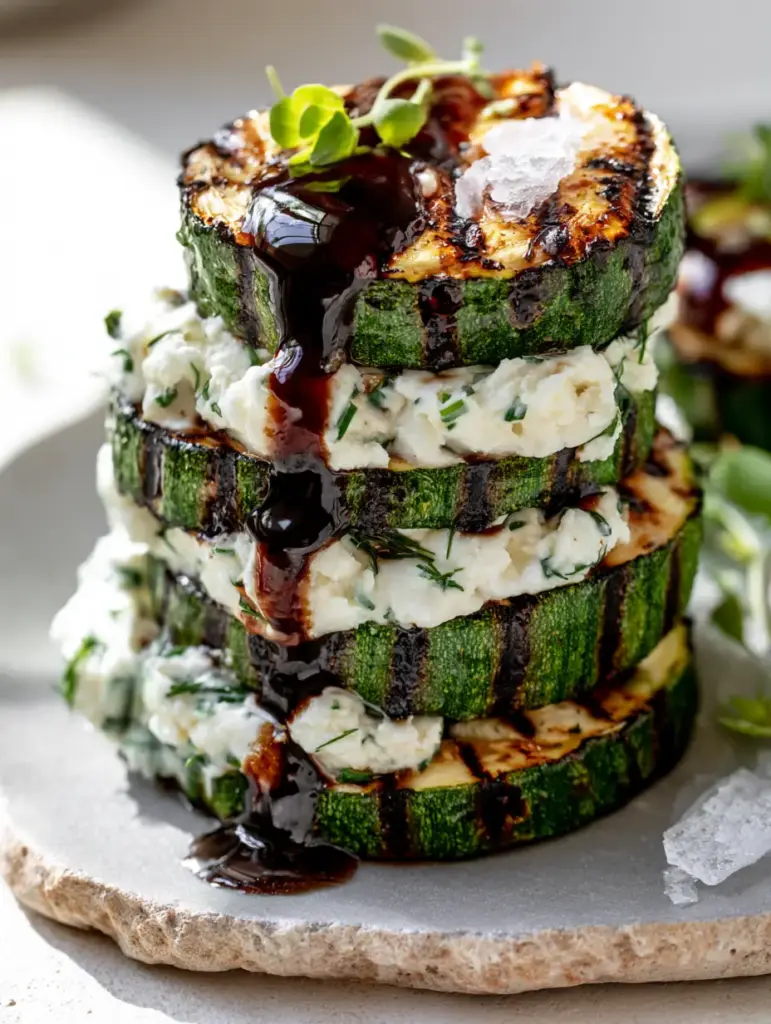
Imagine a macro close-up of three perfectly uniform, thick-cut zucchini rounds. Each one carries the badge of a hot grill: dark, parallel char marks that promise a deep, smoky flavor. Sandwiched between these layers is a generous, fluffy cloud of creamy white goat cheese, intricately speckled with finely minced green chives and dill. To finish, a mahogany-hued balsamic reduction cascades down the sides, catching the light like liquid garnets, while large crystals of flaky sea salt and tiny micro-basil leaves provide the final, artisanal touch.
Whether you are looking for a show-stopping starter for a dinner party or a refined light lunch, this stack delivers on every sensory level. The following guide will walk you through the culinary forensics of achieving that perfect stack height, the science of the balsamic drizzle, and the secrets to keeping your zucchini rounds structurally sound and visually stunning.
Why You Will Love This Elegant Zucchini and Goat Cheese Stack
- Textural Harmony: The combination of the tender-crisp char-grilled zucchini and the whipped, aerated goat cheese creates a luxurious mouthfeel that is both light and satisfying.
- Visual Sophistication: With its dark parallel char marks and glossy mahogany glaze, this dish is designed for high-end presentation on a matte stone plate.
- Herb-Forward Profile: The dual-herb approach using minced chives and fresh dill inside the cheese, topped with micro-basil, provides layers of aromatic complexity.
- Sophisticated Simplicity: Despite its gourmet appearance, the recipe relies on foundational cooking techniques that any home cook can master to achieve professional results.
The Essential Elements for a Flawless Zucchini and Goat Cheese Stack
To achieve the visual and flavorful results described in our blueprint, we must select ingredients that offer both structural integrity and vibrant flavor. Every component plays a role in the “stack” architecture.
Large, Firm Zucchini: Look for zucchinis that are roughly 2.5 inches (6.5cm) in diameter. You need thick, uniform rounds that can withstand the heat of the grill without collapsing into a mushy heap.
Premium Goat Cheese (Chèvre): A high-quality, creamy goat cheese is essential. We will be whipping this to achieve the “fluffy” texture seen in the visual prompt, which requires a cheese that is fresh and not overly crumbly.
Fresh Aromatic Herbs: Fresh chives and dill provide the green speckles within the cheese. Their sharpness cuts through the richness of the dairy perfectly.
Balsamic Reduction: You can use a store-bought glaze, but making your own allows you to control the thickness and the deep mahogany color that is so critical for the final drizzle.
Invisible Foundations: We utilize high-smoke-point extra virgin olive oil for the grilling process and a touch of heavy cream (or whole milk) to assist in the whipping of the goat cheese, ensuring it reaches peak fluffiness.
Tools Required for Culinary Precision
Achieving those iconic parallel char marks and the perfect stack height requires more than just basic pans. To replicate the professional handheld photography look, you will need:
- Cast Iron Grill Pan: This is the secret to those deep, dark parallel char marks. A flat skillet won’t provide the same visual or smoky flavor profile.
- Mandoline Slicer (Optional): While a sharp knife works, a mandoline ensures every zucchini round is exactly the same thickness, which is vital for a stable stack.
- Electric Hand Mixer: To get the goat cheese truly “whipped” and airy, mechanical aeration is superior to stirring by hand.
- Offset Spatula: This tool allows you to spread the generous layers of herbed cheese evenly without disturbing the char marks on the zucchini.
Mastering the Art of the Perfect Grill and Stack
Preparing the Zucchini Rounds for the Flame
Start with 2 large (approx. 600g) zucchinis. Wash them thoroughly and pat them bone-dry; moisture is the enemy of a good sear. Cut the zucchinis into thick rounds, approximately 3/4 inch (2cm) thick. If they are too thin, the Zucchini and Goat Cheese Stack will lose its verticality and structural presence.
Lightly brush each side of the rounds with 2 tablespoons (30ml) of extra virgin olive oil. Season immediately with a small pinch of fine sea salt. Avoid over-salting at this stage, as salt draws out moisture, which can lead to steaming rather than grilling. Much like preparing perfectly grilled zucchini, the goal here is a dry heat application.
Achieving the Iconic Dark Parallel Char Marks
Heat your cast iron grill pan over medium-high heat until a drop of water flicked onto the surface dances and evaporates instantly. Place the zucchini rounds onto the ridges of the pan. Once they are down, do not move them. This stillness is what creates the “perfectly grilled” look mentioned in our visual prompt.
Press down lightly with a spatula to ensure full contact with the grill ridges. Grill for 3-4 minutes per side. You are looking for a sensory cue: the zucchini should be tender enough to pierce with a fork but still offer resistance in the center. The char marks should be a dark, rich brown, almost black, contrasting beautifully with the bright green skin.
Whipping the Herbed Goat Cheese Filling
In a medium mixing bowl, combine 8 ounces (225g) of room-temperature goat cheese with 1 tablespoon (15ml) of heavy cream and 1 teaspoon (5ml) of fresh lemon juice. Using an electric mixer, whip on medium speed for 2 minutes until the mixture increases in volume and looks fluffy.
Fold in 2 tablespoons (8g) of finely minced fresh chives and 1 tablespoon (4g) of minced fresh dill. The herbs should be distributed evenly, creating those distinct green speckles against the creamy white background. This technique is similar to the filling used in savory zucchini bites, but with a lighter, more aerated finish.
Assembly: Building the Triple-Tiered Stack
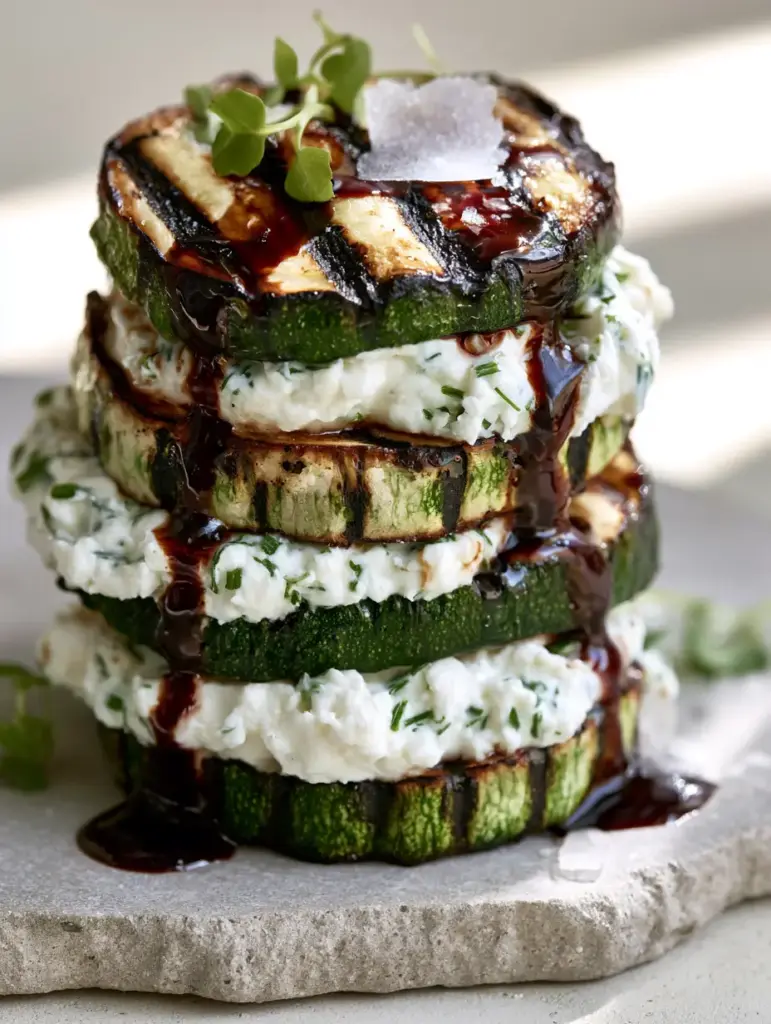
Presentation is everything for the Zucchini and Goat Cheese Stack. Place one charred round on a matte, light gray stone plate. Using your offset spatula, add a generous 1-inch (2.5cm) layer of the whipped herbed cheese. Repeat the process with a second zucchini round and another layer of cheese.
Top the stack with the third and final zucchini round, ensuring the char marks are running in the same direction as the layers below for visual harmony. The weight of the top rounds should cause the cheese to bulge slightly at the edges, creating that mouth-watering, “loaded” appearance.
The Finishing Touches: Glaze and Garnish
Take your thick, mahogany-colored balsamic reduction. Start at the center of the top zucchini round and slowly drizzle in a circular motion, allowing the glaze to run down the sides and pool slightly at the base of the stack. The thickness of the reduction is key; it should cling to the cheese and zucchini like a syrup.
Scatter a few tiny micro-basil leaves over the top and around the plate. Finally, sprinkle a generous pinch of large, crystalline flaky sea salt and a crack of fresh black pepper. The salt crystals should be visible, catching the light alongside the glossy glaze. This level of detail is what separates a simple side dish from a professional Zucchini and Goat Cheese Stack.
Expert Tips for Success
- Temperature Control: Serve the zucchini rounds warm but the goat cheese slightly chilled. This temperature contrast is a hallmark of elite appetizer design.
- Preventing Slumping: If your stack feels unstable, ensure your goat cheese was whipped long enough to hold its shape. If it’s too soft, chill the whipped mixture for 10 minutes before assembling.
- Herb Freshness: Never use dried herbs for this recipe. The visual prompt specifically calls for the vibrant green of fresh chives and dill to pop against the white cheese.
- Glaze Consistency: If your balsamic glaze is too thin, simmer it in a small saucepan for a few extra minutes until it coats the back of a spoon. It should be the consistency of warm honey.
What to Serve With Your Zucchini Stacks
This dish is remarkably versatile. For a Mediterranean-inspired spread, pair it with a refreshing Greek chickpea salad or a bowl of citrus-infused corn. If you are serving this as part of a larger vegetarian feast, it complements a hearty root vegetable stew beautifully, providing a light and bright counterpoint to the heavier flavors.
If you enjoy the combination of squash and aromatics, you might also find that these stacks are a wonderful precursor to cheesy garlic zucchini steaks, carrying the theme through multiple courses.
Maintaining Freshness and Storage
The Zucchini and Goat Cheese Stack is best enjoyed immediately after assembly to maintain the contrast between the warm zucchini and the cool cheese. However, if you have leftovers, they can be stored in an airtight container in the refrigerator for up to 24 hours.
Note that the balsamic glaze will bleed into the cheese over time, and the zucchini will lose its “tender-crisp” texture. We do not recommend freezing this dish, as the cellular structure of the zucchini will break down, and the goat cheese will lose its whipped, aerated quality upon thawing.
Frequently Asked Questions
Yes, you can whip the herbed goat cheese and slice the zucchini up to 24 hours in advance. However, wait to grill and assemble the stacks until just before serving for the best texture.
For this specific recipe, fresh herbs are highly recommended. Fresh chives and dill provide the vibrant green color and sharp aromatic profile necessary to balance the rich goat cheese.
The key is high heat and thick slices. Cut them at least 3/4 inch thick and ensure your grill pan is preheated until smoking hot to sear the outside quickly without overcooking the interior.
A high-quality whole milk ricotta or a whipped feta would work well, though the flavor profile will be milder or saltier, respectively. Ensure you whip them similarly to achieve the fluffy texture.
If you don’t have store-bought glaze, simmer 1/2 cup of balsamic vinegar with 1 tablespoon of honey in a small pan until reduced by half. It should be thick enough to coat a spoon.
The Ultimate Zucchini and Goat Cheese Stack Recipe
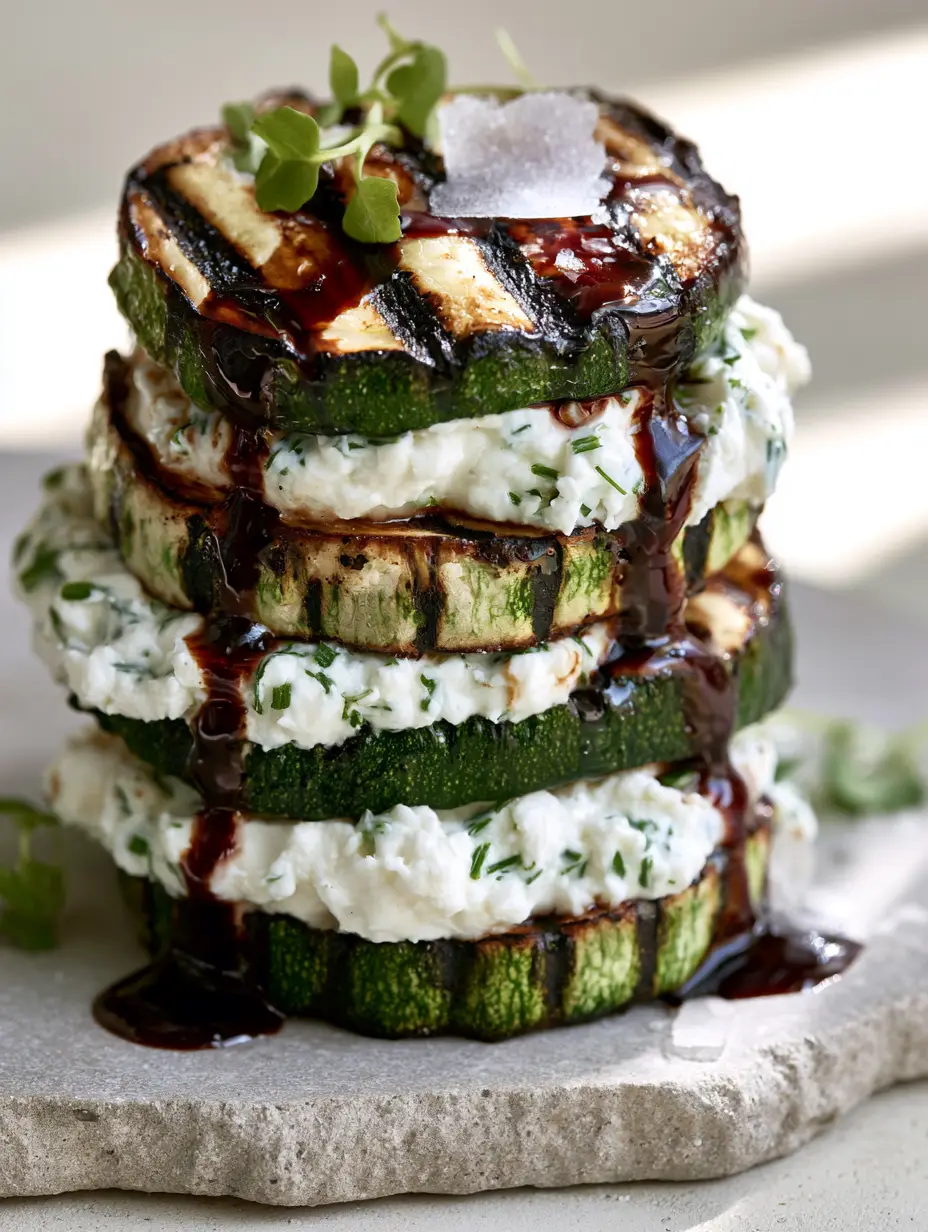
Zucchini and Goat Cheese Stack with Balsamic Glaze and Fresh Herbs
Ingredients
Equipment
Method
- Slice zucchini into 3/4 inch thick rounds. Brush both sides with olive oil and a pinch of salt.
- Heat grill pan over medium-high. Sear zucchini for 3-4 minutes per side without moving them to achieve dark parallel char marks.
- Beat goat cheese, cream, and lemon juice with a hand mixer for 2 minutes. Fold in minced chives and dill.
- Place one zucchini round on a plate, spread a generous layer of cheese, and repeat until three rounds are stacked.
- Drizzle with balsamic reduction, garnish with micro-basil, flaky sea salt, and cracked black pepper.
Notes
Use a thick balsamic glaze so it clings to the sides of the stack instead of running off immediately.
Conclusion and Call to Action
Mastering the Zucchini and Goat Cheese Stack is a rewarding endeavor for any home cook who values the intersection of flavor and aesthetics. By focusing on the “forensic” details—the dark char marks, the fluffy herb-flecked cheese, and the mahogany glaze—you create a dish that is as much a feast for the eyes as it is for the palate. We invite you to try this recipe and share your results! Did your char marks come out perfectly parallel? Did the balsamic pool just right on your stone plate?
Let us know in the comments below, and don’t forget to follow us on Pinterest for more visually stunning and scientifically sound recipes. If you loved this, please share this post with your fellow food enthusiasts!