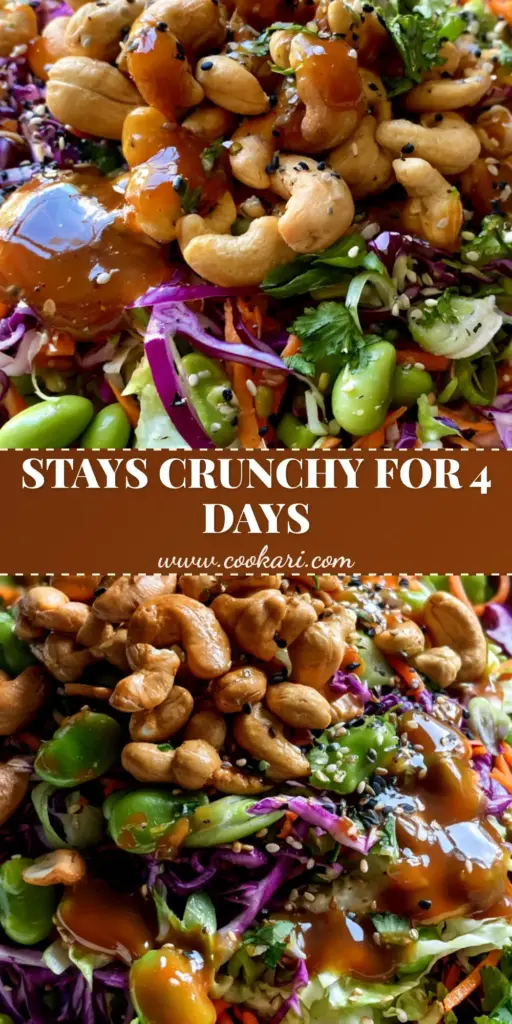
There is a specific kind of magic that happens when the vibrant crunch of garden-fresh vegetables meets the rich, buttery depth of toasted nuts. This Asian Cashew Salad is the physical embodiment of that harmony. When you look at a bowl filled with finely shredded purple cabbage and crisp Napa greens, you aren’t just looking at a meal; you are looking at a masterclass in texture and color theory.
Inspired by the bright, high-contrast aesthetics of modern culinary photography, this dish is designed to be as visually stunning as it is delicious. Imagine a handheld smartphone photo of a matte white ceramic bowl, the natural daylight catching the glossy amber sheen of a sesame ginger dressing. That is the experience we are recreating in your kitchen today.
Every bite offers a symphonic snap from julienned carrots, a creamy pop from steamed edamame, and the unmistakable toasted warmth of golden-brown cashews. Whether you are looking for a light lunch or a show-stopping side for a dinner party, this vibrant Asian-style salad delivers on every professional culinary promise.
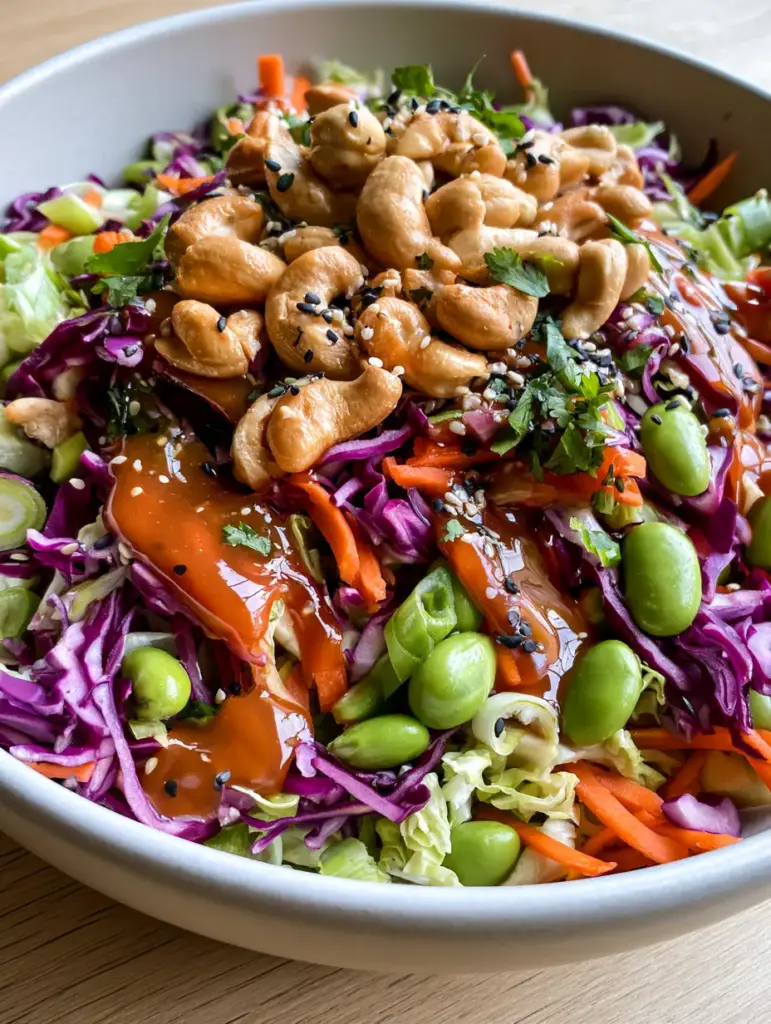
Why This Crunchy Asian Cashew Salad Works
- Textural Contrast: We combine the rigid structure of purple cabbage with the delicate, crinkled leaves of Napa cabbage for a multi-dimensional mouthfeel.
- Glossy Visual Appeal: The dressing isn’t just a flavor enhancer; it’s a visual glaze that gives the vegetables a professional, high-end restaurant finish.
- Saturated Nutrition: From the anthocyanins in the cabbage to the plant-based protein in the edamame, every ingredient serves a functional health purpose.
- Umami Depth: The combination of toasted sesame oil, fresh ginger, and soy sauce creates a savory baseline that balances the natural sweetness of the carrots and cashews.
The Foundation: Cabbage, Carrots, and Aromatics
To achieve the specific visual result described in our blueprint, the preparation of the base vegetables is paramount. You cannot simply chop these ingredients; you must treat them with forensic precision to ensure the dressing clings to every surface.
Purple Cabbage (Red Cabbage): 4 cups (approx. 400g). This provides the structural integrity of the salad. Its deep violet hue creates the high-contrast look that makes the orange carrots pop. Use a mandoline or a very sharp chef’s knife to achieve hair-thin shreds.
Napa Cabbage: 4 cups (approx. 300g). Unlike standard green cabbage, Napa cabbage has a high water content and a tender, ruffled edge. This acts as a sponge for our ginger dressing, ensuring no bite is dry.
Julienned Raw Carrots: 1 cup (125g). These must be cut into “matchsticks.” This specific shape ensures they integrate into the cabbage nest rather than falling to the bottom of the bowl. If you prefer a faster method, a julienne peeler is a lifesaver for this rainbow-hued presentation.
Steamed Green Edamame: 1 cup (155g). Use shelled edamame. We steam them just until they are bright green and tender-crisp. They provide the “plump” visual element that contrasts against the shredded greens.
Sliced Scallions: 1/2 cup (50g). Cut these on a sharp bias (diagonal). This increases the surface area for flavor release and adds a sophisticated, professional look to the final garnish.
The Golden Crunch: Perfecting the Toasted Cashews
Whole Raw Cashews: 1 cup (150g). While you can buy pre-toasted nuts, toasting them fresh in your own kitchen allows you to control the exact level of “golden-brown” described in our visual prompt. The residual heat helps release the essential oils, making them more fragrant.
Neutral Oil: 1 tsp (5ml). A tiny amount of avocado or grapeseed oil helps the heat distribute evenly across the cashew’s curved surface, preventing scorched spots while ensuring a uniform golden glow.
Fine Sea Salt: 1/4 tsp (1.5g). A whispered hint of salt on the nuts bridges the gap between the sweet honey in the dressing and the earthy cabbage base.
The Liquid Gold: Glossy Sesame Ginger Dressing
The amber-colored dressing is the “Critical Bridge” in this recipe. It must be thick enough to coat the vegetables without pooling at the bottom, yet fluid enough to reflect light beautifully.
Rice Vinegar: 1/3 cup (80ml). This provides the necessary acidity to break down the tough fibers of the raw cabbage, effectively “wilting” it just enough to make it pleasant to eat.
Soy Sauce: 3 tbsp (45ml). This provides the salt and the deep amber base color. For a gluten-free version, Tamari is an excellent 1:1 substitute.
Toasted Sesame Oil: 2 tbsp (30ml). This is the aromatic backbone. Be sure to use “toasted” oil rather than plain sesame oil for that signature nutty scent.
Honey or Maple Syrup: 2 tbsp (40g). This is the secret to the “glossy” finish. The sugars create a viscous texture that catches the light, just like in our professional handheld photo prompt.
Fresh Grated Ginger: 1 tbsp (15g). Freshness is non-negotiable here. The zing of ginger cuts through the richness of the cashews.
Fresh Grated Garlic: 1 clove. A foundational savory element that rounds out the sharp vinegar.
Essential Tools for Visual Accuracy
To replicate the high-contrast, professional look of the Asian Cashew Salad, a few specific tools will make your life significantly easier. A sharp Chef’s Knife is mandatory for the cabbage, but a Mandoline Slicer will give you that “paper-thin” consistency found in high-end bistros.
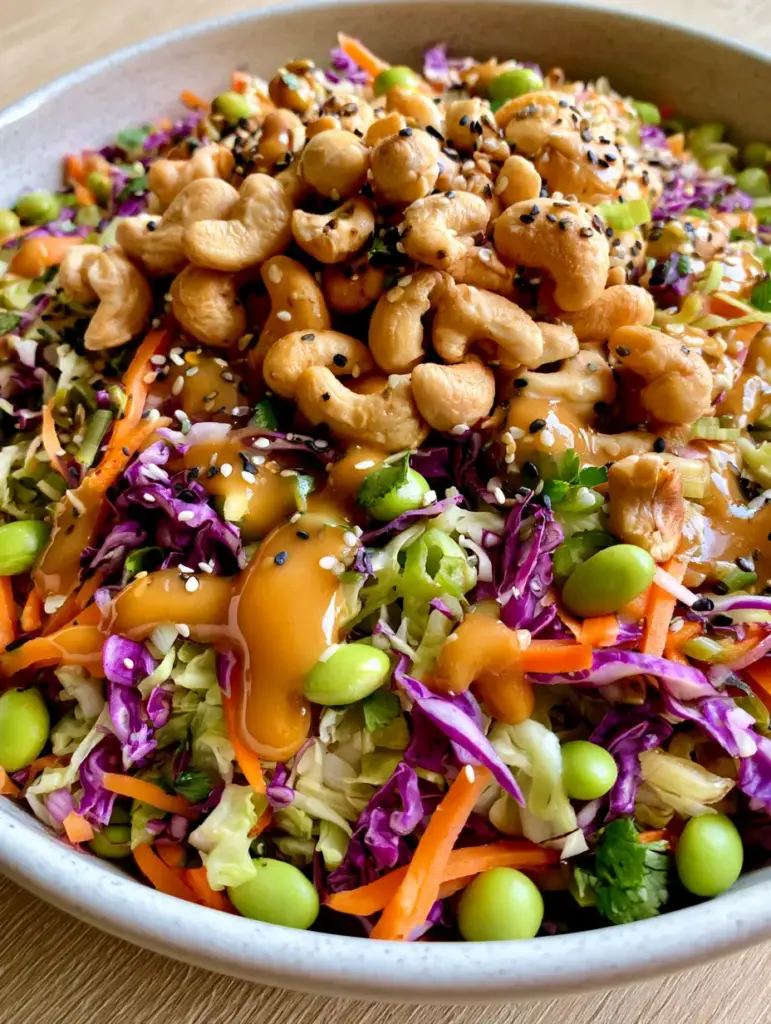
You will also need a Large Matte White Ceramic Bowl. The matte finish is crucial because it doesn’t reflect the camera flash or overhead lights, allowing the “glossy” dressing on the salad itself to be the star of the show. Finally, a small skillet for toasting the cashews ensures you can monitor the color change in real-time.
Step-by-Step Instructions to Culinary Perfection
1. Prepare the Cabbage Base
Start by removing the outer leaves of both the purple and Napa cabbages. Halve them and remove the tough core. Shred the purple cabbage into ultra-fine ribbons. Repeat with the Napa cabbage. In a very large mixing bowl, toss the two cabbages together until you have a vibrant, even distribution of purple and pale green. This creates the “nest” for our other ingredients.
2. Julienne the Carrots and Prep the Edamame
Peel your carrots and cut them into 2-inch (5cm) matchsticks. If using frozen edamame, steam them for 3-4 minutes until bright green and tender. Immediately shock them in ice water to stop the cooking process; this locks in that “plump green” look required for the visual blueprint. Pat them dry thoroughly—water is the enemy of a glossy dressing.
3. Toast the Cashews to Golden Perfection
Place a small skillet over medium-low heat. Add the neutral oil and the whole cashews. Stir constantly for 3-5 minutes. Watch for the visual cue: the nuts should transition from a pale cream to a rich, toasted golden-brown. Once they smell fragrant and look golden, remove them from the heat and sprinkle with sea salt. Set them aside to cool; they will crisp up further as they reach room temperature.
4. Emulsify the Glossy Amber Dressing
In a medium glass jar or bowl, combine the rice vinegar, soy sauce, toasted sesame oil, honey, grated ginger, and grated garlic. Whisk vigorously or shake the jar until the honey is fully incorporated. The dressing should look thick, translucent, and amber-colored. Taste a small leaf of cabbage dipped in the dressing—it should be a balance of tangy, sweet, and salty.
5. The Final Assembly and Garnish
Add the carrots, edamame, and half of the sliced scallions to the cabbage mix. Drizzle about three-quarters of the dressing over the top and toss gently using tongs. Transfer the salad to your matte white ceramic bowl. Pile the toasted cashews generously in the center. Drizzle the remaining dressing directly over the cashews to give them that “amber reflection.” Finally, sprinkle with black and white sesame seeds and a handful of fresh chopped cilantro for a burst of contrasting green.
Expert Tips for the Ultimate Crunch
- Dry Your Greens: If you wash your shredded cabbage, use a salad spinner. Any residual water will dilute the dressing and ruin the glossy finish.
- Toast Nuts Last: To maintain the maximum crunch, add the toasted cashews only seconds before serving. If they sit in the dressing too long, they lose their structural integrity.
- Massage the Cabbage: If you find raw purple cabbage too tough, give it a light “massage” with a pinch of salt before adding other ingredients. This softens the cellulose without losing the snap.
- Temperature Matters: Serve the salad slightly chilled, but let the dressing sit at room temperature for 10 minutes before drizzling to ensure optimal viscosity.
Storage and Meal Prep Strategy
This crunchy edamame-packed salad is excellent for meal prep, but only if you follow the “separation rule.” Store the shredded cabbage, carrots, and edamame in an airtight container for up to 4 days. Keep the dressing in a separate jar and the toasted cashews in a dry pantry container.
When you are ready to eat, simply toss the vegetables with the dressing and top with the nuts. We do not recommend freezing this salad, as the high water content in the cabbage will cause it to become mushy upon thawing. If you have leftovers that are already dressed, they are best consumed within 12 hours.
What to Serve With This Vibrant Salad
This Asian Cashew Salad is a powerhouse on its own, but it also pairs beautifully with various proteins. Try serving it alongside some grilled salmon or a spicy shrimp skewer for a complete meal. If you want to keep it plant-based, crispy tofu nuggets are a fantastic addition.
For a larger spread, consider pairing this with a crispy wonton side or even a refreshing side of pickled cucumbers to double down on the vinegary brightness. The versatility of the sesame ginger profile makes it a natural companion to almost any East Asian-inspired main course.
Frequently Asked Questions
Yes, you can prep the cabbage and vegetables up to 4 days in advance. However, keep the dressing and toasted cashews separate until just before serving to prevent the salad from becoming soggy.
Absolutely. While cashews provide a unique buttery crunch, sliced almonds or peanuts are excellent substitutes. Just ensure you toast them until golden-brown to maintain the flavor profile.
The secret to the glossy, amber finish is the honey (or maple syrup). The natural sugars create a viscous texture that coats the vegetables and reflects light, giving it a professional look.
The base ingredients are naturally gluten-free. To make the entire dish gluten-free, ensure you use Tamari or a gluten-free liquid aminos in place of traditional soy sauce in the dressing.
For the best texture, use a mandoline slicer set to a very thin setting. If you don’t have one, a sharp chef’s knife works well—just be sure to cut the cabbage into the thinnest ribbons possible.
The Complete Asian Cashew Salad Recipe
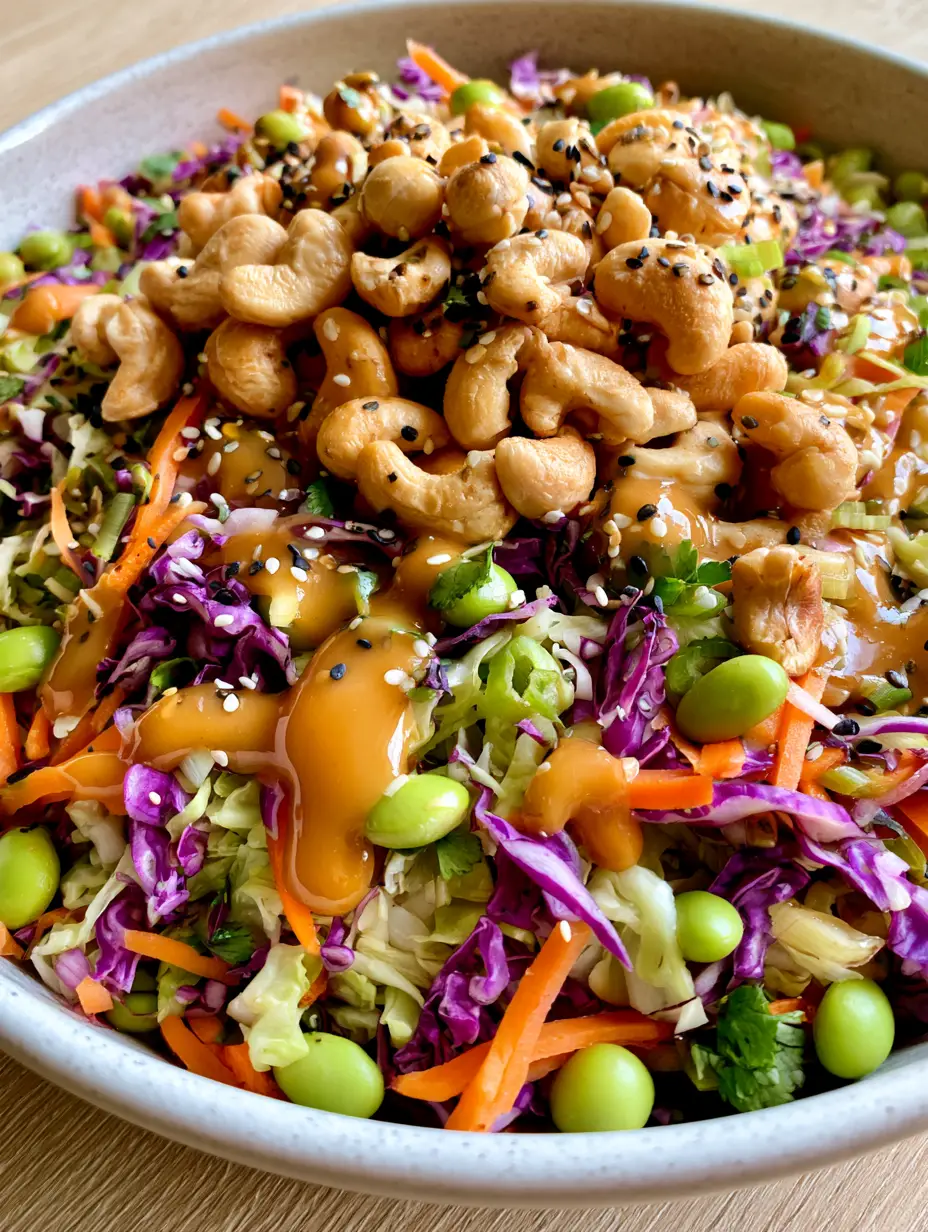
Asian Cashew Salad: The Ultimate Crunchy Sesame Ginger Feast
Ingredients
Equipment
Method
- Finely shred the purple and Napa cabbage using a mandoline or sharp knife. Julienne the carrots into 2-inch matchsticks.
- Steam shelled edamame for 3-4 minutes until tender-crisp, then shock in ice water and pat dry.
- Heat oil in a skillet over medium-low. Add cashews and stir constantly for 3-5 minutes until golden-brown and fragrant.
- Whisk together rice vinegar, soy sauce, sesame oil, honey, ginger, and garlic until emulsified and glossy.
- Toss the vegetables with the dressing. Top with toasted cashews, sesame seeds, and cilantro. Serve immediately.
Notes
Add cashews at the very last second to preserve their crunch.
Conclusion: Bring the Crunch Home
Creating a restaurant-quality Asian Cashew Salad is all about the details—the fineness of the shred, the golden hue of the cashews, and the glossy drape of the dressing. This dish proves that healthy eating doesn’t have to be boring or visually dull. It is a celebration of fresh ingredients handled with professional care.
If you enjoyed this recipe, please leave a comment below and let us know how your toasted cashews turned out! Don’t forget to snap a photo and share your creation on Pinterest so we can see your vibrant bowls. Happy tossing!