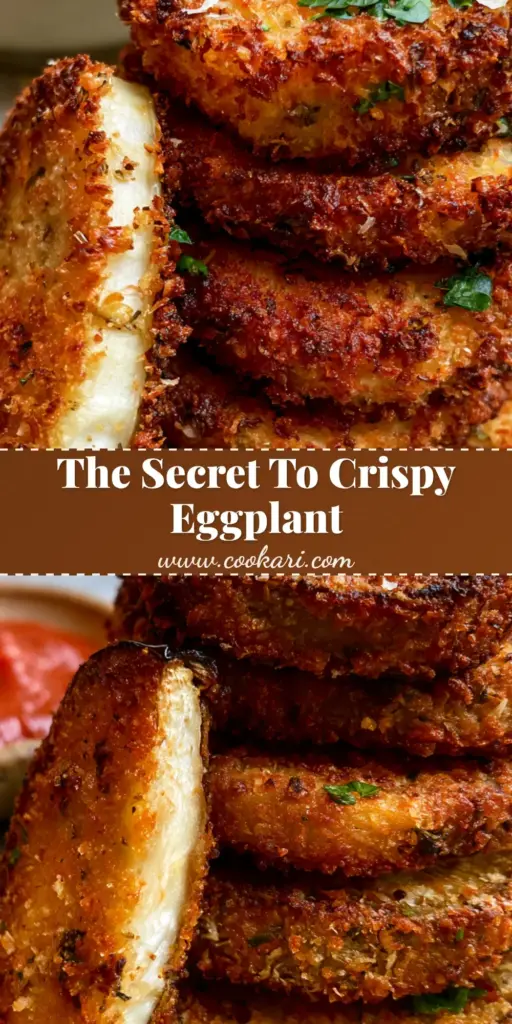
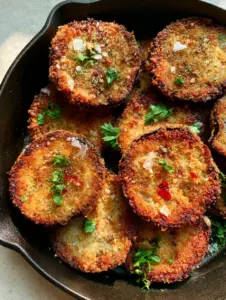
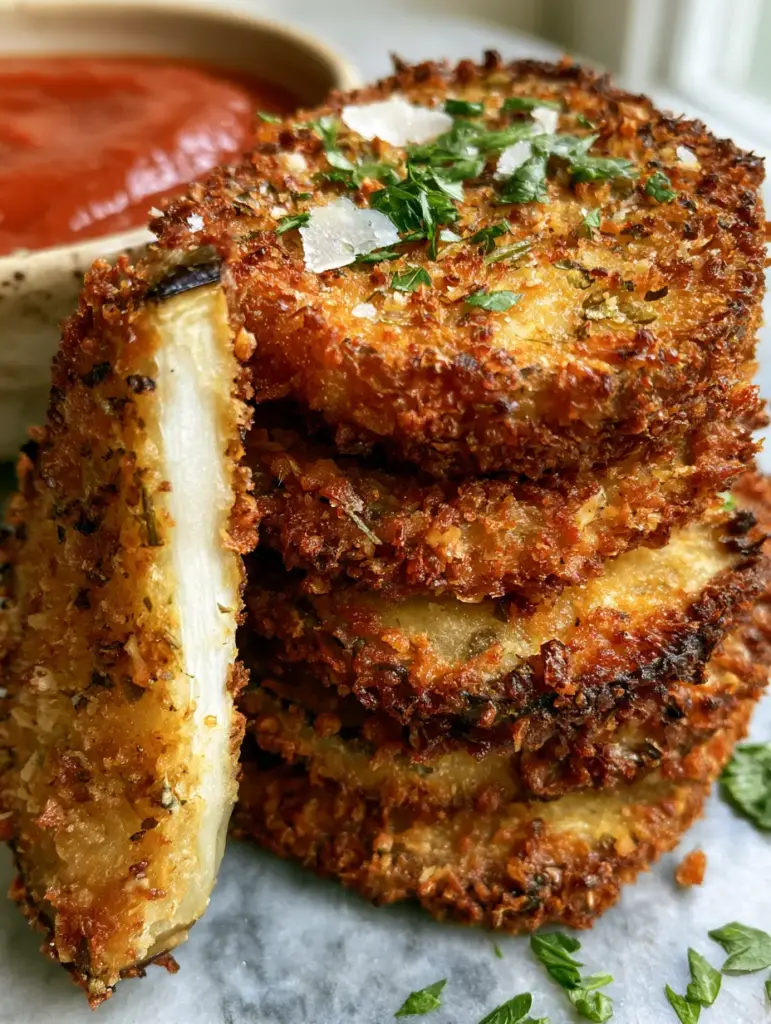
There is a specific, hauntingly satisfying sound that occurs when a serrated knife hits the jagged, golden-brown crust of a perfectly prepared baked eggplant recipe. It’s a sharp, clean crackle that promises a world of textures: the initial crunch of toasted panko, the salty hit of aged parmesan, and the eventual melt-in-your-mouth tenderness of a cream-colored interior. If you have ever suffered through a plate of rubbery or oil-soaked eggplant, this recipe is your redemption song.
Achieving that “eye-level macro” perfection—where every crumb of breading looks like a tiny golden mountain peak—isn’t about luck. It is about a calculated culinary process that transforms a humble, moisture-heavy vegetable into a structural masterpiece. By the time you finish this guide, you will be producing stacks of eggplant rounds that look exactly like a high-end food photography shoot, featuring visible flecks of herbs and that signature Maldon sea salt sparkle.
This isn’t just another side dish; it is a foundational technique for anyone looking to master Mediterranean-inspired textures. Whether you are serving these as a standalone snack with a bowl of vibrant marinara or using them as the base for a crispy oven baked eggplant tower, the result is consistently high-impact and undeniably delicious.
Why This Crispy Breading Method Works Every Time
- The Anti-Mush Protocol: We use a specific salt-sweating technique to ensure the white interior remains firm and structured rather than soggy.
- Jagged Texture Profile: By utilizing Japanese panko instead of traditional breadcrumbs, we create a rough, “crunch-heavy” exterior that catches more heat and light.
- Parmesan-Infused Breading: Grated parmesan doesn’t just add flavor; it acts as a binding agent that melts into the breadcrumbs for a sturdier crust.
- Visual Herb Integration: Dried oregano is baked into the crust for depth, while fresh Italian parsley is added at the end to provide a bright, professional finish.
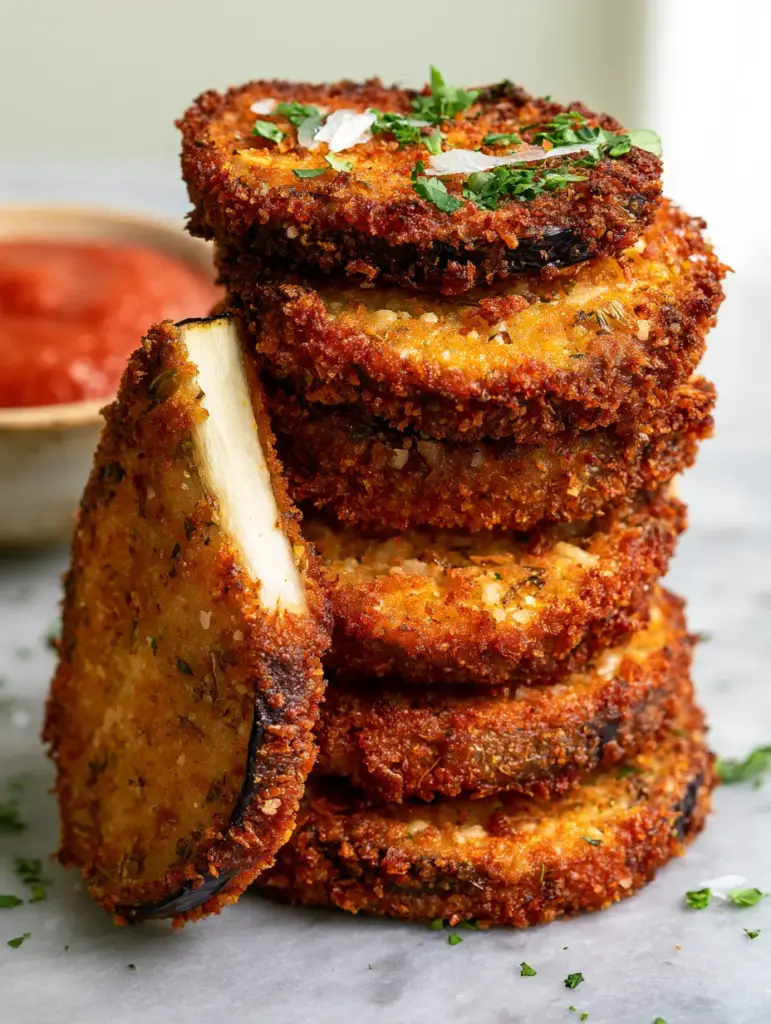
The Golden Elements of the Perfect Panko Crust
To achieve the visual and structural results described in our baked eggplant recipe, you must understand the role of every ingredient. We don’t just “bread” the eggplant; we build a multi-layered coating designed for maximum adhesion and flavor delivery.
1 or 2 Large Globe Eggplants (approx. 1.5 lbs / 680g): Look for eggplants with shiny, tight skin and a green stem. The firm white interior is essential for that “non-mushy” cross-section we are aiming for.
2 cups (120g) Panko Breadcrumbs: These are larger and airier than standard crumbs. They are the key to the “jagged, golden-brown” look seen in the macro photography.
1/2 cup (50g) Grated Parmesan Cheese: Use finely grated cheese so it integrates perfectly with the panko. It provides the savory “umami” punch and helps the crust brown evenly.
1/2 cup (65g) All-Purpose Flour: This is the “glue” layer. It dries the surface of the eggplant round so the egg wash has something to cling to.
2 Large Eggs: Beaten until frothy, these act as the liquid bridge between the flour and the panko-parmesan mixture.
1 tbsp (3g) Dried Oregano: These small green flecks provide the “visible herb” aesthetic required for a professional-looking crust.
1 tsp (6g) Fine Sea Salt & 1/2 tsp Black Pepper: Critical for seasoning the eggplant layers from the inside out.
Maldon Flaky Sea Salt: This is the finishing touch. These large, translucent crystals catch the light and provide a final burst of salinity on the tongue.
1/4 cup (10g) Fresh Italian Parsley: Finely chopped and scattered over the top for a “vibrant red and green” contrast against the golden rounds and the marinara.
2 cups (480ml) Thick Red Marinara Sauce: Served warm in a side bowl, its acidity cuts through the richness of the breaded crust.
Essential Tools for High-Heat Baking
Achieving the “toasted state” without burning requires the right equipment. You will need a heavy-duty rimmed baking sheet—preferably aluminum—to conduct heat evenly. A wire cooling rack placed inside the baking sheet is a secret weapon; it allows hot air to circulate under the eggplant, ensuring the bottom is just as crispy as the top.
You will also need three shallow bowls for your breading station. I recommend using wide pasta bowls or pie tins to give you enough room to work without making a mess. A sharp chef’s knife is also non-negotiable for getting those perfectly even rounds that stack so beautifully.
Step-by-Step: From Raw Slices to Golden Rounds
Step 1: The Osmosis Phase (The Secret to Non-Mushy Eggplant)
Slice your eggplant into rounds roughly 1/2 inch (1.25cm) thick. Lay them out on a clean kitchen towel or paper towels and sprinkle generously with fine sea salt. Let them sit for 20-30 minutes. You will see beads of moisture rising to the surface; this is the internal water being drawn out, which prevents the eggplant from steaming itself into a mushy state in the oven.
Step 2: Designing the Breading Station
Set up three bowls in a row. In the first, place the flour seasoned with a pinch of salt. In the second, whisk the eggs with a teaspoon of water until no streaks remain. In the third, combine the panko, grated parmesan, and dried oregano. Use your hands to toss the panko mixture so the parmesan is evenly distributed.
Step 3: The Triple-Coat Technique
Pat the eggplant rounds completely dry with a paper towel. Dip a round into the flour, shaking off any excess. Submerge it in the egg wash, then press it firmly into the panko-parmesan mixture. You want to literally *press* the panko into the flesh to create that thick, jagged coating. Repeat until all rounds are covered.
Step 4: The High-Heat Roast
Preheat your oven to 425°F (220°C). Lightly spray your wire rack or parchment-lined tray with olive oil. Arrange the rounds in a single layer, ensuring they do not touch. Bake for 20-25 minutes, flipping halfway through. Look for the visual cue: the crust should be a deep, “rough-textured” golden brown, and the interior should feel tender when pierced with a fork but still hold its shape.
Step 5: The Finishing Touches
Immediately upon removing from the oven, sprinkle the rounds with Maldon flaky sea salt. The heat from the eggplant will help the salt adhere. Scatter the freshly chopped parsley over the stack. Serve immediately with a side of thick, vibrant marinara sauce.
Expert Tips for the Ultimate Crunch
- Don’t Overcrowd the Pan: If the eggplant slices are too close together, they will release steam and soften the crust. Give them at least an inch of space.
- Use Freshly Grated Cheese: Pre-shredded parmesan in a green can contains anti-caking agents that prevent it from melting and browning properly. Grate it yourself for the best texture.
- The “Dry Hand/Wet Hand” Rule: Use your left hand for the flour and panko (dry) and your right hand for the egg wash (wet). This prevents your fingers from becoming breaded along with the eggplant.
- Oil Spray is Your Friend: A light misting of olive oil spray over the panko before it goes into the oven will help it achieve that “handheld smartphone photo” golden glow.
Perfect Pairings for Your Baked Eggplant
While this baked eggplant recipe is a star on its own, it plays beautifully with other textures. For a complete Italian-inspired feast, serve these alongside a mediterranean pasta salad or a refreshing amish macaroni salad. If you are looking to keep the meal light and vegetable-focused, these rounds are the perfect precursor to a baked zucchini spinach and feta casserole.
For those hosting a summer gathering, consider a fruit-forward palate cleanser like a creamy grape salad or a chilled strawberry daiquiri to balance the savory, salty crunch of the eggplant.
Frequently Asked Questions
Yes! Substitute the all-purpose flour with a 1:1 gluten-free flour blend and use gluten-free panko-style breadcrumbs for the same jagged texture.
Yes, avoid the microwave. Reheat them in a 400°F (200°C) oven or an air fryer for 3-5 minutes to restore the original crunch.
No peeling is necessary. The skin helps the rounds hold their shape and provides a beautiful color contrast against the golden breading.
The key is the three-step dredging process: flour first to dry the surface, then egg wash as a glue, and finally pressing the panko firmly into the slice.
Sogginess is caused by excess moisture. To prevent this, salt your eggplant rounds for 20-30 minutes before baking to draw out water, then pat them completely dry.
The Ultimate Crispy Baked Eggplant Rounds
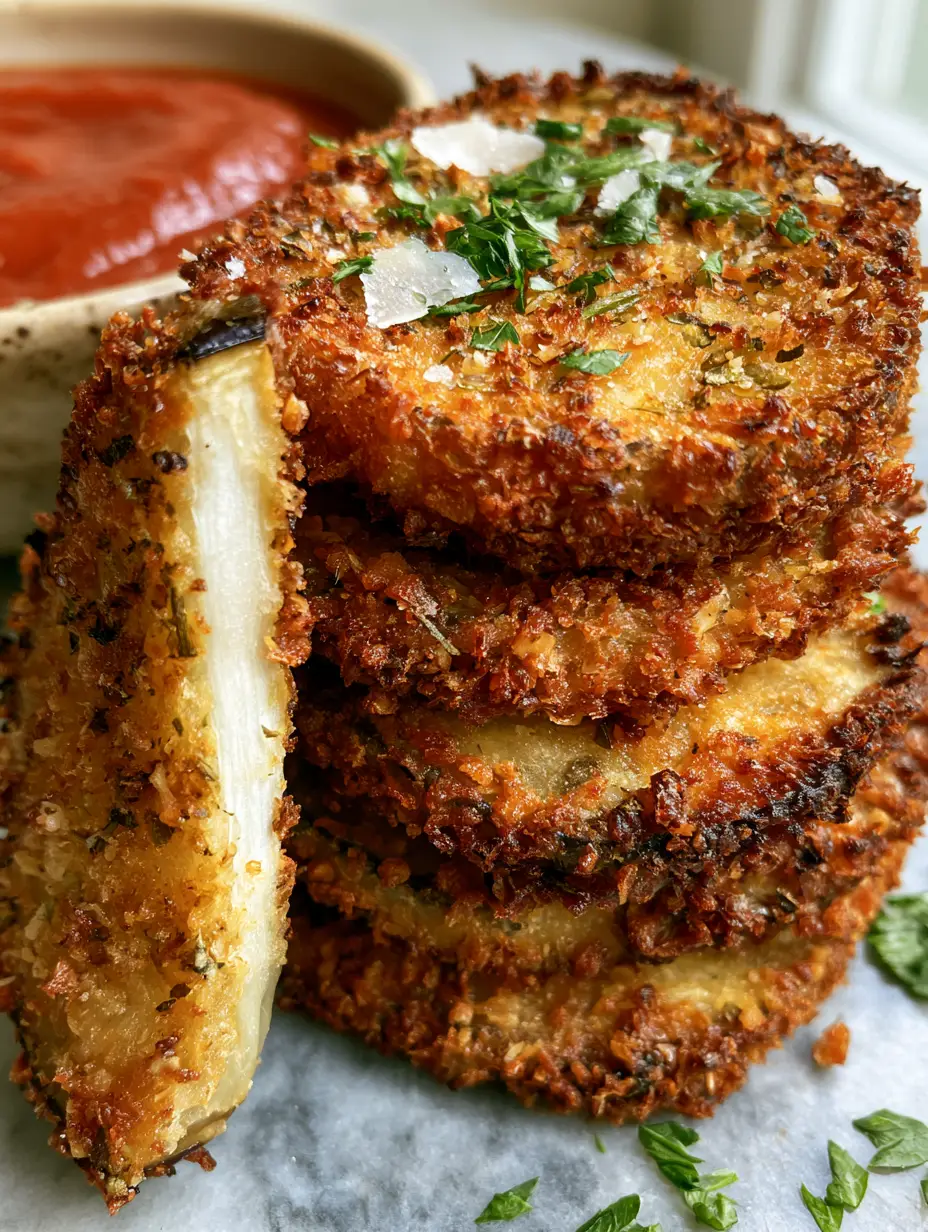
Baked Eggplant Recipe: The Secret to Extra-Crispy Panko Rounds
Ingredients
Equipment
Method
- Arrange eggplant rounds on paper towels and sprinkle with fine salt. Let sit for 20-30 minutes until moisture beads on top, then pat dry.
- Place flour in bowl one, beaten eggs in bowl two, and panko mixed with parmesan and oregano in bowl three.
- Coat each round in flour, then egg, then press firmly into the panko mixture until a thick, jagged crust forms.
- Place rounds on a wire rack over a baking sheet. Bake at 425°F (220°C) for 20-25 minutes, flipping once, until deep golden-brown.
- Sprinkle immediately with Maldon salt and fresh parsley. Serve with warm marinara.
Notes
Use a wire rack for 360-degree crispiness.
Share Your Culinary Success!
There is nothing quite like the satisfaction of mastering a vegetable dish that even the most dedicated meat-eaters will clamor for. This baked eggplant recipe delivers on every sensory promise: the sight of the golden crust, the smell of toasted oregano, and the undeniable crunch of panko. We would love to see your results!
If you made this recipe, please leave a comment below and let us know how it turned out. Did you achieve that “jagged, golden-brown” perfection? Don’t forget to save this to your favorite boards on Pinterest so you always have the secret to non-mushy eggplant at your fingertips.