There is a specific culinary magic that happens when translucent mung bean noodles meet the zesty, electrifying bite of a traditional Nam Jim dressing. This Thai glass noodle salad, known in Thailand as Yum Woon Sen, is a masterclass in texture and temperature contrast.
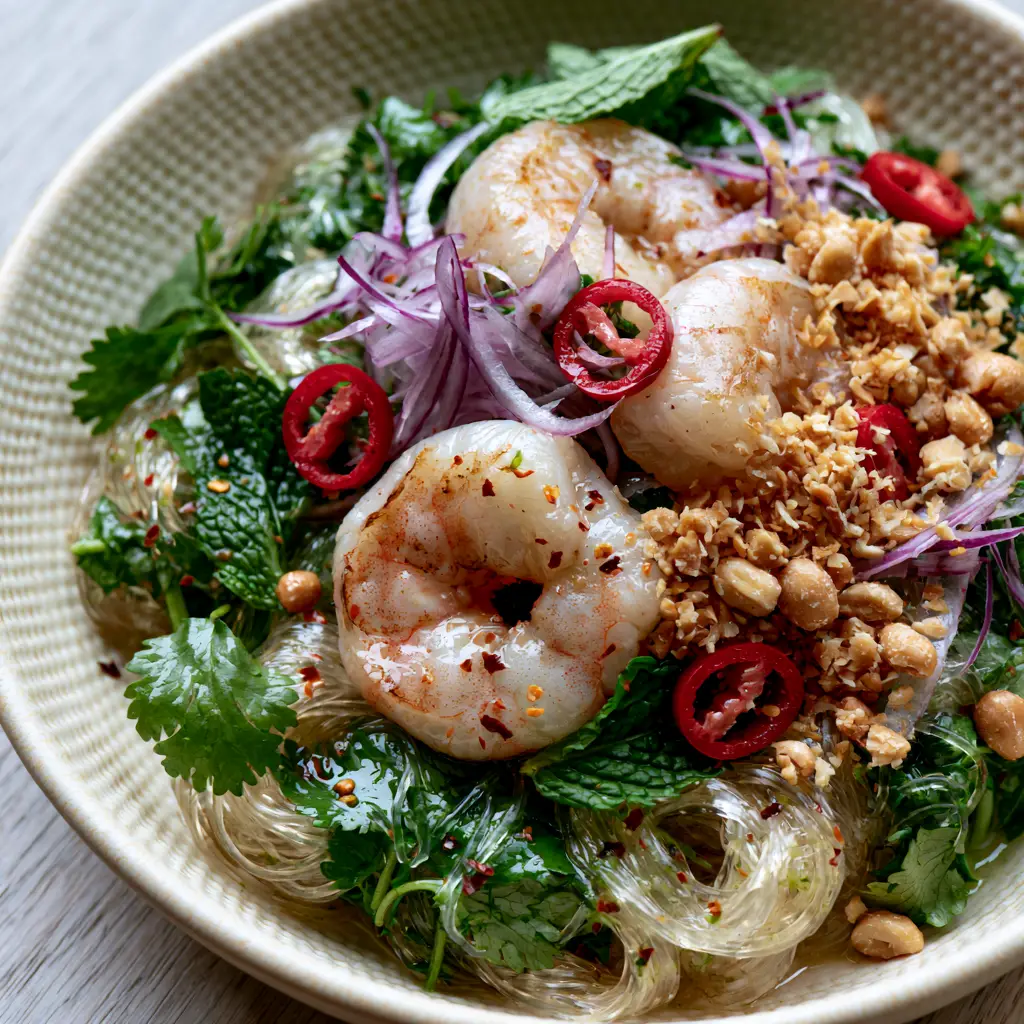
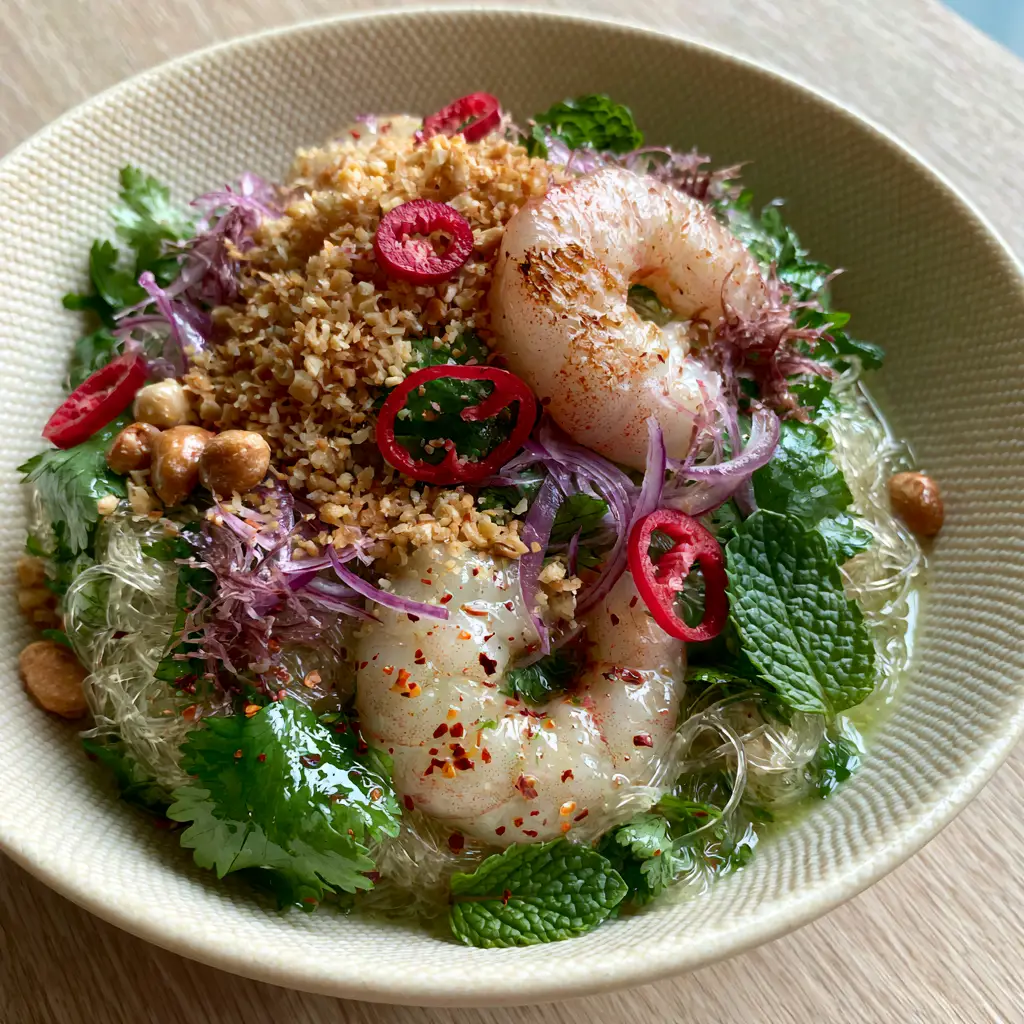
Imagine a bowl where the noodles are so clear they look like spun silk, tangled with the vibrant green of fresh cilantro and mint. Perched atop this delicate foundation are jumbo shrimp, seared to a perfect light pink, providing a meaty counterpoint to the crunch of golden peanuts and raw purple shallots.
This recipe isn’t just a meal; it is a sensory journey that captures the essence of Thai street food with a gourmet, modern twist. We are focusing on high-quality ingredients and precise techniques to recreate the exact shallow-depth-of-field beauty you see in professional food photography.
The Irresistible Visual Appeal of Yum Woon Sen
What makes this Thai glass noodle salad stand out from your standard pasta dish is its remarkable lightness and complex flavor profile. It hits every part of the palate—sour, salty, spicy, and a hint of sweetness—while remaining incredibly refreshing.
- Textural Harmony: The “bouncy” texture of the glass noodles paired with the hard crunch of crushed toasted peanuts.
- Searing Excellence: Jumbo pink shrimp that have been quickly seared to lock in moisture and provide a golden exterior.
- Aromatic Depth: The combination of fresh mint and cilantro provides a cooling finish to the heat of the red bird’s eye chilies.
- Glossy Finish: A dressing that doesn’t just flavor the noodles but coats them in a high-shine, mouthwatering glaze.
Sourcing the Foundation: Mung Bean Noodle Essentials
To achieve that signature translucent look, you must use 1.75 oz (50g) of dried mung bean vermicelli. These are often sold in small bundles and are distinctly different from rice vermicelli, which turn opaque white when cooked.
Mung bean noodles are prized for their ability to absorb the 3 tbsp (45ml) of fresh lime juice and 3 tbsp (45ml) of premium fish sauce without becoming soggy. They maintain a firm, “al dente” snap that is essential for an authentic experience.
While you are browsing for ingredients, you might find yourself looking for other refreshing options. If you enjoy a different noodle texture, you might also like this refreshing ramen noodle salad for your next meal prep session.
Essential Ingredients for the Ultimate Thai Glass Noodle Salad
Jumbo Shrimp (8-10 pieces): Choose 16/20 count shrimp to ensure they remain plump and juicy after a high-heat sear. Their light pink hue provides a stunning visual contrast against the green herbs.
Purple Shallots (2 large): These must be thinly sliced into translucent rounds. Their mild, peppery bite is far superior to standard red onions in this specific application.
Red Bird’s Eye Chilies (2-3): These small but mighty peppers provide the “kick.” Slice them into thin rings to distribute the heat evenly throughout the salad.
Toasted Golden Peanuts (1/4 cup / 35g): These provide the necessary fatty crunch. Crushing them slightly releases their oils and ensures they stick to the glossy noodles.
Fresh Mint and Cilantro (1/2 cup each / 15g): Use whole mint leaves and roughly chopped cilantro. These aren’t just garnishes; they are primary components of the salad’s flavor structure.
Dried Chili Flakes (1 tsp / 2g): A sprinkle of these adds a secondary layer of smoky heat and creates tiny red specks that look beautiful against the clear noodles.
Professional Tools for Gourmet Results
To get the “top-down angled” gourmet look, a shallow textured cream ceramic bowl is your best friend. The neutral tone allows the pink shrimp and purple shallots to pop visually.
A high-quality carbon steel or cast iron skillet is necessary for the shrimp. You need a pan that can retain high heat to achieve a “light pink sear” in under 90 seconds per side.
Finally, a sharp mandoline or a professional-grade chef’s knife is non-negotiable for the shallots. They need to be sliver-thin to macerate slightly in the dressing without losing their structure.
Mastering the Translucent Noodle Technique
The biggest mistake home cooks make with a Thai glass noodle salad is overcooking the noodles. They do not need a rolling boil; in fact, boiling them for too long will turn them into a gummy mess.
Step 1: The Precision Soak
Place your mung bean noodles in a large heat-proof bowl and cover them with boiling water. Let them sit for exactly 3-5 minutes until they are completely translucent but still offer a slight resistance when bitten.
Immediately drain them and rinse under cold running water. This stops the cooking process and removes excess starch, ensuring your noodles don’t clump together in the bowl.
Step 2: Crafting the Glossy Nam Jim Dressing
In a small glass jar, whisk together 3 tbsp (45ml) lime juice, 3 tbsp (45ml) fish sauce, and 1 tbsp (12g) palm sugar or brown sugar. Stir until the sugar is fully dissolved.
This dressing should be glossy and thin. The fish sauce provides the “umami” backbone, while the lime juice offers the bright acidity that cuts through the richness of the seared shrimp.
Step 3: Searing the Jumbo Pink Shrimp
Pat your shrimp extremely dry with paper towels—this is the secret to a good sear. Season lightly with a pinch of salt and a drizzle of neutral oil.
Heat your skillet over medium-high heat until it begins to shimmer. Place the shrimp in the pan, leaving space between them. Sear for 90 seconds, flip, and cook for another 60 seconds until they are opaque and light pink with golden edges.
Step 4: The Tangle and Assembly
In a large mixing bowl, combine the cooled noodles, sliced shallots, bird’s eye chilies, and half of the peanuts. Pour the dressing over the top and toss vigorously using tongs.
The goal is to “tangle” the noodles so the shallots and chilies are evenly distributed. Add the fresh cilantro and mint at the very last second to prevent them from wilting under the acidity of the lime.
Chef’s Tips for Visual and Flavor Perfection
- Symmetry in Plating: When transferring to your ceramic bowl, use tongs to twirl the noodles into a high mound. Nest the shrimp on top rather than mixing them in to keep them looking pristine.
- The Nut Factor: Always toast your peanuts right before serving. The warmth enhances the aroma and ensures maximum crunch against the soft noodles.
- Herb Preservation: If you are making this for a dinner party, keep the herbs in an ice-water bath until the moment of assembly to ensure they look “vibrant green.”
- Managing Heat: If you prefer a milder salad, deseed the bird’s eye chilies. The flavor remains, but the capsaicin burn is significantly reduced.
What to Serve with Your Thai Noodle Creation
This salad is remarkably versatile. It works as a light lunch on its own, but it also pairs beautifully with other vibrant textures. If you are hosting a summer gathering, consider serving this alongside a refreshing watermelon and feta salad for a cooling contrast.
For those who love a bit of crunch on the side, these crispy zucchini tots provide a salty, savory element that complements the spicy lime dressing of the noodles perfectly.
Optimal Storage and Meal Prep Advice
Thai glass noodle salad is best enjoyed within 2 hours of assembly. Unlike grain-based salads, the mung bean noodles will continue to absorb liquid over time, which can eventually lead to a softer texture.
If you must store leftovers, keep the dressing in a separate container and only toss the noodles and vegetables when you are ready to eat. The seared shrimp should be stored in an airtight container and eaten within 24 hours.
Never freeze this salad. The cellular structure of the mung bean noodles and the fresh herbs will collapse upon thawing, resulting in an unappealing texture.
Common Questions About Thai Glass Noodle Salad
No, glass noodles (also known as cellophane noodles) are made from mung bean starch, which makes them translucent when cooked. Rice noodles are made from rice flour and turn white/opaque.
Yes! Substitute the fish sauce with a high-quality vegan ‘no-fish’ sauce or light soy sauce, and replace the shrimp with seared tofu or extra mushrooms.
Absolutely, just ensure they are fully thawed and patted extremely dry with paper towels before searing to get that perfect golden-pink crust.
The key is to rinse them thoroughly under cold water immediately after soaking. This removes the surface starch that causes clumping.
Yum Woon Sen is traditionally served at room temperature or slightly warm, especially when featuring freshly seared proteins like shrimp.
The Authentic Thai Glass Noodle Salad Recipe
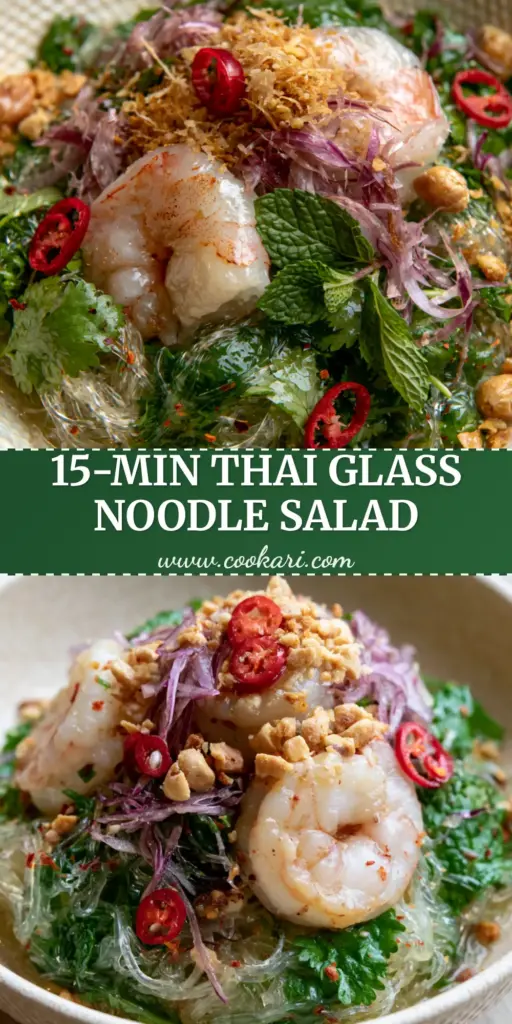
Thai glass noodle salad with Jumbo Seared Shrimp (Yum Woon Sen)
Ingredients
Equipment
Method
- Place mung bean noodles in boiling water for 3-5 minutes until translucent.
- Drain and rinse immediately with cold water to stop the cooking.
- Sear shrimp in a hot skillet with a little oil for 90 seconds per side until light pink and opaque.
- Whisk lime juice, fish sauce, and sugar. Toss with noodles, shallots, and chilies.
- Fold in fresh herbs and top with peanuts, chili flakes, and seared shrimp.
Notes
Ensure the shrimp are dry before hitting the pan for the best sear.
Final Thoughts on This Vibrant Dish
Mastering the Thai glass noodle salad is a milestone for any home cook looking to expand their Southeast Asian repertoire. It’s a dish that relies on the quality of its components and the precision of its textures.
The combination of glistening noodles, seared jumbo shrimp, and that sharp, glossy dressing creates a meal that is as beautiful to look at as it is to eat. We would love to see your creations! Share your photos and tag us, or leave a comment below with your favorite way to customize this recipe.
For more daily recipe inspiration, be sure to follow us on Pinterest and subscribe to our newsletter for the latest gourmet guides.